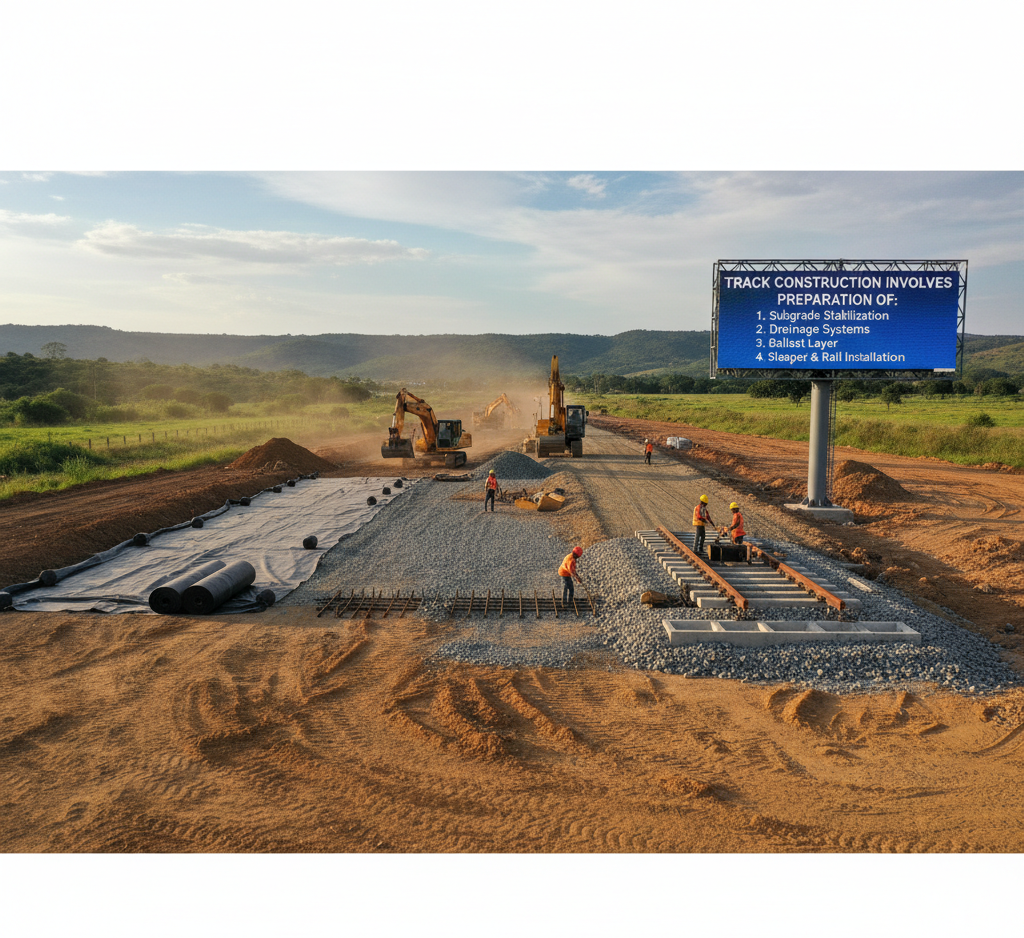
The construction of a running or jogging track is not just about laying a surface — it is a step-by-step engineering process that ensures durability, comfort, and safety for runners. Proper preparation is the foundation of a high-quality track, whether it’s a synthetic athletics track, a 5 km jogging loop, or a park fitness trail.
Below is a complete overview of what the preparation for track construction involves:
1. Site Selection and Surveying
Before any physical work begins, the site is carefully selected and surveyed.
Key tasks include:
-
Conducting a topographical survey to assess levels and slopes.
-
Checking soil type, drainage, and bearing capacity.
-
Identifying natural features like trees, slopes, or water bodies.
-
Ensuring the site has adequate space and accessibility for construction machinery.
This stage helps determine whether the site can support the design and ensures minimum earthwork adjustments later.
2. Clearing and Grubbing
The first physical step in track construction is site clearing.
This involves removing:
-
Unwanted vegetation, grass, or shrubs.
-
Tree stumps, rocks, and organic material.
-
Waste, debris, or old construction remnants.
After clearing, the surface is leveled to establish the base formation level.
3. Earthwork and Subgrade Preparation
This is one of the most crucial stages of track preparation.
Subgrade preparation creates a solid foundation on which all other layers will rest.
Steps include:
-
Excavating or filling soil to reach the required grade level.
-
Compacting the soil using rollers to achieve uniform density.
-
Checking surface slope (usually 1–2%) for proper drainage.
-
Applying a layer of moorum, sand, or stabilizing material if the soil is weak.
A well-compacted subgrade ensures the track doesn’t crack, settle, or deform over time.
4. Base Layer Construction
After preparing the subgrade, the next step is to build the base layer, which gives structural strength to the track.
Typical base layers include:
-
Granular Sub-Base (GSB): 100–150 mm of crushed stone and sand mix.
-
Wet Mix Macadam (WMM): 75–100 mm of mechanically mixed aggregates.
Each layer is:
-
Laid in uniform thickness.
-
Watered and compacted using vibratory rollers.
-
Checked for slope, alignment, and evenness.
This base acts as a load-bearing layer and ensures long-lasting performance of the surface finish above.
5. Surface Preparation and Paving
Once the base is ready, the final track surface is constructed. The type of surface depends on the purpose and budget:
Common options include:
-
Bituminous Asphalt Surface – smooth, flexible, ideal for parks and campuses.
-
Synthetic Rubber Surface (EPDM or PU) – soft, shock-absorbent, suitable for professional use.
-
Concrete or Interlocking Pavers – durable and low-maintenance, but harder on the feet.
-
Natural Gravel or Soil Surface – eco-friendly, suitable for rustic trails or eco-parks.
Each surface material requires:
-
Leveling and compaction of the base.
-
Application of a binder or primer coat.
-
Laying of surface mix in one or more layers.
-
Finishing and curing (especially for concrete or synthetic tracks).
6. Drainage Preparation
A properly constructed drainage system is essential to prevent water accumulation and extend track life.
Drainage components include:
-
Side drains or trench drains running along the track.
-
A cross slope of 1–2% for water runoff.
-
Soak pits or rainwater harvesting systems (for eco parks).
-
Perforated pipes below the surface for heavy rainfall areas.
Without proper drainage, the surface can soften, crack, or develop algae — making it unsafe for users.
7. Edge Restraints and Shoulders
To prevent track deformation, edge restraints (curbs or concrete bands) are provided on both sides.
These help maintain the track’s shape and protect edges from erosion or wear.
Shoulders — usually 0.5 to 1 meter wide green strips — are added for safety and aesthetics.
8. Surface Marking and Finishing
After the track surface is laid and cured, it is finished with markings and signs:
-
Distance markers (every 100m or 500m).
-
Lane divisions (for multi-lane tracks).
-
Directional arrows and safety warnings.
-
Start/finish lines and metric indications.
Paint used is generally weather-resistant and reflective for night visibility.
9. Lighting, Fixtures, and Amenities
Modern running and jogging tracks include a range of support facilities that enhance usability and safety.
Typical additions include:
-
LED streetlights at 15–25 m intervals.
-
Benches and rest areas.
-
Dustbins and signage.
-
Water stations or fountains.
-
CCTV and emergency call points (in public parks).
These elements turn a simple running path into a comfortable fitness corridor.
10. Quality Control and Testing
Every stage of construction undergoes strict quality checks:
-
Compaction testing of subgrade and base.
-
Surface evenness and slope checks.
-
Drainage performance tests.
-
Final walk-through inspection.
For professional synthetic tracks, laboratory testing is done to ensure surface friction, shock absorption, and rebound meet international standards (such as IAAF / World Athletics guidelines).
11. Maintenance Preparation
Finally, a maintenance plan is established before the track is opened to the public.
This includes:
-
Routine sweeping and cleaning schedules.
-
Crack repair and resurfacing cycles.
-
Drain cleaning and lighting inspections.
-
Periodic repainting of markings.
Proper maintenance preparation ensures the track remains safe, attractive, and long-lasting.
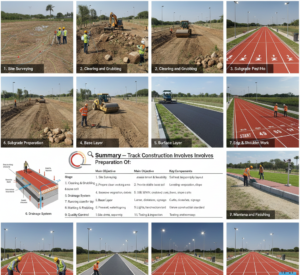
🔍 Summary — Track Construction Involves Preparation Of:
| Stage | Main Objective | Key Components |
|---|---|---|
| 1. Site Surveying | Assess terrain and feasibility | Soil test, topography, layout |
| 2. Clearing and Grubbing | Prepare clean working area | Remove vegetation, debris |
| 3. Subgrade Preparation | Provide stable base soil | Leveling, compaction, slope |
| 4. Base Layer | Strength and support | GSB, WMM, crushed stone |
| 5. Surface Layer | Running comfort and durability | Asphalt, EPDM, pavers, concrete |
| 6. Drainage System | Prevent waterlogging | Side drains, slope, pits |
| 7. Edge & Shoulder Work | Maintain alignment and safety | Curbs, green buffer |
| 8. Marking and Finishing | Functional visibility | Lanes, distances, signage |
| 9. Lighting & Fixtures | User convenience and safety | Lights, benches, signage |
| 10. Quality Control | Ensure construction standard | Testing and inspection |
| 11. Maintenance Setup | Long-term performance | Cleaning, repairs, repainting |
🏁 Conclusion
Track construction involves the systematic preparation of land, layers, drainage, and surfacing, followed by finishing works that ensure safety and longevity. Every step — from subgrade to final markings — plays a vital role in creating a professional, durable, and comfortable track.
Whether it’s a 5 km park jogging path, a stadium athletics track, or a recreational walking trail, proper preparation guarantees performance and satisfaction for years to come.
(FAQ – Track Construction Involves Preparation Of)
1. What does track construction involve?
Track construction involves preparing a durable and level foundation before installing the running surface. This ensures safety, performance, and longevity for athletes and users.
2. What is involved in the preparation of the track subgrade?
The subgrade preparation is the first step:
-
Clearing vegetation and debris
-
Excavating and leveling the ground
-
Compacting soil to prevent settling
-
Conducting soil tests for stability and drainage
3. What is the sub-base layer in track construction?
The sub-base layer provides strength and supports the track surface:
-
Typically made of crushed stone or gravel
-
Ensures proper drainage to prevent waterlogging
-
Prevents deformation of the track over time
4. What is the base layer in track construction?
The base layer acts as the foundation for the surface:
-
Can be made of asphalt or concrete
-
Must be smooth, level, and strong enough to handle traffic and weather
-
Provides a stable platform for synthetic or polyurethane surfaces
5. How is the track surface installed?
After preparing subgrade, sub-base, and base layers:
-
Synthetic surfaces (PU, EPDM, or tartan) are laid
-
Surfaces are cured or bonded depending on material
-
Line markings are added according to standard track dimensions
6. Does track construction include drainage preparation?
Yes. Proper track construction includes:
-
Installing drainage pipes or channels
-
Sloping the track slightly for water runoff
-
Preventing water accumulation that can damage the base or surface
7. What tools and equipment are used for track preparation?
-
Excavators and graders for leveling
-
Rollers and compactors for soil and sub-base compaction
-
Asphalt pavers or concrete mixers for base layer
-
Surface laying equipment for synthetic track materials
8. How long does track preparation take?
-
Small tracks: 1–2 weeks for preparation
-
Standard 400m stadium tracks: 3–6 weeks
-
Total time depends on soil conditions, weather, and track size
9. Can the existing ground be used without preparation?
No. Skipping subgrade and base preparation can lead to:
-
Uneven surfaces
-
Drainage issues and waterlogging
-
Reduced lifespan and frequent repairs
10. Who provides track preparation services?
Professional track construction companies provide:
-
Site assessment and soil testing
-
Subgrade, sub-base, and base construction
-
Drainage planning
-
Surface installation and line marking