In today’s fast-paced urban lifestyle, people are actively seeking ways to stay healthy, manage stress, and reconnect with nature. Among all forms of physical activity, jogging remains one of the most accessible and effective exercises, benefiting both physical strength and mental well-being.
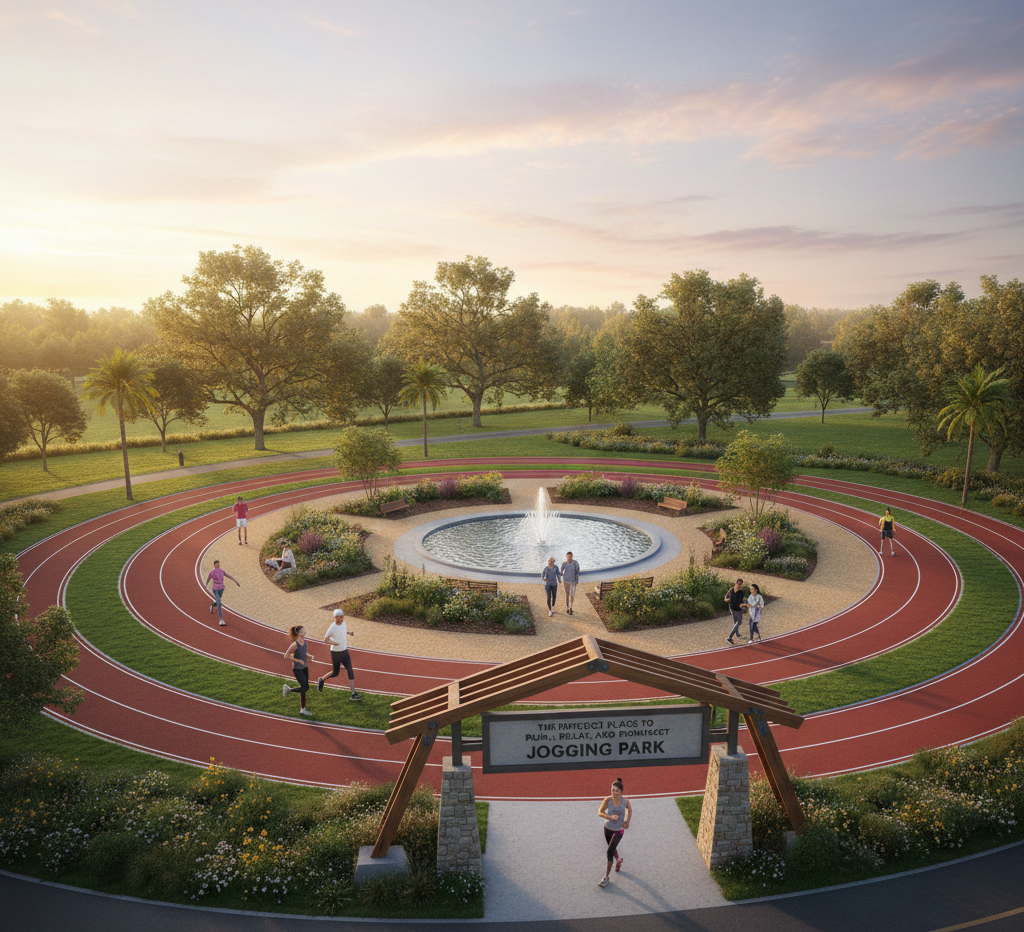
Now imagine a beautifully designed jogging park featuring two identical circular tracks—a space where movement feels effortless, nature surrounds every step, and people of all ages find room to breathe, exercise, and connect. This is not just a recreational park; it is a purpose-built wellness environment where fitness, community, and tranquility come together.
1. Intelligent Design for an Enhanced Fitness Experience
A jogging park with two identical circular tracks offers a thoughtful and highly functional layout. Circular tracks allow runners and walkers to maintain a smooth, uninterrupted rhythm without sharp turns or sudden stops, making workouts more comfortable and enjoyable.
Each track can serve a distinct purpose—one for joggers and runners, the other for walkers, seniors, or light activity users. This separation minimizes congestion and ensures that everyone can move at their preferred pace without interference.
Beginners gain confidence, experienced runners maintain speed, and everyone enjoys a safe, organized environment. The symmetry of dual tracks also adds visual balance, making the park aesthetically pleasing as well as practical.
2. Inspiring Healthy Lifestyles Within the Community
Well-designed jogging parks naturally encourage people to adopt healthier habits. A clearly visible, inviting track motivates individuals to step outside, move more, and make exercise a part of daily life rather than an obligation.
When residents see others jogging, stretching, or walking together, it creates a ripple effect of motivation. Group walks, morning jogging clubs, yoga sessions, and informal fitness challenges flourish in such spaces. With two tracks available, community activities can happen simultaneously without overcrowding, reinforcing a shared culture of wellness.
3. A Safe, Comfortable, and User-Friendly Environment
Safety is fundamental to any public fitness space. Dual circular tracks improve visibility and movement control, making it easier for users to stay aware of their surroundings. Families feel more at ease, and park authorities can manage foot traffic efficiently.
The tracks are typically surfaced with shock-absorbing materials such as rubberized flooring or synthetic finishes, reducing joint stress and injury risk. Comfortable jogging encourages consistency, especially for beginners and older adults.
Additional features like shaded seating areas, drinking water stations, rest points, and energy zones further enhance comfort. With proper lighting along both tracks, the park remains safe and inviting during early mornings and evenings—ideal for working professionals.
4. A Natural Retreat for Mental and Emotional Well-Being
Beyond physical fitness, this type of jogging park offers powerful mental health benefits. The circular tracks often surround lush greenery, landscaped lawns, flower beds, or water features, turning every lap into a calming sensory experience.
Joggers enjoy fresh air, birdsong, and the soothing rhythm of movement. Trees provide shade, improve air quality, and create a peaceful atmosphere. The gentle curves of the tracks promote visual harmony, reducing stress and enhancing focus.
Unlike indoor gyms or treadmills, jogging in nature refreshes the mind, improves mood, and restores emotional balance.
5. A Social Space for Families and Shared Activities
A jogging park with dual circular tracks naturally becomes a community gathering point. Parents can walk while children cycle nearby, seniors can stroll comfortably, and fitness enthusiasts can train without disruption.
On weekends, the park transforms into a lively social space—friends meet for group runs, yoga instructors host outdoor sessions, and families relax on the lawns. The circular layout keeps everyone connected while maintaining a continuous flow of movement and energy.
6. Eco-Friendly and Sustainable Urban Design
Such parks align perfectly with modern sustainable urban planning. Circular track designs make efficient use of space, allowing more area for greenery and recreation without excessive land consumption.
Eco-friendly features may include:
-
Solar-powered pathway lighting
-
Rainwater harvesting systems
-
Native plant landscaping
-
Benches made from recycled materials
These elements transform the jogging park into a green lung for the city, demonstrating how environmental responsibility and human well-being can coexist.
7. Inclusive Design for All Age Groups
One of the greatest strengths of a dual-track jogging park is inclusivity. It welcomes:
-
Young athletes training seriously
-
Seniors enjoying gentle walks
-
Parents exercising with children
-
Individuals with mobility challenges
Smooth surfaces, gentle gradients, ramps, handrails, and accessible rest areas ensure the park is usable by everyone. The design sends a powerful message: fitness is not exclusive—it belongs to all.
8. Boosting Local Identity and Economic Activity
A well-planned jogging park can evolve into a local landmark. Fitness events, fun runs, health campaigns, and community programs attract visitors from surrounding areas.
Nearby cafés, juice bars, and small fitness-related businesses often benefit, creating a vibrant micro-economy. Over time, the park becomes a symbol of neighborhood pride, wellness, and modern urban living.
9. Making the Most of Your Jogging Park Experience
To enjoy the park fully:
-
Warm up before jogging
-
Use the appropriate track for your activity
-
Stay hydrated
-
Maintain lane discipline
-
Keep the environment clean and green
Simple habits help preserve the park’s welcoming atmosphere while enhancing personal fitness results.
10. A Symbol of Balanced Urban Living
A jogging park with two identical circular tracks represents the future of urban recreation. It blends smart design, inclusivity, sustainability, and nature into a single harmonious space.
Whether you’re chasing fitness goals, social connection, or a moment of calm, this kind of park offers a rare balance. Every lap becomes more than exercise—it becomes a step toward a healthier, happier, and more connected life.
FAQ – Jogging Park with Two Identical Circular Tracks: The Perfect Place to Run, Relax, and Reconnect
1. What is a jogging park with circular tracks?
A jogging park with circular tracks is a specially designed outdoor space that features two or more circular tracks for running, walking, or jogging. Circular tracks provide continuous loops, making it easier to track distance and maintain a steady pace.
2. Why have two identical circular tracks in a jogging park?
- Separation of speeds: One track for walkers, one for runners
- Safety and comfort: Reduces congestion and collisions
- Better workout management: Enables lap counting and fitness tracking
- Flexibility: One track can be reserved for events or fitness classes
3. What are the standard dimensions of a circular jogging track?
- Track Radius: Typically ranges from 20–50 meters per loop
- Track Width: 1.5–2 meters per lane
- Lap Distance: Adjustable based on park size, often designed so 1 lap ≈ 400 meters for easy tracking
4. What surface materials are used for jogging park tracks?
- Asphalt: Durable and low maintenance
- PU/EPDM Rubberized Surface: Shock-absorbing, joint-friendly, ideal for runners
- Synthetic Tracks: Weather-resistant and slip-resistant
- Gravel or Compacted Soil: Budget-friendly and eco-friendly option
5. How long does it take to construct a jogging park with two circular tracks?
Construction typically takes 4–8 weeks, depending on track material, landscaping, and additional amenities like benches, lighting, or water fountains.
6. How much does a jogging park with circular tracks cost?
Cost varies based on size, surface type, and facilities:
- Basic asphalt tracks: ₹15–25 lakh
- Synthetic PU/EPDM tracks with landscaping: ₹30–50 lakh
- Premium parks with lighting, seating, and greenery: ₹50 lakh+
7. What facilities can be included in a jogging park?
- Benches and resting areas
- Drinking water stations
- Shade trees and landscaped gardens
- Lighting for early morning or evening runs
- Fitness stations or yoga zones
8. How to maintain jogging park tracks?
- Regular cleaning of debris, leaves, and litter
- Check track surface for cracks or uneven areas
- Periodic resurfacing of synthetic or PU tracks
- Maintain surrounding greenery and pathways