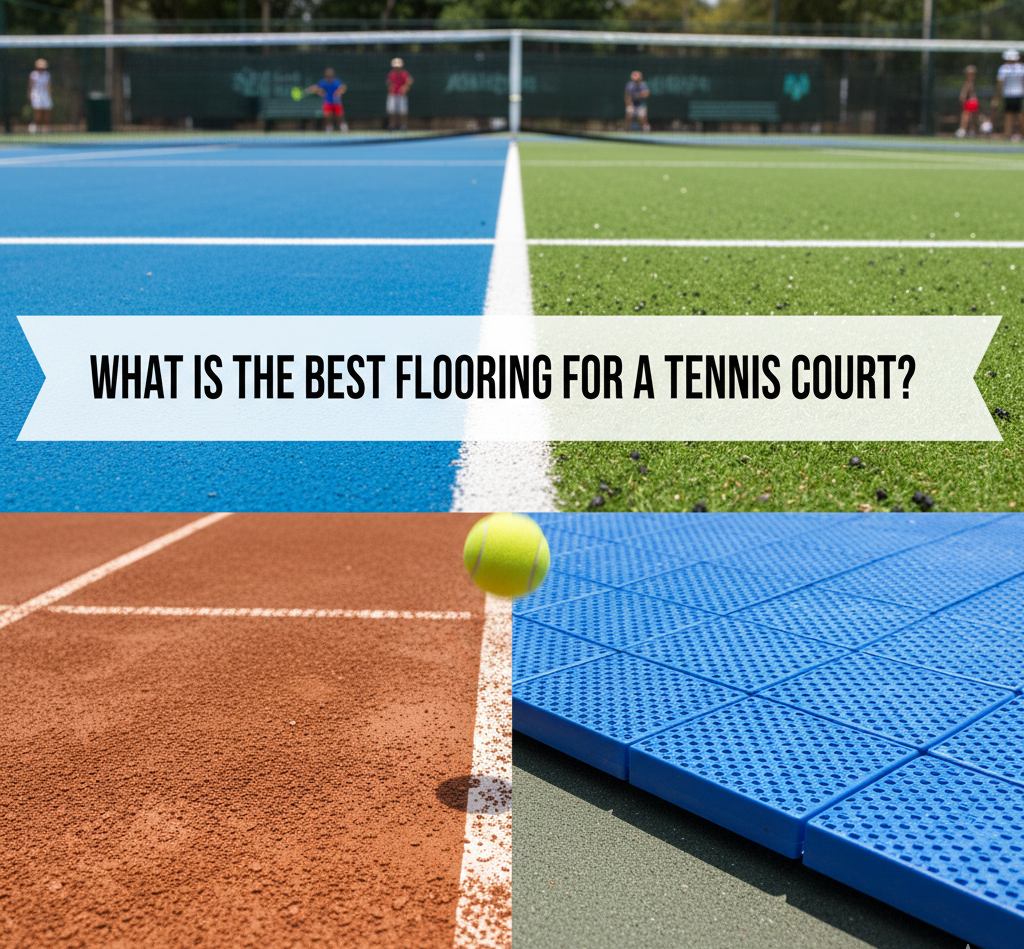
Tennis is a sport that demands precision, power, and strategy — but just as crucial as a player’s skill is the surface they play on. The type of flooring used for a tennis court determines everything from ball speed and bounce to player comfort and maintenance needs. Whether you’re building a court for a sports academy, school, club, or residential project, choosing the best flooring for a tennis court is essential for long-term performance and player satisfaction.
This guide explores the most popular tennis flooring types, compares their pros and cons, and helps you identify which surface is best for your facility in 2025 and beyond.
Why Choosing the Right Tennis Court Flooring Matters
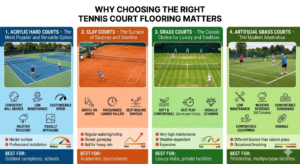
Selecting the right court flooring is not just about appearance — it directly impacts:
-
Gameplay speed (fast, medium, or slow surface)
-
Ball bounce quality and consistency
-
Player safety and injury prevention
-
Durability and maintenance cost
-
Weather performance and longevity
In short, the ideal tennis court surface should balance playability, comfort, durability, and cost-efficiency. Let’s look at the top flooring materials used worldwide and determine which one best suits your needs.
1. Acrylic Hard Courts – The Most Popular and Versatile Option
Overview
Acrylic hard courts are widely considered the best overall flooring for tennis courts, especially for outdoor use. Used in global tournaments like the US Open and Australian Open, these courts combine durability, performance, and aesthetic appeal.
They are constructed using multiple layers of acrylic coating over an asphalt or concrete base. This design offers a consistent bounce, smooth surface, and excellent weather resistance.
Benefits
-
Consistent Ball Bounce: Offers predictable ball response, ideal for all playing levels.
-
Low Maintenance: Minimal upkeep compared to clay or grass.
-
Customizable Speed: Surface can be adjusted for slow, medium, or fast play.
-
Weather Resistant: Withstands heat, rain, and UV exposure.
-
Visually Appealing: Available in a range of colors and textures.
Drawbacks
-
Harder surface may be tough on knees without cushioning.
-
Requires professional installation for best results.
Best For
Outdoor tennis courts, sports complexes, schools, and professional clubs.
2. Clay Courts – The Surface of Strategy and Stamina
Overview
Clay courts are known for their slow speed and high bounce, offering a unique style of play that emphasizes strategy, patience, and endurance. Famous for hosting the French Open, clay surfaces are made from crushed brick, shale, or stone compacted over a stable base.
These courts test a player’s technical skill and physical strength while reducing joint strain thanks to their softer surface.
Benefits
-
Gentle on Joints: The soft surface absorbs impact effectively.
-
Encourages Longer Rallies: Ideal for training and skill development.
-
Self-Healing Surface: Minor dents or scuffs can be easily smoothed out.
Drawbacks
-
Requires regular watering, rolling, and brushing.
-
Slower gameplay may not suit every player’s style.
-
Not ideal for regions with frequent rain.
Best For
Outdoor training academies, tennis schools, and professional tournaments.
3. Grass Courts – The Classic Choice for Luxury and Tradition
Overview
Grass courts represent the heritage and elegance of tennis, most famously showcased at Wimbledon. This natural surface provides fast gameplay and low ball bounce, demanding excellent reflexes and serve-and-volley skills.
Constructed on a soil base covered with natural grass, these courts offer a soft, comfortable feel but require high maintenance and care.
Benefits
-
Soft and Comfortable: Great for joints and quick movements.
-
Fast Play: Perfect for serve-and-volley players.
-
Visually Stunning: Green, natural appearance enhances aesthetics.
Drawbacks
-
Very high maintenance — mowing, watering, and reseeding needed regularly.
-
Weather-dependent; slippery when wet.
-
Expensive to install and maintain.
Best For
Luxury clubs, resorts, and private sports facilities seeking prestige and tradition.
4. Artificial Grass Courts – The Modern Alternative
Overview
Artificial grass has become a popular substitute for natural turf, offering similar aesthetics with less maintenance and greater durability. These courts are made from synthetic turf fibers filled with sand or rubber granules, providing medium-speed play and consistent bounce.
It’s a great choice for recreational and semi-professional environments where cost-effectiveness and year-round usability matter.
Benefits
-
Low Maintenance: No mowing or watering required.
-
Weather Resistant: Suitable for all climates.
-
Comfortable Cushioning: Reduces stress on joints and muscles.
-
Durable: Long-lasting surface for both indoor and outdoor courts.
Drawbacks
-
Slightly different bounce than natural grass.
-
Requires occasional brushing to maintain even infill.
Best For
Schools, residential societies, and multipurpose sports facilities.
5. Polyurethane (PU) Tennis Flooring – Comfort Meets Performance
Overview
PU tennis courts are seamless, cushioned surfaces that combine elasticity and resilience. Made from polyurethane resin over a rubber or asphalt base, they deliver high comfort, excellent grip, and consistent performance.
This surface type is especially popular in indoor or semi-outdoor environments where player comfort and versatility are priorities.
Benefits
-
Excellent Shock Absorption: Reduces player fatigue and injury risk.
-
Non-Slip Surface: Ideal for both wet and dry conditions.
-
Long Lifespan: Resistant to cracks, peeling, and fading.
-
Low Maintenance: Easy to clean and maintain.
Drawbacks
-
Slightly more expensive than acrylic.
-
Requires professional installation.
Best For
Indoor courts, professional training centers, and multi-sport facilities.
6. Modular Tile Courts – Fast, Flexible, and Portable
Overview
Modular tile systems are the most flexible tennis flooring solution available today. Made from polypropylene interlocking tiles, these courts can be installed over existing surfaces like concrete or asphalt.
They are ideal for temporary setups, events, or multi-sport areas, and provide moderate cushioning with good traction.
Benefits
-
Quick Installation: Can be set up and removed easily.
-
Durable and Weatherproof: Performs well in outdoor conditions.
-
Portable: Ideal for spaces requiring temporary sports setups.
Drawbacks
-
Less natural feel compared to acrylic or clay.
-
Requires a perfectly level sub-base.
Best For
Schools, community centers, portable event courts, and training areas.
How to Choose the Best Tennis Court Flooring
The right flooring depends on several important factors:
| Factor | Best Choice | Why |
|---|---|---|
| Outdoor Durability | Acrylic Hard Court | Weather-resistant and low maintenance |
| Indoor Comfort | Polyurethane (PU) | Cushioned and safe for joints |
| Luxury Look | Grass or Artificial Grass | Aesthetic appeal and premium feel |
| Budget-Friendly | Synthetic Acrylic | Cost-effective and long-lasting |
| Training Focus | Clay Court | Slower pace improves endurance and control |
Conclusion
When it comes to choosing the best flooring for a tennis court, there is no single “one-size-fits-all” answer. However, in 2025, the most balanced and popular option remains the acrylic hard court system — especially for outdoor facilities. It combines durability, consistency, and affordability, while offering excellent playability across all skill levels.
FAQ: What Is the Best Flooring for a Tennis Court?
1. What is the best flooring for a tennis court?
The best flooring depends on the level of play, budget, maintenance capacity, and climate. The most popular options are:
-
Hard courts (acrylic or concrete base)
-
Clay courts
-
Grass courts
-
Synthetic or cushioned surfaces
For most residential, school, and club courts, acrylic hard courts are considered the best overall due to durability, moderate cost, and low maintenance.
2. What are the different types of tennis court surfaces?
There are four main types:
Hard Courts
-
Made from asphalt or concrete with acrylic coating
-
Medium-fast playing speed
-
Used in the US Open and Australian Open
-
Low maintenance and long lifespan
Clay Courts
-
Made from crushed brick, shale, or stone
-
Slower playing speed
-
Used in the French Open
-
Requires high maintenance (watering and rolling)
Grass Courts
-
Natural grass surface
-
Fastest playing speed
-
Used in Wimbledon
-
Very high maintenance
Synthetic / Artificial Turf
-
Synthetic grass with sand infill
-
Lower maintenance than natural grass
-
Good for clubs and multi-purpose facilities
3. Which surface is best for beginners?
Hard courts are best for beginners because:
-
They provide consistent ball bounce
-
Require less maintenance
-
Are suitable for all playing styles
Cushioned acrylic surfaces are especially helpful as they reduce stress on joints.
4. Which tennis court surface lasts the longest?
Hard courts typically last 10–15 years with proper maintenance.
Clay and grass require frequent upkeep and resurfacing.
5. What is the most affordable tennis court flooring?
Hard courts (asphalt base with acrylic coating) are usually the most cost-effective option in terms of installation and long-term maintenance.
6. Which surface is best for professional tournaments?
It depends on the playing style and tournament tradition:
-
Hard courts dominate global tournaments.
-
Clay courts favor baseline players.
-
Grass courts reward serve-and-volley players.
Each surface creates a unique style of play.