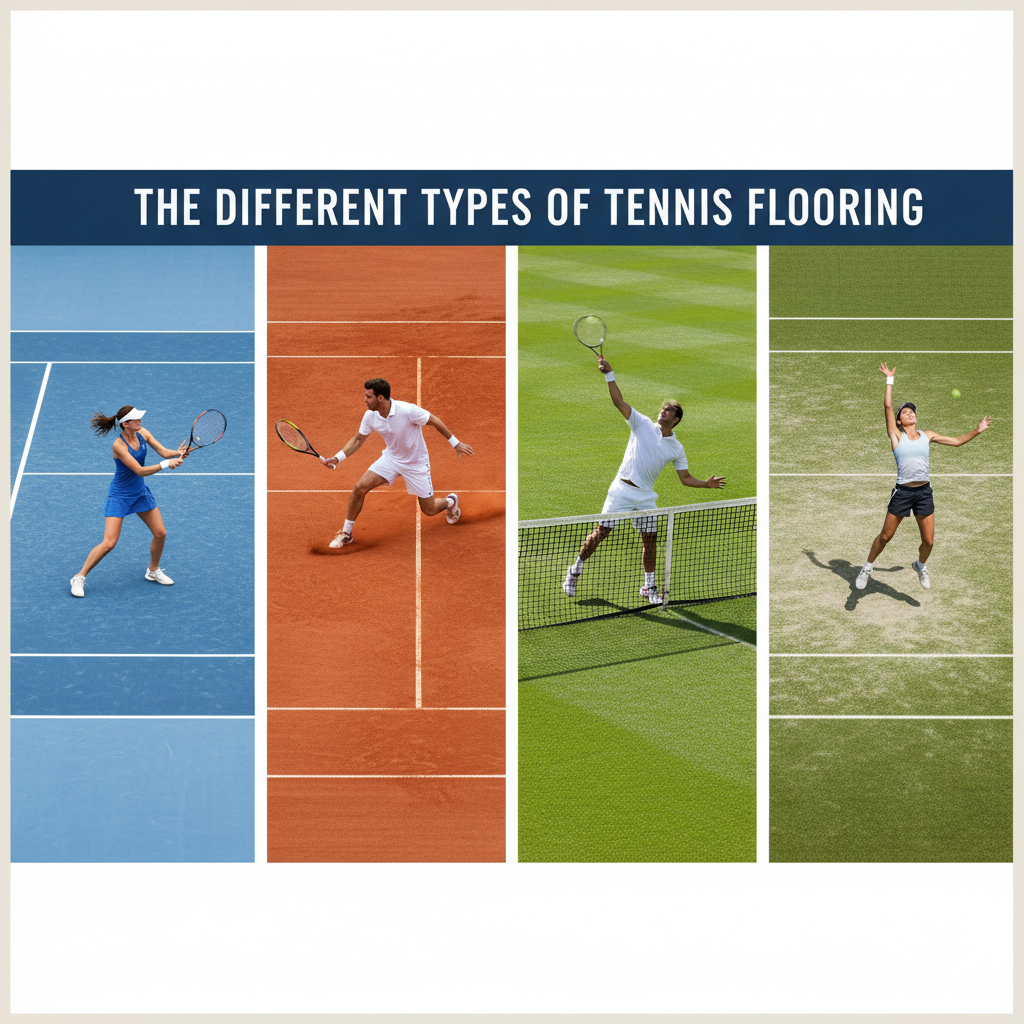
When it comes to building a tennis court, one of the most crucial decisions you’ll make is choosing the right tennis flooring surface. The surface type not only impacts the speed, bounce, and playability of the game but also affects player comfort, safety, and maintenance requirements.
From professional tournaments to residential or school courts, each type of tennis flooring offers a unique set of features and benefits. In this guide, we’ll explore the different types of tennis flooring, how they’re constructed, and which surface is best suited for your needs.
1. Hard Court Flooring
Overview
Hard courts are the most common and versatile type of tennis flooring. Used in global tournaments such as the US Open and Australian Open, these courts offer a medium-fast surface that provides consistent bounce and supports a wide variety of playing styles.
They’re typically built using a concrete or asphalt base topped with multiple layers of acrylic coating or polyurethane resin. These coatings not only add color but also improve grip, cushioning, and ball response.
Advantages
-
Consistent and predictable bounce.
-
Low maintenance and long lifespan.
-
Suitable for both professional and recreational play.
-
Can be used both indoors and outdoors.
Disadvantages
-
Hard on joints without proper cushioning.
-
Surface temperature can rise in hot weather.
Ideal For
Public sports complexes, tennis academies, schools, and private clubs looking for a durable, all-round surface.
2. Clay Court Flooring
Overview
Clay courts are loved for their slow playing speed and high bounce, promoting longer rallies and a more strategic game. The French Open is the most famous example of clay court play.
Clay courts are constructed using natural materials like crushed brick, shale, or stone layered over a compacted base. They require regular maintenance but offer a unique playing experience that encourages stamina and precision.
Advantages
-
Excellent shock absorption and joint protection.
-
Encourages longer rallies and tactical play.
-
Surface “self-heals” as it can be easily leveled after play.
Disadvantages
-
High maintenance – needs regular watering and rolling.
-
Not ideal for indoor or humid climates.
-
Slower gameplay may not suit all players.
Ideal For
Professional academies, training centers, and outdoor facilities in dry climates.
3. Grass Court Flooring
Overview
Grass courts are the original and most traditional type of tennis flooring. Known for their fast, low-bounce surface, they favor serve-and-volley players and demand quick reflexes. Wimbledon, the world’s most prestigious tournament, is played on grass courts.
These courts are constructed over a natural soil base, with a carefully maintained layer of real grass that needs constant upkeep.
Advantages
-
Fast surface for high-paced games.
-
Soft and easy on the joints.
-
Elegant, classic appearance.
Disadvantages
-
Extremely high maintenance (watering, mowing, reseeding).
-
Expensive to install and maintain.
-
Performance can vary with weather.
Ideal For
Luxury resorts, high-end clubs, or traditional tennis enthusiasts seeking premium aesthetics and authentic play.
4. Synthetic Acrylic Flooring
Overview
Acrylic tennis flooring is an advanced form of hard court construction. It uses multiple layers of synthetic acrylic material applied over an asphalt or concrete base, creating a smooth, durable, and cushioned surface.
These courts can be customized for speed — from slow training surfaces to fast professional courts — by adjusting the thickness and number of acrylic layers.
Advantages
-
Uniform bounce and speed control.
-
Long-lasting and weather-resistant.
-
Minimal maintenance and easy cleaning.
-
Suitable for all weather conditions.
Disadvantages
-
Can become slippery if not properly maintained.
-
Slightly more expensive than traditional asphalt courts.
Ideal For
Professional tennis centers, sports clubs, and public facilities looking for long-term performance and low upkeep.
5. Artificial Grass Tennis Flooring
Overview
For those who love the aesthetics of a natural turf court but prefer lower maintenance, artificial grass tennis courts are a perfect choice.
Constructed from synthetic fibers with a sand or rubber infill, these courts replicate the look and feel of natural grass while being far easier to maintain. They provide a medium-fast surface with a comfortable, cushioned feel underfoot.
Advantages
-
Low maintenance — no watering or mowing needed.
-
Suitable for all-weather use.
-
Comfortable and safe for players.
-
Visually appealing and long-lasting.
Disadvantages
-
Bounce slightly differs from real grass.
-
Needs periodic brushing to maintain consistency.
Ideal For
Residential complexes, clubs, schools, and multi-sport facilities.
6. Carpet and Modular Tile Flooring
Overview
Carpet or modular interlocking tile systems are popular for indoor or temporary tennis courts. These portable floors are made from synthetic materials and can be easily assembled, removed, or relocated.
They offer consistent bounce, comfortable cushioning, and great grip, making them a preferred option for indoor training centers and event-based courts.
Advantages
-
Quick installation and portability.
-
Good cushioning and grip.
-
Can be used for multi-sport applications.
Disadvantages
-
Not suitable for outdoor permanent courts.
-
Needs a stable sub-base for durability.
Ideal For
Indoor tennis academies, temporary sports setups, and multipurpose gymnasiums.
7. Polyurethane (PU) Sports Flooring
Overview
PU tennis flooring is a high-performance, multi-layered surface designed for indoor or semi-outdoor courts. It combines durability, flexibility, and excellent shock absorption.
The PU coating is laid over an elastic base mat, offering a comfortable playing surface that reduces fatigue and enhances traction.
Advantages
-
High resilience and cushioning.
-
Excellent grip and comfort.
-
Long-lasting and low maintenance.
-
Suitable for both recreational and competitive play.
Disadvantages
-
Higher installation cost compared to acrylic surfaces.
-
Requires professional installation for best results.
Ideal For
Indoor sports complexes, professional clubs, and universities.
8. Cushioned Tennis Court Flooring
Overview
Cushioned tennis courts are an enhanced version of acrylic surfaces that include shock-absorbing layers beneath the top coating. These layers improve comfort, reduce impact on joints, and extend playtime without fatigue.
Advantages
-
Superior comfort and injury prevention.
-
Customizable cushioning levels.
-
Great for training centers and long practice sessions.
Disadvantages
-
Slightly higher cost.
-
May require expert maintenance for longevity.
Ideal For
Tennis academies, rehabilitation centers, and clubs focusing on player safety.
Choosing the Right Tennis Flooring
When selecting the best tennis flooring, consider the following factors:
-
Purpose of the court: Professional, training, or recreational use.
-
Location: Indoor or outdoor.
-
Climate conditions: Rain, humidity, or temperature extremes.
-
Maintenance capacity: Availability of staff and budget.
-
Budget: Initial cost vs. long-term upkeep.
-
Player comfort: Cushioning, traction, and injury prevention.
For example:
-
Choose acrylic or PU flooring for a professional setup.
-
Select artificial grass for aesthetic, low-maintenance facilities.
-
Opt for clay courts for endurance training and slow rallies.
Conclusion
Tennis flooring has evolved significantly — from the natural grass of the 19th century to today’s advanced synthetic and cushioned surfaces. Each surface type offers a different playing experience, maintenance requirement, and aesthetic appeal.
(FAQ) – The Different Types of Tennis Flooring
1. What are the main types of tennis court flooring?
The most common types of tennis flooring are:
-
Acrylic / Hard Court: Durable, low maintenance, and suitable for outdoor play.
-
Cushioned Acrylic: Provides shock absorption for player comfort and reduces joint stress.
-
Clay Court: Traditional surface that offers slower ball speed and soft impact, popular in Europe and for training.
-
Grass Court: Natural surface with fast ball bounce, typically used in professional tournaments like Wimbledon.
-
Synthetic / Modular Courts: Prefabricated panels for easy installation and maintenance, suitable for indoor or multi-use facilities.
-
Rubber Flooring: Shock-absorbing and anti-slip surface, ideal for training and high-frequency use.
2. What are the advantages of acrylic/hard courts?
-
Durable and long-lasting
-
Low maintenance
-
Provides consistent ball bounce
-
Suitable for all weather conditions
3. Why choose cushioned acrylic tennis flooring?
-
Reduces impact on knees and joints
-
Offers comfort for professional training or frequent use
-
Maintains excellent ball bounce and surface durability
4. What are the benefits of clay courts?
-
Soft on joints and reduces injury risk
-
Slower ball speed allows longer rallies and better training
-
Requires regular maintenance like rolling, watering, and line marking
5. Are grass courts suitable for regular use?
Grass courts offer fast ball speed and low bounce, making them ideal for professional or tournament play. However:
-
High maintenance requirements (watering, mowing, and rolling)
-
Not ideal for heavy daily use
6. What are synthetic/modular tennis courts?
-
Made of prefabricated panels (PVC, rubber, or synthetic materials)
-
Quick and easy to install
-
Can be indoor or outdoor
-
Low maintenance and durable
7. What are the advantages of rubber tennis flooring?
-
Excellent shock absorption and anti-slip surface
-
Reduces injuries from hard landings
-
Durable and long-lasting
-
Can be customized with colors and cushioning thickness
8. How do I choose the right tennis flooring?
Consider the following factors:
-
Usage frequency: Recreational, training, or professional use
-
Player comfort: Cushioned or rubber floors reduce stress on joints
-
Climate and weather: Acrylic and synthetic surfaces handle weather well, clay requires more care
-
Budget: Maintenance and installation costs vary by surface type
9. How long does each type of tennis flooring last?
-
Acrylic/hard courts: 8–12 years
-
Cushioned acrylic: 10–12 years
-
Clay courts: 5–8 years with proper upkeep
-
Grass courts: 3–5 years (high maintenance)
-
Synthetic/modular: 10+ years
-
Rubber flooring: 10–15 years
10. Do all types of tennis flooring require maintenance?
Yes, but maintenance varies:
-
Acrylic & cushioned courts: Cleaning, resurfacing, repainting lines
-
Clay courts: Daily brushing, watering, rolling, and line maintenance
-
Grass courts: Frequent mowing, watering, and rolling
-
Synthetic/modular: Light cleaning and occasional inspection
-
Rubber flooring: Sweeping, cleaning, and checking for cracks or damage