Whether you’re planning a new court or upgrading an existing one, 2025 offers some exciting developments in badminton court flooring materials and technology. Let’s explore the top trends shaping flooring choices, followed by some standout product picks you can evaluate for your project.
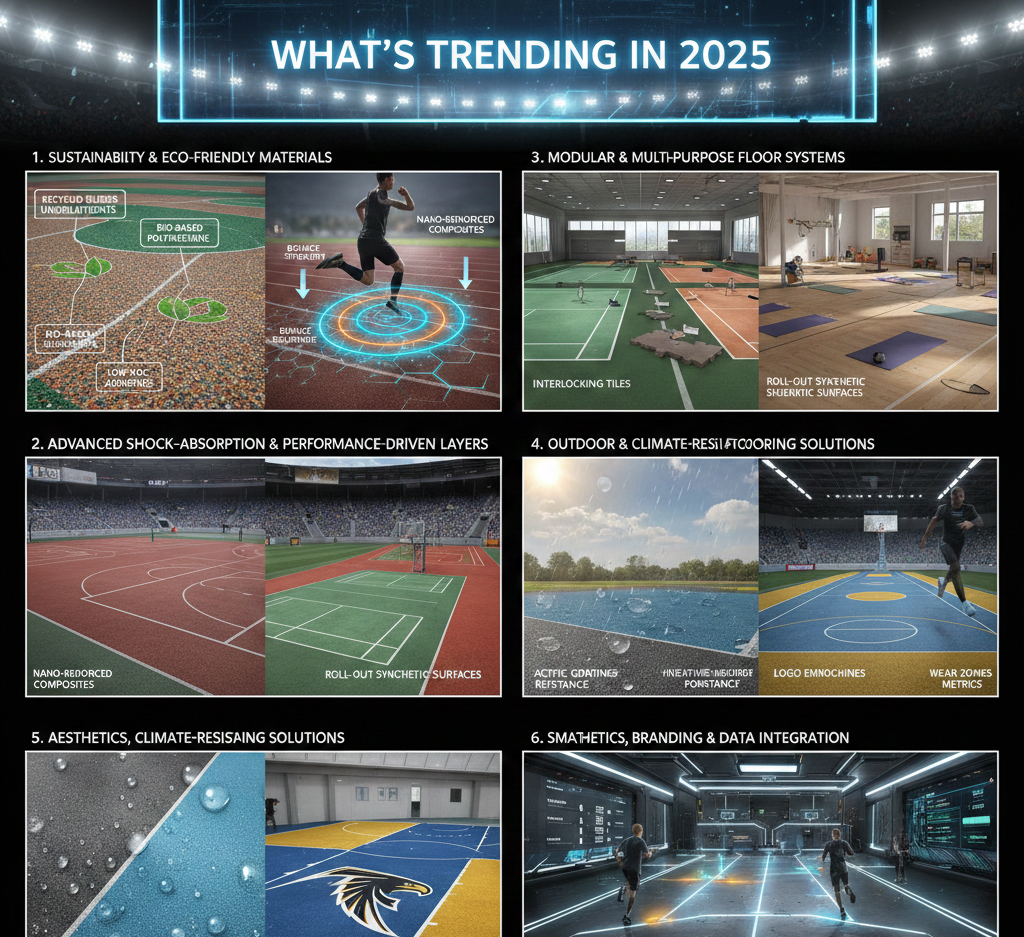
What’s Trending in 2025
1. Sustainability & Eco-Friendly Materials
A clear trend: sports flooring makers are shifting to greener options. Eco-friendly materials such as recycled rubber underlayments, bio-based polyurethane systems, low-VOC adhesives/coatings are becoming standard.
For example: use of recycled content in synthetic floors and reduced chemical emissions during installation.
This matters especially in places focusing on green building certifications or where indoor air quality is a concern.
2. Advanced Shock-Absorption & Performance-Driven Layers
Player safety and comfort are driving innovation. Flooring systems now incorporate multi-layer cushioning, optimized shock absorption, and improved energy return for rapid movements.
A recent review highlighted “nano-reinforced composites” that boost wear resistance, impact strength and bounce resilience
If you’re installing a court for regular training or competitive use, this trend means you can expect a more forgiving floor.
3. Modular & Multi-Purpose Floor Systems
With space constraints or multi-sport venues, modular and convertible flooring is gaining traction. Floors that can switch between badminton, volleyball, indoor-games or community use help maximize venue utility.
Interlocking tiles, roll-out synthetic surfaces, quick installation systems are being adopted for flexibility.
This is particularly useful for schools, clubs, residential complexes where the same hall needs multiple uses.
4. Outdoor & Climate-Resistant Flooring Solutions
Especially in places with heavy weather variation (sun, rain, humidity), traditional indoor flooring types may underperform. In 2025, there is a marked shift toward flooring that survives outdoor exposure while still delivering performance.
For example: acrylic coatings over concrete/asphalt bases for outdoor badminton courts offer weather resistance and consistent play
If you’re building in a humid or outdoor environment (like many locations in India), this may be a major deciding factor.
5. Aesthetics, Branding & Customization
Flooring isn’t just about function anymore—it’s also part of the venue experience. 2025 trends show emphasis on: custom color schemes, logos embedded in the floor, matte finishes, tailored zone-markings and even smart flooring.
This is good if you want your facility to have a distinct identity (school court, club court, community etc).
6. Smart Flooring & Data Integration
Though more niche, smart sports flooring is emerging: floors embedded with sensors that monitor load, athlete movement, detect wear zones or highlight training metrics
While still relatively new in badminton-specific applications, it’s worth considering if you run an academy or high-performance facility.
🎯 Must-Know Flooring Picks for 2025
Here are some good product options you might evaluate for your badminton court (covering indoor/outdoor, budget/premium).


Here’s my commentary on each:
-
Wooden Sports Flooring – Maple Hardwood: This is the premium indoor choice. Ideal for high-level play, academies. Offers excellent bounce and feel. Higher cost and maintenance though.
-
PVC/Vinyl Roll Badminton Court Flooring: Very solid indoor option. Easier installation, good performance, lower maintenance than hardwood.
-
5 mm Synthetic Badminton Court Flooring Roller: A cost-effective synthetic option suitable for training courts, smaller gyms. Good value.
-
Badminton Court Mat Flooring: Budget friendly. Perhaps less premium in performance but could serve recreational setups.
-
Luxury Vinyl/Modular Multi‑Sport Tiles: Great for multi-sport venues. Flexible, modular, useful if you want to convert space for other sports.
-
General Badminton Court Flooring – Synthetic Condition: A general synthetic flooring solution that could fit many setups between budget & premium.
-
Outdoor Acrylic/Interlocking Court Tiles: (Note: same reference reused) This signals outdoor-friendly surfaces—good for exposed courts.
-
Budget Synthetic Badminton Flooring 5 mm: Another budget indoor variant for cost-sensitive projects.
✅ How to Choose Based on Your Needs
Here’s a quick decision matrix for 2025:
-
Indoor vs Outdoor: If indoors, you can go hardwood or high-grade synthetic. If outdoor or semi-outdoor: acrylic or modular weather-resistant systems.
-
Usage level: For frequent training or competition: choose premium material with high shock absorption. For casual/recreational: synthetics or budget options suffice.
-
Budget & lifecycle cost: Consider upfront cost + maintenance cost + lifespan. Premium flooring costs more but often lasts longer and demands less frequent replacement.
-
Facility flexibility: Need the court for multiple sports or events? Modular or multi-sport surfaces give you that flexibility.
-
Climate conditions: In places with high humidity, heavy rain, or strong sun (like many Indian cities) pick flooring with weather, UV, moisture resistance. Acrylic surfaces do well here.
-
Branding & aesthetics: Want your court to stand out? Choose flooring that supports custom colours, logos, finishes.
-
Sustainability: If you need green certification or want a low environmental footprint—look for low-VOC, recycled content flooring systems.
📝 Final Thought
In 2025, the best badminton court flooring isn’t just about the material—it’s about performance, flexibility, environment, and lifespan. Some key standouts:
-
Premium indoor: Hardwood remains top tier.
-
Versatile indoor: Synthetic roll or modular flooring.
-
Outdoor/exposed: Acrylic or modular interlocking weather-resistant systems.
-
Multi-purpose: Modular and convertible flooring systems grab value where usage changes
-
Frequently Asked Questions (FAQ – Trending Badminton Floor 2025)
1. What are the top badminton flooring trends for 2025?
Key trends include sustainable materials, advanced shock absorption, smart flooring technologies, customizable designs, and multi‑sport performance surfaces tailored for modern facilities.
2. Why is sustainability a big trend in badminton flooring?
Manufacturers are increasingly using recycled and eco‑friendly materials, reducing VOC emissions and supporting green building standards — a response to environmental concerns and facility‑level sustainability goals.
3. What materials are popular for badminton flooring in 2025?
Trending options include:
-
PVC/Vinyl – affordable, easy‑install, low‑maintenance.
-
PU (Polyurethane) – seamless, durable, strong shock absorption.
-
Wooden flooring – top choice for professional indoor courts with excellent bounce and feel.
-
Acrylic & synthetic surfaces – durable outdoor solutions with good grip/resilience.
4. Are smart technologies being used in badminton floors?
Yes. Flooring with embedded sensors that can track player movement, impact, and performance patterns is gaining traction, helping coaches and players enhance training and reduce injury risk.
5. How is design evolving in badminton flooring?
Customization is trending — courts are now available in custom colours, branding themes, and unique patterns, boosting aesthetics and facility identity.
6. What performance features are being prioritized?
Modern badminton flooring emphasizes:
-
Improved shock absorption to protect joints and reduce fatigue.
-
Slip resistance for safer movements.
-
Moisture‑resistant coatings for durability.
7. Are there flooring options suitable for outdoor courts?
Yes — acrylic and weather‑resistant synthetic surfaces are trending for outdoor badminton courts, offering UV resistance, low‑maintenance, and year‑round playability.
8. What role does multi‑sport functionality play in 2025?
Venues increasingly choose multi‑sport flooring systems that support badminton as well as other indoor games like basketball or volleyball, maximizing utility and ROI.
9. How important is certification and compliance?
Badminton facilities often seek BWF‑approved flooring to meet international competition standards, ensuring performance, safety, and official compliance.
10. What should facility owners consider when choosing trending flooring?
Consider:
Usage intensity (professional vs. training)
Budget and lifecycle costs
Maintenance requirements
Sustainability goals
Performance and safety standards
These factors help match the right trending flooring option to your project needs.