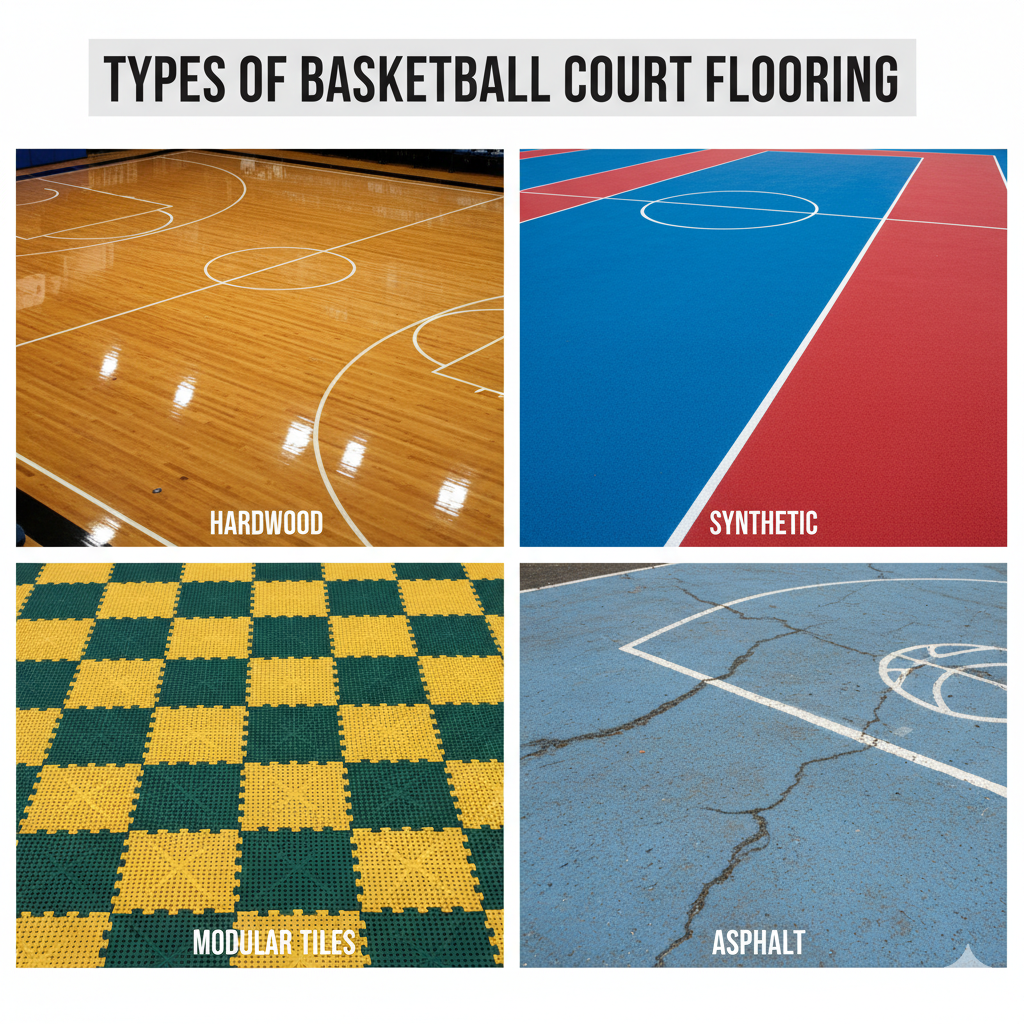
Basketball is more than just a game—it’s a sport of precision, speed, and power. Every dribble, jump, and shot depends not only on skill but also on the surface beneath the players’ feet. The right basketball court flooring ensures proper bounce, reduces injury risks, and enhances overall game performance. From professional arenas to school playgrounds, the choice of flooring greatly influences gameplay quality, durability, and maintenance needs.
If you’re planning to build or renovate a basketball court, understanding the different types of basketball court flooring is essential. In this guide, we’ll explore the various materials used for both indoor and outdoor courts, their features, advantages, and suitability—helping you make an informed choice for your facility.
Importance of Choosing the Right Basketball Flooring
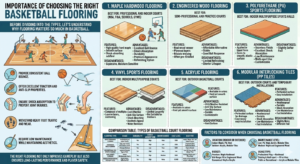
Before diving into the types, let’s understand why flooring matters so much in basketball.
A basketball court experiences intense activity—running, jumping, sliding, and quick directional changes. Hence, the surface must:
-
Provide consistent ball bounce.
-
Offer excellent traction and anti-slip properties.
-
Ensure shock absorption to prevent joint injuries.
-
Withstand heavy foot traffic and wear.
-
Require low maintenance while maintaining aesthetics.
The right flooring not only improves gameplay but also ensures long-lasting performance and player safety.
Main Types of Basketball Court Flooring
Basketball court flooring is broadly divided into indoor and outdoor categories. Indoor floors focus on elasticity, comfort, and aesthetics, while outdoor floors prioritize durability and weather resistance.
Below are the most commonly used types of basketball court flooring:
1. Maple Hardwood Flooring
Best for: Professional and indoor courts (NBA, FIBA, schools, gyms)
Maple hardwood is the traditional and most prestigious basketball flooring material. It’s the official choice of professional leagues due to its superior performance characteristics.
Features:
-
Made from high-quality hard maple wood.
-
Offers a smooth, consistent surface with a natural finish.
-
Typically includes a shock-absorbing subfloor system beneath the planks.
Advantages:
-
Excellent Ball Bounce: Ensures uniform rebound and game consistency.
-
Shock Absorption: Protects knees and ankles from impact.
-
Durability: Can last over 25 years with proper care.
-
Premium Appearance: Professional, glossy surface.
-
Refinishing Option: Can be sanded and polished multiple times.
Disadvantages:
-
Expensive: Higher initial cost and maintenance.
-
Moisture Sensitive: Can expand or warp if exposed to humidity.
Ideal For:
Indoor stadiums, professional training centers, and sports academies seeking world-class standards.
2. Engineered Wood Flooring
Best for: Semi-professional and practice courts
Engineered wood is a cost-effective alternative to solid maple. It combines real wood veneer with layers of plywood or fiberboard for enhanced stability and reduced moisture sensitivity.
Features:
-
Retains the wooden appearance but resists warping better.
-
Often pre-finished and easy to install.
Advantages:
-
Affordable Alternative: Offers similar look and performance to hardwood.
-
Stable: Better resistance to temperature and humidity changes.
-
Good Ball Response: Suitable for training and competitive play.
Disadvantages:
-
Limited Refinishing: Only a few sanding cycles possible.
-
Shorter Lifespan: Compared to solid wood.
Ideal For:
Indoor basketball courts in schools, universities, or recreation centers.
3. Polyurethane (PU) Sports Flooring
Best for: Indoor multipurpose sports halls
PU (Polyurethane) is a seamless, synthetic flooring system used for both basketball and other indoor sports. It provides a balance of comfort, flexibility, and durability.
Features:
-
Applied in liquid form over a concrete base.
-
Cures into a smooth, elastic surface.
Advantages:
-
Seamless Finish: No joints or gaps.
-
Excellent Shock Absorption: Reduces impact injuries.
-
Low Maintenance: Easy to clean and maintain.
-
Multi-sport Use: Ideal for facilities hosting different games.
-
Customizable: Available in various colors and thicknesses.
Disadvantages:
-
Slightly Softer Feel: Ball bounce may differ from wood.
Ideal For:
Indoor sports complexes, schools, and community centers.
4. Vinyl Sports Flooring
Best for: Indoor multipurpose courts
Vinyl is a PVC-based synthetic surface that combines affordability with performance. It’s versatile, shock-absorbent, and easy to maintain.
Features:
-
Composed of multiple layers: wear layer, foam layer, and backing.
-
Offers cushioning and comfort underfoot.
Advantages:
-
Cost-Effective: Affordable installation and maintenance.
-
Anti-Slip Surface: Improves safety during play.
-
Shock Absorbing: Reduces strain on players’ joints.
-
Aesthetic Appeal: Can replicate wooden designs.
-
Water Resistant: Ideal for indoor environments.
Disadvantages:
-
Limited Longevity: May wear out sooner than wood or PU.
-
Not Suitable for Outdoors: Can be damaged by sunlight and heat.
Ideal For:
School gyms, training courts, and multipurpose indoor sports halls.
5. Acrylic Flooring
Best for: Outdoor basketball courts
Acrylic is a weather-resistant synthetic coating used on concrete or asphalt bases. It’s durable, affordable, and commonly seen in parks, schools, and residential playgrounds.
Features:
-
Available in different color combinations.
-
Provides a hard yet smooth playing surface.
Advantages:
-
UV & Weather Resistant: Suitable for all climates.
-
Anti-Slip Surface: Ensures safe play even in wet conditions.
-
Low Maintenance: Simple cleaning and periodic recoating.
-
Durable: Long lifespan with minimal cracking.
-
Customizable: Available in various thicknesses and designs.
Disadvantages:
-
Hard Surface: Limited shock absorption compared to indoor materials.
Ideal For:
Outdoor courts in schools, housing complexes, and public sports parks.
6. Modular Interlocking Tiles (PP Tiles)
Best for: Outdoor courts and temporary installations
Made from high-impact polypropylene (PP), these modular tiles are interlocked to form a flexible sports surface.
Features:
-
Perforated surface allows water drainage.
-
Quick and easy installation—no adhesives needed.
Advantages:
-
Weatherproof: Handles rain, heat, and UV exposure.
-
Portable: Can be relocated or expanded.
-
Shock Absorption: Protects players from injuries.
-
Low Maintenance: Individual tiles can be replaced easily.
-
Fast Installation: Ideal for quick setups.
Disadvantages:
-
Slightly Noisy: Tiles may create sound under impact.
-
Different Feel: Not as smooth as wooden floors.
Ideal For:
Outdoor recreational courts, community sports zones, or events requiring temporary courts.
Comparison Table: Types of Basketball Court Flooring
| Flooring Type | Usage | Durability | Shock Absorption | Maintenance | Cost Level | Best For |
|---|---|---|---|---|---|---|
| Maple Hardwood | Indoor | Very High | Excellent | Medium | High | Professional arenas |
| Engineered Wood | Indoor | High | Very Good | Medium | Medium | Training courts |
| PU Flooring | Indoor | High | Excellent | Low | Medium | Multipurpose halls |
| Vinyl Flooring | Indoor | Moderate | Good | Low | Low | School gyms |
| Acrylic Flooring | Outdoor | Very High | Moderate | Low | Low | Outdoor courts |
| Modular PP Tiles | Outdoor | Very High | Good | Very Low | Medium | Community setups |
Factors to Consider When Choosing Basketball Flooring
-
Location (Indoor or Outdoor):
-
Indoor: Maple, PU, Vinyl
-
Outdoor: Acrylic, Modular Tiles
-
-
Budget:
-
Premium: Maple Hardwood
-
Mid-Range: PU or Engineered Wood
-
Economical: Vinyl or Acrylic
-
-
Maintenance Level:
-
Low: PU, Vinyl, Acrylic, Modular Tiles
-
Medium: Maple and Engineered Wood
-
-
Usage Type:
-
Professional Play → Hardwood
-
Training & Multi-sport → PU or Vinyl
-
Public or Recreational → Acrylic or Modular Tiles
-
Maintenance Tips for Long-Lasting Basketball Courts
-
Clean Regularly: Remove dust and debris to maintain traction.
-
Avoid Water Logging: Especially on wooden and acrylic surfaces.
-
Use Non-Marking Shoes: Prevent scuffing and scratches.
-
Inspect Periodically: Fix cracks or damaged areas early.
-
Resurface When Needed: Extend the lifespan with timely maintenance.
Conclusion
The type of basketball court flooring you choose defines not just the court’s appearance but also its performance, safety, and lifespan.
-
For indoor professional setups, maple hardwood remains the ultimate choice for superior gameplay and aesthetics.
-
For multipurpose or training centers, PU or vinyl flooring offers versatility and cost-effectiveness.
-
For outdoor environments, acrylic surfaces or modular PP tiles provide weather resistance and easy maintenance.