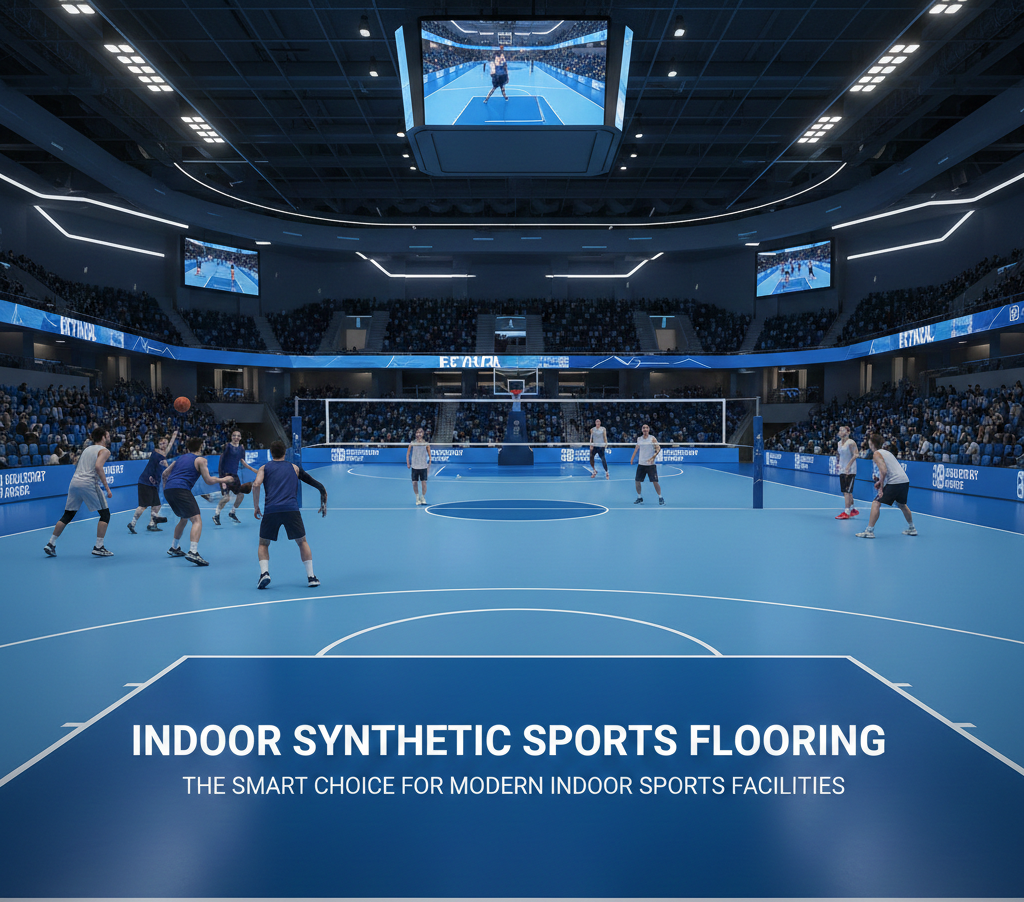
Indoor sports facilities today demand more than just functional surfaces. Performance, safety, durability, and aesthetics all play a crucial role in creating an environment that supports athletes, trainers, and facility owners alike. This is where indoor synthetic sports flooring has emerged as the preferred solution for modern sports infrastructure.
From schools and colleges to professional sports academies, gyms, and multipurpose recreation centers, synthetic sports flooring offers consistent playability, long-term value, and minimal maintenance. Engineered using advanced materials and technologies, these flooring systems are designed to meet international standards while delivering superior comfort and performance.
This blog explores what indoor synthetic sports flooring is, where it is used, its advantages, installation process, flooring types, maintenance needs, and why it has become the go-to solution for indoor sports environments.
What Is Indoor Synthetic Sports Flooring?
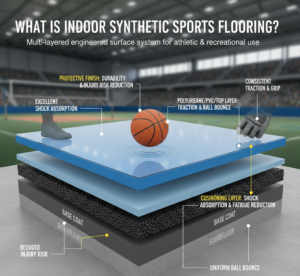
Indoor synthetic sports flooring is a multi-layered, engineered surface system designed specifically for indoor athletic and recreational use. Unlike traditional concrete or wooden floors, synthetic flooring systems are manufactured using materials such as polyurethane (PU), polyvinyl chloride (PVC), vinyl, rubber, and acrylic compounds.
These materials are combined with cushioning layers, base coats, and protective finishes to create a seamless, resilient surface that delivers:
-
Excellent shock absorption
-
Consistent traction and grip
-
Reduced fatigue and injury risk
-
Uniform ball bounce
-
Long-term durability
The result is a smooth, high-performance surface that supports a wide range of indoor sports and activities while maintaining visual appeal.
Applications of Indoor Synthetic Sports Flooring
Indoor synthetic sports flooring is highly versatile and can be used across a wide range of indoor facilities and sports disciplines.
Common Applications Include:
-
Indoor badminton courts
-
Indoor basketball and volleyball courts
-
Table tennis and squash halls
-
Gymnasiums and fitness centers
-
School and college indoor sports complexes
-
Multipurpose sports halls
-
Indoor futsal, skating, and training areas
Whether the requirement is a single-purpose court or a fully integrated multi-sport complex, synthetic flooring provides flexibility, performance, and safety across all applications.
Why Choose Indoor Synthetic Sports Flooring?
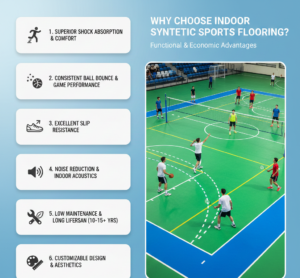
The growing popularity of synthetic flooring is driven by its numerous functional and economic advantages.
1. Superior Shock Absorption and Player Comfort
One of the most important benefits of indoor synthetic sports flooring is its ability to absorb impact. Cushioned layers beneath the surface reduce stress on joints, muscles, and ligaments, making it ideal for high-intensity sports and long training sessions.
This feature significantly lowers the risk of injuries and enhances overall player comfort.
2. Consistent Ball Bounce and Game Performance
Synthetic flooring systems are engineered to provide uniform surface response. This ensures consistent ball rebound, which is critical for sports such as badminton, basketball, volleyball, and futsal.
Players benefit from predictable movement and fair gameplay across the entire court.
3. Excellent Slip Resistance
Indoor synthetic floors are designed with anti-slip properties that maintain grip even under humid or sweaty conditions. This controlled friction allows athletes to move confidently, change direction quickly, and stop safely during intense play.
4. Noise Reduction and Indoor Acoustics
Synthetic flooring helps absorb impact noise and reduces echo within enclosed spaces. This improves the overall acoustic environment of indoor sports halls, making them more comfortable for players, coaches, and spectators.
5. Low Maintenance and Long Lifespan
Compared to wooden or natural surfaces, synthetic sports flooring requires minimal maintenance. Regular cleaning is usually sufficient to maintain both appearance and performance.
With proper care, high-quality synthetic flooring systems can last 10–15 years or more, making them a cost-effective long-term investment.
6. Customizable Design and Aesthetics
Indoor synthetic sports flooring is available in a wide range of colors, textures, thicknesses, and finishes. Court markings can be customized for single or multiple sports, allowing facility owners to tailor the surface to branding or usage requirements.
Types of Indoor Synthetic Sports Flooring
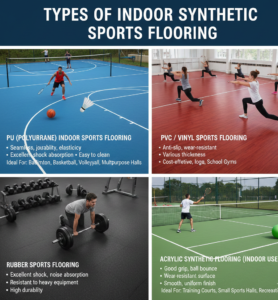
Different sports and facilities require different flooring solutions. The most common types of indoor synthetic sports flooring include:
PU (Polyurethane) Indoor Sports Flooring
PU flooring is one of the most popular choices for indoor sports.
Key Features:
-
Seamless and joint-free surface
-
High durability and elasticity
-
Excellent shock absorption
-
Easy to clean and maintain
Ideal For:
-
Badminton courts
-
Basketball and volleyball courts
-
Multipurpose indoor halls
PVC / Vinyl Sports Flooring
PVC or vinyl flooring systems are flexible, affordable, and widely used in indoor facilities.
Key Features:
-
Anti-slip and wear-resistant
-
Available in various thicknesses
-
Cost-effective and long-lasting
Ideal For:
-
Badminton courts
-
Aerobics and yoga studios
-
School sports halls and gyms
Rubber Sports Flooring
Rubber flooring is designed for impact-heavy environments.
Key Features:
-
Excellent shock and noise absorption
-
Resistant to heavy equipment
-
High durability
Ideal For:
-
Gymnasiums
-
Fitness and training zones
-
Strength and conditioning areas
Acrylic Synthetic Flooring (Indoor Use)
Acrylic flooring systems are often used for training and recreational spaces.
Key Features:
-
Good grip and ball bounce
-
Wear-resistant surface
-
Smooth and uniform finish
Ideal For:
-
Indoor training courts
-
Small sports halls
-
Recreational play areas
Indoor Synthetic Flooring Installation Process
A professional installation process is essential to achieve optimal performance and longevity.
1. Site Assessment and Planning
The process begins with a detailed inspection of the existing base surface, moisture levels, humidity, and usage requirements. Based on this analysis, a customized flooring system is designed.
2. Sub-Base Preparation
The sub-base is cleaned, leveled, and sealed to ensure it is smooth, dry, and stable. Proper sub-base preparation is critical for preventing future surface issues.
3. Cushion and Base Layer Application
Cushion layers are applied to provide flexibility, shock absorption, and noise reduction. The thickness and composition depend on the selected flooring system.
5. Line Marking and Customization
Multi-sport facilities may include color-coded markings for different games.
Maintenance Tips for Indoor Synthetic Sports Flooring
To maintain optimal performance and appearance:
-
Clean regularly with soft mops and neutral cleaners
-
Avoid dragging heavy furniture or equipment
-
Maintain indoor humidity between 40–60%
-
Inspect seams and markings periodically
-
Schedule professional cleaning or inspection annually
Proper maintenance ensures consistent performance and extends the floor’s lifespan.
Advantages of Professional Installation
Working with experienced indoor sports flooring specialists ensures:
-
Correct system selection and design
-
Proper moisture control and leveling
-
Seamless joints and professional finish
-
Compliance with international standards
-
Manufacturer-backed warranties
-
Expert guidance on maintenance
Professional installation directly impacts the safety, durability, and performance of the flooring.
Conclusion
Indoor synthetic sports flooring offers the perfect balance of performance, safety, durability, and aesthetics for modern indoor sports and fitness facilities. With superior shock absorption, consistent playability, low maintenance, and long service life, synthetic flooring has become the preferred choice for schools, academies, gyms, and professional sports centers.
By investing in high-quality materials and expert installation, facility owners can create indoor sports environments that enhance athlete performance, ensure safety, and deliver long-term value. Indoor synthetic sports flooring is not just a surface—it is the foundation of a successful sports facility.
Frequently Asked Questions (FAQ) – Indoor Synthetic Sports Flooring
1. What is indoor synthetic sports flooring?
Indoor synthetic sports flooring is a man-made flooring system designed for indoor courts, gyms, and multipurpose sports arenas. .
2. Which sports can be played on synthetic indoor floors?
Synthetic flooring is suitable for multiple sports, including:
-
Basketball
-
Volleyball
-
Badminton
-
Futsal
-
Table tennis
-
Multi-sport activities in gyms and training centers
3. What are the advantages of synthetic sports flooring?
-
Shock absorption to reduce joint stress
-
Slip-resistant surface for player safety
-
Low maintenance compared to wooden floors
-
Durability under high foot traffic
-
Customizable markings for different sports
-
Weather and moisture resistance
4. How thick is indoor synthetic sports flooring?
The thickness varies depending on sport and system design:
-
PU / PVC flooring: 4–10 mm
-
Rubber or cushioned systems: 6–15 mm
Thicker floors provide better shock absorption and comfort for high-intensity sports.
6. Is synthetic flooring safe for athletes?
Yes, high-quality synthetic floors are designed with shock absorption, slip resistance, and ergonomic support, reducing injuries and improving performance during sports and fitness activities.
7. How long does synthetic sports flooring last?
With proper installation and maintenance, synthetic flooring can last 8–12 years, depending on usage intensity and floor quality.
8. What maintenance is required for synthetic indoor flooring?
-
Regular dry sweeping or vacuuming
-
Occasional damp mopping with mild cleaning agents
-
Inspection of seams and markings to ensure safety
-
Avoiding harsh chemicals or dragging heavy equipment across the floor
10. How long does it take to install indoor synthetic sports flooring?
Installation typically takes 7–15 days, depending on the floor type, area, and subfloor preparation required.
11. What is the cost of indoor synthetic sports flooring in India?
Costs generally range from ₹800 to ₹3,500 per sq. meter, depending on material (PU, PVC, rubber), thickness, and installation complexity.
12. Do synthetic sports floors meet international standards?
Yes, premium synthetic sports flooring systems meet FIBA, BWF, and FIVB standards for professional-level indoor sports.