In today’s health-conscious world, jogging tracks are becoming essential features in schools, residential societies, corporate campuses, and public parks. But behind every smooth, durable, and well-designed jogging track lies precise construction engineering and strong infrastructure planning.
A jogging track is not just a running surface — it’s an integrated system of foundation layers, drainage, surfacing, lighting, and landscaping. When planned and executed with precision, it ensures safety, performance, and longevity for users of all ages.
🧱 Overview of Jogging Track Construction
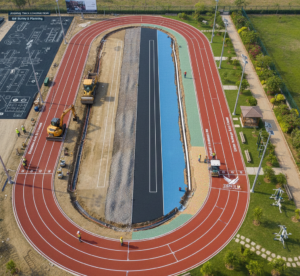
Jogging track construction involves several specialized stages — from base preparation and foundation work to surface installation and finishing touches.
Each component must be designed to handle:
-
Daily foot traffic and load stress
-
Weather exposure (heat, rain, UV)
-
Drainage and water management
-
Low maintenance requirements
A professional jogging track construction project combines civil engineering, sports flooring expertise, and architectural planning to create a long-lasting infrastructure.
⚙️ Key Stages of Jogging Track Construction
Let’s break down the major stages that make up a successful jogging track construction process:
1. Site Survey & Planning
Before construction begins, a detailed site survey is conducted to evaluate:
-
Ground slope and topography
-
Soil bearing capacity and drainage conditions
-
Space availability and layout feasibility
Design engineers then create a layout plan including:
-
Track dimensions (e.g., 100m, 200m, or 400m oval)
-
Lane width and curve radius
-
Drainage routes and lighting points
-
Entry/exit zones and surrounding features
Proper planning ensures efficient use of space and compliance with sports facility standards.
2. Excavation & Subgrade Preparation
Once the design is finalized:
-
The ground is excavated to the required depth (300–600 mm).
-
Topsoil, roots, and debris are removed.
-
The natural soil (subgrade) is compacted using mechanical rollers.
-
Soil stabilization (lime/cement treatment) may be applied for added strength.
A stable subgrade is essential to prevent cracking, sinking, or uneven settlement later.
3. Foundation and Base Construction
The foundation acts as the backbone of the jogging track.
It includes several layers that provide strength, stability, and water drainage:
| Layer | Material Used | Function |
|---|---|---|
| Subgrade | Compacted natural soil | Basic support |
| Sub-base | Crushed stone/gravel | Drainage & load distribution |
| Base Course | WMM or WBM | Structural strength |
| Wearing Course | PCC or Asphalt | Smooth hard surface |
Each layer is compacted and leveled precisely. The slope is maintained (1–2%) to facilitate drainage.
4. Drainage System Installation
Efficient drainage is one of the most critical aspects of jogging track infrastructure.
-
Perimeter drains and catch basins are installed to collect runoff.
-
PVC pipes or concrete channels direct water away from the track.
-
In some designs, permeable bases allow natural filtration.
Proper drainage prevents water stagnation and ensures long-term surface performance.
5. Surfacing and Finishing Layer
The choice of surface material determines the comfort, performance, and maintenance of the track. Popular options include:
| Surface Type | Material | Best For |
|---|---|---|
| PU (Polyurethane) | Synthetic multilayer system | Professional athletic tracks |
| Acrylic Surface | Textured resin coating | Schools & residential areas |
| EPDM Rubber | Soft, shock-absorbent | Children’s and community tracks |
| Red Clay / Natural Soil | Traditional compacted surface | Parks and budget projects |
Each surface is applied in multiple layers, ensuring grip, elasticity, and weather resistance.
6. Line Marking & Branding
These markings are:
-
UV-resistant
-
Anti-slip
-
Long-lasting
7. Track Lighting & Electrical Infrastructure
A well-lit jogging track allows users to run safely during early mornings or late evenings.
Lighting infrastructure includes:
-
LED floodlights or solar lighting poles
-
Smart timers or motion sensors for energy efficiency
-
Concealed wiring systems for safety
Modern installations may even integrate solar panels for sustainable energy use.
8. Landscaping and Peripheral Development
A jogging track’s surroundings enhance both its functionality and appeal.
Landscaping may include:
-
Green zones with trees and shrubs
-
Seating benches and gazebos
-
Outdoor gym or fitness stations
-
Walking trails and rest areas
Good landscaping promotes a pleasant and motivating environment for daily fitness routines.
🧩 Infrastructure Elements in Jogging Track Design
A well-planned jogging track infrastructure consists of multiple integrated systems:
| Component | Purpose |
|---|---|
| Foundation System | Stability and strength |
| Drainage Network | Water management |
| Electrical System | Lighting and safety |
| Surface Coating System | Comfort and performance |
| Landscape Design | Aesthetic appeal |
| Safety Features | Fencing, curbing, and non-slip edges |
All these systems must work harmoniously to create a safe, sustainable, and enjoyable fitness space.
🧪 Quality Testing & Standards
-
Soil Compaction Test
-
CBR (California Bearing Ratio)
-
Plate Load Test
-
Drainage Flow Test
-
Level & Slope Verification
-
Surface Friction & Shock Absorption Test
These ensure the jogging track meets both engineering accuracy and athletic performance requirements.
💰 Cost of Jogging Track Construction & Infrastructure (India)
| Track Type | Size | Approx. Cost (INR) |
|---|---|---|
| Mini Track (100–150m) | Residential / School | ₹1,50,000 – ₹3,00,000 |
| Standard Track (200m) | College / Complex | ₹3,50,000 – ₹5,50,000 |
| 400m Athletic Track | Stadium / Park | ₹6,00,000 – ₹12,00,000 |
Cost includes foundation, surfacing, drainage, and basic lighting installation.
🏆 Benefits of a Professionally Constructed Jogging Track
-
Durability: Long-lasting performance with low maintenance.
-
Safety: Anti-slip surface and smooth gradients reduce injury risk.
-
Comfort: Shock-absorbent materials ensure better running experience.
-
Aesthetics: Enhances the overall look of the facility.
-
Value Addition: Increases property or institutional value.
-
Eco-Friendly Options: Sustainable materials and solar lighting.
⚠️ Common Mistakes to Avoid in Jogging Track Infrastructure
❌ Poor subgrade compaction → uneven surface.
❌ No slope or faulty drainage → water stagnation.
❌ Low-quality surface materials → cracks and fading.
❌ Ignoring lighting and landscape integration.
❌ Skipping quality testing before surface application.
✅ Always work with experienced sports infrastructure contractors who follow industry-approved methods and quality standards.
🌿 Sustainable Construction Practices
Modern jogging track construction emphasizes eco-friendly and low-maintenance infrastructure:
-
Use of recycled rubber and non-toxic binders.
-
Permeable surfaces for natural rainwater absorption.
-
Solar-powered lights for energy efficiency.
-
Native plants for landscaping and soil preservation.
This ensures both environmental responsibility and long-term sustainability.
🏁 Conclusion
A well-designed jogging track construction & infrastructure project combines engineering precision, quality materials, and smart design to create an inspiring fitness environment.
From the foundation and drainage system to lighting and landscaping, every element plays a key role in ensuring safety, beauty, and durability.
Frequently Asked Questions (FAQ) – Jogging Track Construction & Infrastructure
1. What is jogging track construction and infrastructure?
Jogging track construction and infrastructure refers to the planning, design, and building of jogging tracks, including surface preparation, sub-base, flooring, safety features, lighting, and additional amenities for a functional and durable track.
2. What are the key components of jogging track infrastructure?
-
Sub-base preparation (compacted soil, sand, or concrete)
-
Surface layers (rubber, PU, PVC, EPDM, or asphalt)
-
Drainage system to prevent waterlogging
-
Safety features (anti-slip flooring, lighting, signage)
-
Additional amenities (benches, hydration points, shade structures)
3. How is a jogging track constructed?
Steps in construction:
-
Site selection and survey – choose a level area and determine length/width
-
Excavation and leveling – prepare the ground for sub-base
-
Sub-base laying – compacted sand, stone, or concrete for stability
-
Surface installation – apply synthetic tiles, PU, rubber, or asphalt
-
Line markings and lane division – optional for multi-lane tracks
-
Safety and amenities installation – lighting, benches, and fitness stations
4. What types of surfaces are used in jogging track construction?
-
Interlocking rubber or PVC tiles – modular, easy to replace
-
PU (Polyurethane) tracks – professional-grade, shock-absorbing
-
EPDM or rubberized tracks – durable and slip-resistant
-
Asphalt or concrete with surface coating – long-lasting, outdoor use
5. How important is drainage in jogging track construction?
Drainage is critical to prevent water accumulation, surface damage, and slippery conditions. Proper slopes (1–2%) and side drains ensure long-lasting, safe tracks.
6. What are the ideal dimensions for a jogging track?
-
Width: 1.2–2.5 meters per lane (wider tracks for heavy foot traffic)
-
Length: Variable depending on park or stadium size; common loops are 200–400 meters
-
Safety clearance: Minimum 0.5–1 meter around the track edges
7. Can jogging tracks be installed over existing concrete or asphalt?
Yes, synthetic and modular surfaces can be installed over concrete or asphalt, provided the base is level, clean, and free of cracks. Leveling compounds or primers may be added for better adhesion.
8. How long does jogging track construction take?
-
Small residential or park track: 3–7 days
-
Medium professional track: 7–15 days
-
Large stadium or multi-lane track: 2–4 weeks
9. What is the cost of constructing a jogging track in India?
Costs depend on material and infrastructure:
-
PVC or interlocking tiles: ₹400–₹900 per sq. meter
-
PU or synthetic tracks: ₹900–₹2,500 per sq. meter
-
Rubberized asphalt: ₹1,500–₹3,000 per sq. meter
Additional amenities like lighting, benches, and fitness equipment increase costs.
10. How is maintenance handled for jogging tracks?
-
Regular sweeping and cleaning
-
Inspection for damage or worn-out tiles
-
Drainage system check to prevent waterlogging
-
Occasional repainting lane markings or surface coating
11. What safety measures are included in jogging track infrastructure?
-
Shock-absorbing surfaces for joint protection
-
Anti-slip flooring for wet conditions
-
Proper lighting and signage
-
Emergency access points for parks or public facilities
12. Can jogging tracks include additional features?
Yes, modern jogging tracks often include:
-
Benches and seating areas
-
Hydration stations or water fountains
-
Fitness equipment along the track
-
Shade structures or pergolas
-
Smart sensors or distance counters
13. Who designs and constructs jogging tracks?
Professional sports flooring experts, architects, and contractors design and build jogging tracks to ensure durability, safety, compliance with standards, and aesthetic appeal.
14. How long does a well-constructed jogging track last?
-
Interlocking or PVC tiles: 8–10 years
-
PU or EPDM tracks: 10–12 years
-
Rubberized asphalt tracks: 12–15 years
Proper installation and maintenance extend the track lifespan.