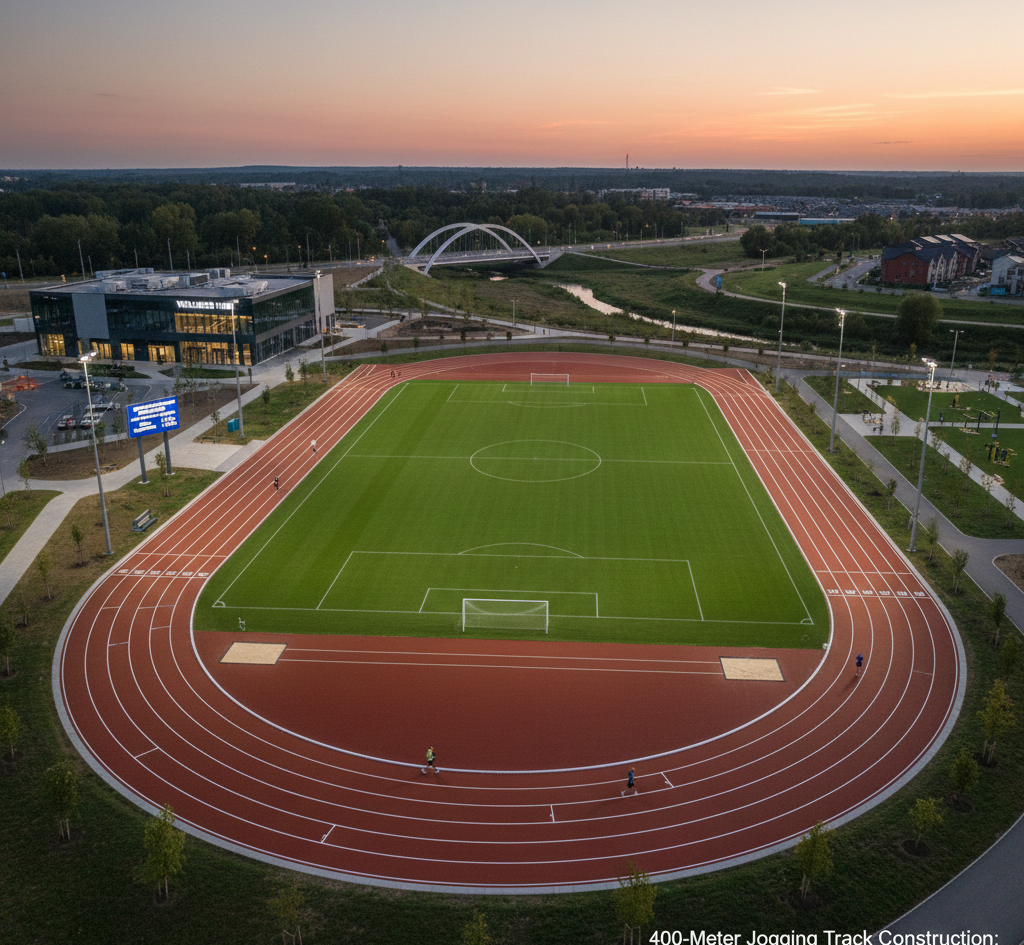
A 400-meter jogging track is widely recognized as the international benchmark for athletics, fitness training, and recreational running. Whether developed for schools, universities, stadiums, residential communities, corporate campuses, or public parks, a professionally constructed 400m track delivers unmatched functionality, durability, and long-term value.
Designed to support runners of all skill levels, modern 400-meter tracks combine advanced materials, precise engineering, and weather-resistant construction to create a safe, high-performance surface that promotes health, discipline, and community engagement.
Why a 400-Meter Jogging Track Is the Ideal Choice
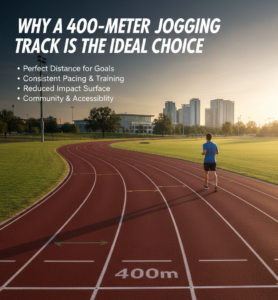
A 400m jogging track offers the perfect balance between performance, usability, and space efficiency. Below are the key benefits that make it the preferred standard worldwide:
1. Internationally Standardized Distance
The 400-meter oval is globally accepted for athletic training and competition. It enables accurate performance tracking and supports standardized fitness routines for both professionals and beginners.
2. Versatile & Multi-Purpose
A 400m track accommodates running, jogging, walking, warm-ups, physical education activities, and fitness drills, making it suitable for daily use as well as organized events.
3. High-Durability Surface
Constructed using advanced materials like polyurethane (PU), EPDM rubber, or acrylic systems, these tracks provide excellent grip, shock absorption, and resistance to wear and tear.
4. Encourages Active Lifestyles
On-site jogging tracks motivate consistent physical activity, reduce sedentary behavior, and foster a culture of health and wellness within communities and institutions.
5. Adds Aesthetic & Property Value
A professionally designed track enhances the visual appeal of the surroundings while significantly increasing the functional and commercial value of the property.
Ideal Locations for 400-Meter Jogging Track Installation
A standard 400m jogging track can be constructed in a wide range of environments, including:
-
Sports complexes and athletic stadiums
-
Schools, colleges, and universities
-
Corporate offices and government campuses
-
Public parks and recreational areas
-
Residential societies and townships
-
Fitness centers and training academies
Track layouts, colors, lane markings, and finishes can be customized to match the available space and intended usage.
Surface Options for 400-Meter Jogging Tracks
Choosing the right surface is critical for performance, safety, and lifespan. The most commonly used track surfaces include:
1. Synthetic Polyurethane (PU) Track
-
High-performance athletic surface
-
Excellent elasticity and water resistance
-
Ideal for professional and institutional use
-
Low maintenance with a lifespan of 10–15 years
2. EPDM Rubber Track
-
Made from eco-friendly rubber granules
-
Superior shock absorption and anti-slip properties
-
Best suited for schools, parks, and residential areas
-
Available in multiple colors and thickness options
3. Acrylic Track Surface
-
Cost-effective and UV-resistant
-
Suitable for moderate-intensity training
-
Easy installation and maintenance
-
Ideal for multi-purpose sports grounds
4. Prefabricated Rubber Track
-
Quick installation using pre-manufactured rolls or tiles
-
Uniform finish and consistent grip
-
Easy to replace or repair
-
Suitable for both permanent and semi-portable applications
Each surface is selected based on budget, climate conditions, usage frequency, and performance requirements.
Step-by-Step Process
Professional execution ensures accuracy, durability, and safety. The construction process typically includes:
1. Site Evaluation & Design
Engineers analyze soil conditions, drainage, topography, and available area. A precise oval layout is designed according to standard 400m track geometry.
2. Sub-Base Preparation
The ground is leveled, compacted, and reinforced with layers of crushed stone or asphalt. Proper slopes and drainage systems are incorporated to prevent water accumulation.
3. Base Layer Application
A base coating is applied to strengthen the foundation and enhance surface bonding.
4. Synthetic Surface Installation
The selected track material (PU, EPDM, or acrylic) is applied in layers to achieve uniform thickness, elasticity, and grip.
5. Lane Marking & Finishing
Accurate lane lines, boundaries, and markings are applied using weather-resistant paint.
6. Final Quality Inspection
The completed track is inspected for smoothness, drainage efficiency, safety, and compliance with performance standards.
Standard Technical Specifications of a 400-Meter Track
-
Track Length: 400 meters (oval)
-
Track Width: 7.32 meters (8 lanes)
-
Lane Width: 1.22 meters
-
Inner Radius: 36.5 meters
-
Total Area Required: 5,500 – 6,000 sq. meters
-
Surface Type: PU, EPDM, or Acrylic
-
Expected Lifespan: 10–15 years with proper maintenance
Key Advantages of Professional 400-Meter Track Construction
-
Accurate, competition-ready layout
-
Slip-resistant and shock-absorbing surface
-
All-weather usability and UV stability
-
Minimal maintenance requirements
-
Long-term durability and safety
-
Customizable colors, logos, and designs
-
Supports both recreational and competitive use
Maintenance Guidelines for Long-Lasting Performance
To ensure optimal performance and extended lifespan:
-
Clean debris, dust, and leaves regularly
-
Avoid sharp-edged footwear and heavy equipment
-
Inspect drainage, joints, and markings periodically
-
Recoat the surface when required to maintain grip
-
Prevent oil, chemicals, and corrosive substances
Consistent maintenance preserves surface quality and user safety.
Cost of jogging track
The total project cost depends on surface type, base preparation, and site conditions. On average, construction costs range between ₹600 to ₹1,200 per square foot.
This typically includes:
-
Site preparation and leveling
-
Sub-base construction
-
Synthetic surface installation
-
Lane marking and finishing
-
Drainage and curbing (if required)
While the initial investment is substantial, the long lifespan and low maintenance make a 400m track a cost-effective long-term infrastructure asset.
Importance of Hiring Professional Track Contractors
Experienced installers ensure compliance with international standards, precise measurements, and superior surface performance. Professional teams use advanced machinery and proven techniques while also offering post-installation services such as resurfacing, repairs, and maintenance support.
Conclusion
A 400-meter jogging track is more than just a running surface—it is a long-term commitment to health, performance, and community development. With professional design, quality materials, and expert installation, a 400m track delivers unmatched durability, safety, and functionality. Whether for athletic training, daily exercise, or recreational use, investing in a 400-meter jogging track creates lasting value for generations to come.