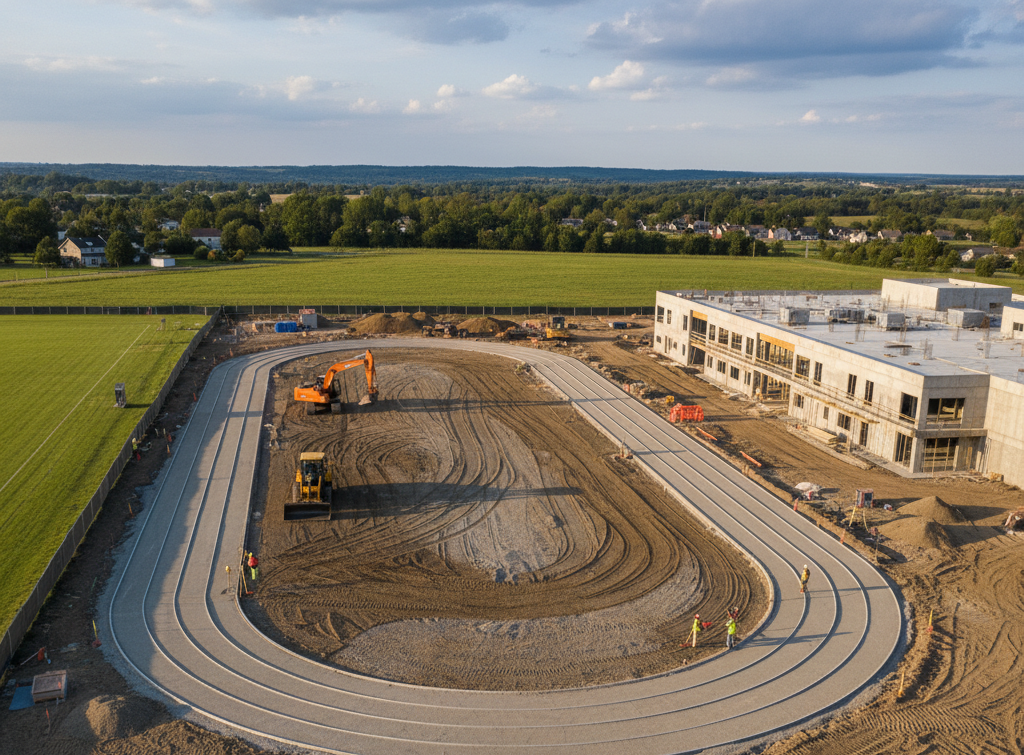
Physical education plays a vital role in the all-round development of students, and a school jogging track serves as the heart of this fitness culture. It’s not just a pathway for running; it’s a space where discipline, endurance, and teamwork take shape. In today’s health-conscious and sports-driven educational environment, having a well-constructed jogging track is no longer a luxury — it’s an essential part of a school’s infrastructure.
A professionally designed jogging track in schools encourages children to stay active, enhances athletic performance, and supports physical training programs. It also promotes mental well-being, teamwork, and healthy lifestyle habits from an early age.
1. Importance of a Jogging Track in Schools
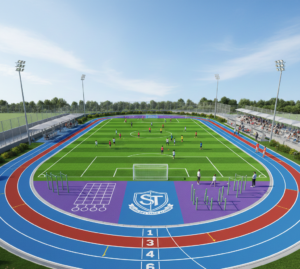
A jogging track in a school environment offers far more than a running route — it becomes a structured platform for fitness and discipline. It’s where students learn about the importance of regular exercise, perseverance, and goal setting.
Key Benefits Include:
-
Daily Fitness Activity: Encourages regular physical exercise, improving student stamina and concentration.
-
Athletic Training: Provides a professional surface for training, sprint drills, and warm-up exercises.
-
Safety and Comfort: Prevents injuries that may occur on rough or uneven natural grounds.
-
Promotes Health Awareness: Builds early habits of physical activity and outdoor engagement.
-
Event Hosting: Enables schools to organize sports days, athletic meets, and fun runs efficiently.
A well-constructed jogging track becomes the most used and loved part of a school playground — from morning assemblies to physical education classes and extracurricular sports sessions.
2. Design Considerations for School Jogging Tracks
Designing a jogging track for a school requires thoughtful planning that balances safety, space, and functionality. Every element — from shape and surface to layout and lighting — must cater to students of all age groups.
Key Design Factors:
-
Track Shape: Usually oval or circular to fit within school grounds and ensure smooth running flow.
-
Track Length: Typically ranges from 100m to 400m depending on the available area and grade levels.
-
Width: Must accommodate multiple students running side by side, generally 1.5–2.5 meters wide.
-
Safety Zones: Proper spacing around edges and barriers to prevent injuries.
-
Drainage & Gradient: Essential for water runoff during rains to maintain surface quality.
-
Accessibility: Easy entry and exit points, suitable for children and staff.
Modern school jogging tracks often integrate multi-purpose zones for warm-up, stretching, and physical training, maximizing land use while enhancing usability.
3. Suitable Surface Materials for School Jogging Tracks
Choosing the right surface material is crucial for safety, comfort, and durability. School jogging tracks are designed to be child-friendly, non-slippery, and cushioned for soft impact.
a. Synthetic Rubber Track (EPDM Surface)
One of the most preferred surfaces for school tracks, EPDM (Ethylene Propylene Diene Monomer) rubber provides excellent grip and shock absorption. It reduces strain on joints and ensures students can run safely even during rain.
b. Acrylic Surface Track
Acrylic-coated jogging tracks offer smooth, colorful finishes that are UV-resistant and easy to maintain. They are suitable for both indoor and outdoor school environments.
c. Asphalt or Bitumen Track
An economical choice for schools with large grounds. While durable, it’s less cushioned than synthetic options but can be coated with rubber granules for improved comfort.
d. Grass or Clay Surface
Ideal for budget-conscious or rural schools. Although low-cost, these surfaces require frequent maintenance and may not offer consistent performance during monsoon or winter seasons.
Selecting the right surface depends on the school’s budget, climate, and intended usage. For long-term performance, synthetic or acrylic surfaces are most recommended.
4. The Construction Process: Step-by-Step
Constructing a school jogging track involves precision and adherence to quality standards. From groundwork to finishing, every phase impacts the track’s durability and safety.
Step 1: Site Preparation and Layout
The ground is leveled, compacted, and measured for proper track dimensions. The layout includes lanes, curves, and safety margins.
Step 2: Foundation Work
A sub-base of crushed stones or compacted soil provides strength and prevents future surface deformation.
Step 3: Drainage System Installation
Proper slope and drainage channels ensure quick water runoff and protect the track from damage.
Step 4: Surface Layer Application
Depending on the selected material, the surface layer — synthetic, acrylic, or asphalt — is applied using precise spreading and curing methods.
Step 5: Marking and Finishing Touches
Final lane markings, boundary lines, and signages are added using weather-resistant paint. Optional features like fencing, LED lighting, and spectator areas enhance usability and safety.
5. Safety and Maintenance Measures
Since children are the primary users, safety and maintenance are top priorities in school jogging track construction.
Safety Guidelines:
-
Non-slip surface to prevent falls.
-
Rounded edges and protective barriers.
-
Adequate lighting for early morning or late evening use.
-
Clear lane markings to guide students during activities.
Maintenance Tips:
-
Regular cleaning to remove dust, leaves, or debris.
-
Checking for cracks or wear after every season.
-
Re-coating or resurfacing every 4–5 years for synthetic tracks.
-
Periodic inspection of drainage systems.
Well-maintained tracks last longer, ensure consistent performance, and maintain the school’s sports infrastructure standards.
6. Integration with School Sports Facilities
A jogging track is often part of a larger sports ecosystem that includes playgrounds, basketball courts, football fields, and fitness zones. Integrating the jogging track with these facilities enhances student participation and allows multi-sport functionality.
Examples of integration include:
-
Surrounding the football field or cricket pitch with the jogging track.
-
Linking the track with outdoor gym equipment zones.
-
Designing shaded rest areas and hydration points along the path.
-
Installing seating zones for teachers or coaches.
This holistic approach turns the track into a lively fitness hub during school hours and community use after school.
7. Long-Term Benefits for Schools
Investing in a jogging track delivers lasting value beyond sports. It enhances the school’s image, promotes wellness, and aligns with the modern education emphasis on physical literacy.
Key Benefits Include:
-
Improves student attendance and energy levels.
-
Enhances school’s infrastructure appeal for admissions and accreditation.
-
Encourages parents and community engagement through events.
-
Creates opportunities for inter-school athletic meets.
-
Promotes mental health and focus among students.
A jogging track fosters a positive school culture — one where every child values movement and well-being as much as academics.
8. Conclusion
A school jogging track is more than an infrastructure addition — it’s an investment in student health, discipline, and lifelong fitness. Constructed with the right materials, design, and safety measures, it becomes a foundation for nurturing future athletes and confident individuals.
By integrating technology, sustainable materials, and child-safe designs, modern schools can create jogging tracks that inspire students to run, learn, and grow — one lap at a time.
School Jogging Track Construction – Frequently Asked Questions (FAQ)
❓ 1. What is a school jogging track?
A school jogging track is a specially designed running or walking track built within school premises for students’ physical education, sports training, and daily fitness activities. It is typically constructed around a playground or along the boundary of the campus.
❓ 2. What is the ideal size for a school jogging track?
There is no fixed standard size for school jogging tracks. Common options include:
-
200m track
-
300m track
-
400m track (for larger schools)
-
Custom loop designs depending on available space
The size depends on campus area and budget.
❓ 3. What materials are used in school jogging track construction?
Common materials include:
-
EPDM rubber flooring – Safe and colorful
-
Polyurethane (PU) system – Durable and long-lasting
-
Acrylic sports coating – Cost-effective solution
-
Compacted sub-base + asphalt or concrete base
Material choice depends on usage intensity and school budget.
❓ 4. Which surface is best for school students?
For schools, EPDM rubber or sandwich system tracks are ideal because they offer:
-
Shock absorption
-
Slip resistance
-
Injury reduction
-
Comfort for young students
-
Bright color options
Safety and durability are top priorities.
❓ 5. What are the main steps in construction?
School jogging track construction generally includes:
-
Site inspection and measurement
-
Ground leveling and compaction
-
Sub-base installation (WMM layer)
-
Asphalt or concrete base laying
-
Primer application
-
EPDM/PU surface installation
-
Line marking and finishing
-
Final inspection and curing
Proper drainage planning is essential.
❓ 6. How long does construction take?
The typical timeline is:
-
Small jogging track: 2–4 weeks
-
400m track: 6–8 weeks
Weather conditions may affect curing time.
❓ 7. What is the estimated cost of a school jogging track?
Cost depends on:
-
Track size
-
Surface type (EPDM, PU, Acrylic)
-
Base preparation
-
Drainage system
-
Custom markings and colors
EPDM and acrylic systems are generally more budget-friendly compared to full PU tracks.
❓ 8. Why is drainage important in school track construction?
Proper drainage prevents:
-
Water accumulation
-
Slippery surfaces
-
Surface damage
-
Reduced lifespan
Tracks are usually built with a slight slope (around 1%) for water runoff.
❓ 9. Is a rubber jogging track safe for children?
Yes. Rubberized tracks provide:
-
Soft landing surface
-
Reduced joint stress
-
Anti-slip grip
-
Lower injury risk during running
They are much safer than concrete or hard surfaces.
❓ 10. Can the track include multi-sport markings?
Yes. School tracks can include:
-
Running lane markings
-
Sprint lanes
-
Fitness grids
-
Game zones
-
School logo or branding
Customization makes the facility more engaging for students.