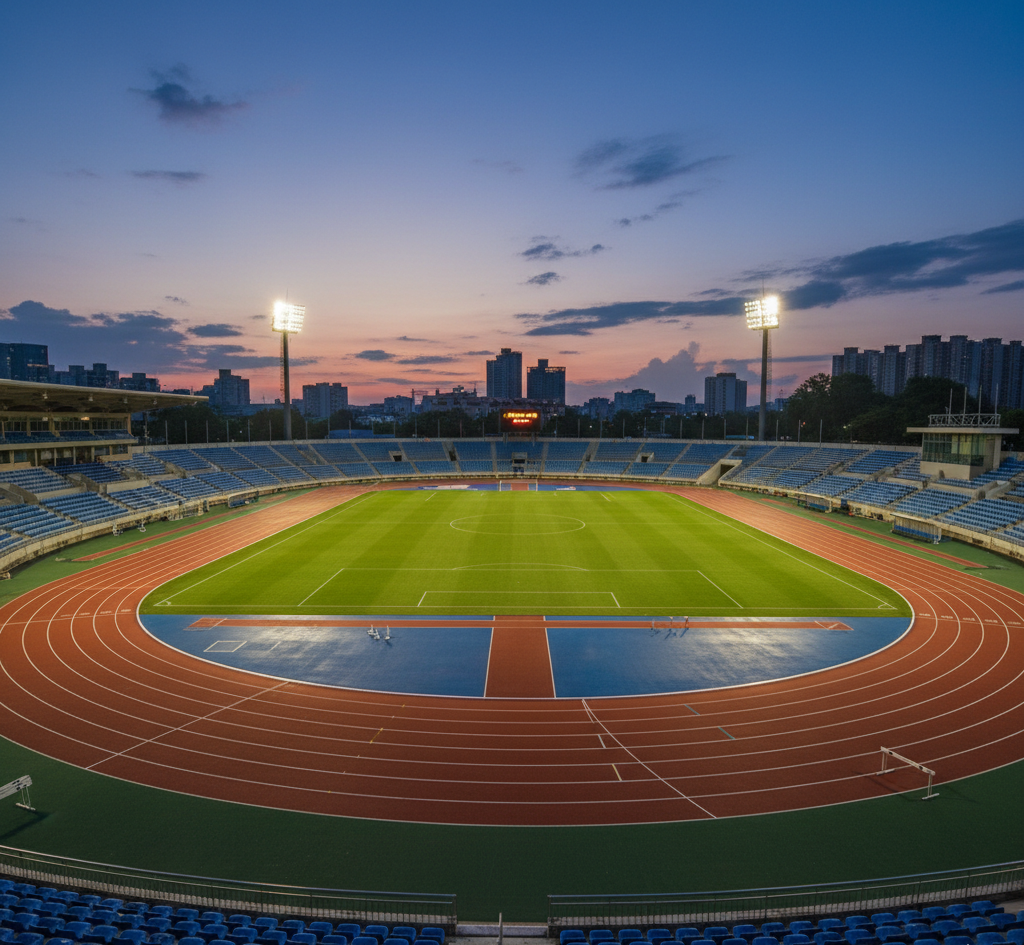
A stadium running track stands as the centerpiece of modern athletic infrastructure. It’s where speed, endurance, and performance come together — from school sports meets to international championships. Constructing a stadium running track demands precision engineering, durable materials, and compliance with international standards.
Whether designed for professional competitions, athlete training, or multi-sport events, a stadium running track must deliver safety, comfort, and peak performance in every stride.
1. Importance of a Stadium Running Track
-
Platform for Excellence
-
A professionally built stadium track provides athletes with the perfect surface for speed, acceleration, and consistent traction.
-
It supports sprints, middle-distance, hurdles, and relay events under standardized conditions.
-
-
Safety and Shock Absorption
-
Advanced materials such as polyurethane or EPDM rubber ensure impact resistance and cushioning, reducing injury risks.
-
-
All-Weather Durability
-
Designed to withstand intense sun, heavy rain, and constant use, modern tracks remain consistent and resilient year-round.
-
-
Versatility for Multi-Sport Events
-
Stadium tracks often surround football, hockey, or rugby fields, making them multi-functional and space-efficient.
-
-
Aesthetic and Institutional Prestige
-
A vibrant, well-maintained track enhances the stadium’s appearance and brand value, symbolizing professionalism and sports excellence.
-
2. Key Features of a Stadium Running Track
-
Track Dimensions
-
The standard stadium track measures 400 meters in lane 1, with 8 or 9 lanes depending on competition level.
-
Each lane is 1.22 meters wide, with curves precisely designed for uniform running distance.
-
-
Surface Options
-
Polyurethane Surface: Highly durable, seamless, and ideal for professional events.
-
EPDM Rubber Surface: Excellent flexibility and shock absorption for training facilities.
-
Tartan Track: A combination of base and polyurethane top layers for maximum resilience.
-
Mondo Track: A premium surface used in many Olympic and World Athletics venues, offering superior traction and rebound.
-
-
Base and Foundation Layers
-
Built with compacted sub-base, asphalt base course, and cushion layers, ensuring stability, evenness, and drainage efficiency.
-
-
Drainage System
-
Integrated subsurface drainage channels and curbs prevent waterlogging, keeping the track usable in all conditions.
-
-
Line Marking and Field Event Integration
-
Precisely marked lanes, start/finish lines, and designated zones for long jump, javelin, and shot put maintain compliance with World Athletics standards.
-
-
Lighting and Accessories
-
Modern stadiums feature LED floodlights for nighttime use, along with timing systems, starting blocks, and hurdle setups for full event readiness.
-
3. Steps in Stadium Running Track Construction
Step 1: Planning and Design
-
Conduct feasibility studies and site assessments to determine layout and space utilization.
-
Choose track type, number of lanes, and orientation based on the stadium’s purpose and expected footfall.
-
Plan for field events, spectators, and drainage infrastructure.
Step 2: Site Preparation
-
Clear, level, and compact the ground to ensure structural stability.
-
Install the sub-base and base course, typically made from asphalt or concrete, for longevity.
: Drainage System Installation
-
Construct side gutters and slope gradients to ensure efficient surface water runoff.
: Shock Absorbing Layer
-
Apply elastic cushion layers made from rubber granules and polyurethane binders to enhance comfort and safety.
-
: Surface Application
-
Install the chosen synthetic surface system, such as polyurethane or Mondo flooring.
-
The surface is applied in multiple layers to achieve optimal thickness, traction, and durability.
: Line Marking and Detailing
-
Paint lanes, start lines, and finish areas using UV-resistant paints.
-
Include event-specific markings (e.g., hurdles, steeplechase, relays) according to World Athletics standards.
: Final Testing and Certification
-
Conduct shock absorption, friction, and evenness tests.
-
Ensure compliance with international athletic federation standards before official use.
4. Maintenance and Upkeep
A stadium track must be maintained regularly to ensure performance consistency and athlete safety:
-
Routine Cleaning
-
Remove debris, dirt, and leaves to preserve traction.
-
Wash with gentle cleaning agents to prevent surface deterioration.
-
-
Inspection and Repairs
-
Check for surface cracks, granule wear, or color fading, and repair promptly.
-
-
Drainage System Maintenance
-
Keep drainage channels clear to prevent water buildup and material damage.
-
-
Repainting and Resurfacing
-
Refresh lane markings and apply surface recoats every few years for longevity.
-
-
Scheduled Professional Checks
-
Annual performance inspections ensure the track meets safety and quality benchmarks.
-
5. Benefits of a Professionally Constructed Stadium Track
-
Performance Enhancement – Athletes gain maximum speed and comfort through consistent traction and elasticity.
-
Safety and Comfort – Surfaces minimize joint impact and reduce fatigue.
-
Weather Resistance – Designed to withstand rain, heat, and heavy usage.
-
Aesthetic Appeal – Bright colors and smooth finishes improve the stadium’s visual quality.
-
Longevity and Value – Durable materials extend track lifespan and reduce maintenance costs.
-
International Standard Compliance – Enables hosting of national and global athletic competitions.
6. Cost Considerations
The cost of a stadium running track varies depending on several factors:
-
Track Type: Polyurethane and Mondo systems are premium options.
-
Track Size: 8-lane or 9-lane configurations increase material and labor requirements.
-
Base Work: Soil stabilization, drainage, and foundation layers add to the cost.
-
Accessories: Lighting, timing systems, and line markings affect total investment.
-
Maintenance Plan: Regular cleaning and resurfacing ensure cost efficiency in the long run.
7. Applications of Stadium Running Tracks
-
Professional Athletics Meets – Hosting district, state, national, or international championships.
-
Training Facilities – For sprinters, marathoners, and field athletes.
-
School and College Events – Annual sports days and inter-institutional competitions.
-
Community Fitness Programs – Open tracks for public health and wellness initiatives.
A stadium running track serves as a multi-functional arena, blending sports, health, and community development.
8. Advantages of Professional Construction
-
Precision Engineering: Ensures perfect curves, lane alignment, and uniform thickness.
-
Quality Materials: Designed to last through years of intense use.
-
Athlete-Centric Design: Reduces fatigue and enhances performance.
-
Compliance and Certification: Meets World Athletics and IAAF standards.
-
Sustainability: Eco-friendly materials and efficient drainage systems reduce environmental impact.
9. Conclusion
A stadium running track is not just a sports surface — it is the foundation of athletic excellence and competitive spirit. Through careful design, quality materials, and expert construction, stadiums can offer safe, durable, and world-class tracks for athletes of all levels.
Stadium Running Track – FAQs
1. What are the standard dimensions of a stadium running track?
-
Standard oval track length: 400 meters per lap (IAAF/FIA standard)
-
Lane width: 1.22 meters (4 ft) per lane
-
Number of lanes: Typically 6–8 lanes for professional stadiums
-
Curve radius: 36.5 meters for the innermost lane
-
Straights: Approximately 84.39 meters each
Recreational or smaller stadium tracks may adjust these dimensions based on available space.
2. What types of surfaces are used for stadium running tracks?
Common surface materials include:
-
Synthetic PU (Polyurethane) tracks: Durable, weather-resistant, and shock-absorbing
-
Tartan tracks: Standard for professional competitions
-
Rubberized tracks: Soft surface, reduces joint impact, ideal for schools and training
-
Asphalt or concrete: Cost-effective but harder, suitable for recreational use
3. Why is a shock-absorbing surface important?
-
Minimizes joint and muscle stress
-
Reduces risk of injuries from repeated impact
-
Provides consistent traction and performance
-
Enhances runner comfort and speed
4. How many lanes are standard in a stadium running track?
-
Professional stadiums: 6–8 lanes
-
School or recreational tracks: 2–4 lanes may be sufficient
-
Lane width: 1.22 m (4 ft) per lane
Proper lane design ensures safety and fair competition.
5. How is a stadium running track constructed?
Typical track layers include:
-
Sub-base: Compacted gravel or crushed stone for stability
-
Base/binder layer: Asphalt or concrete for structural strength
-
Top layer: Synthetic polyurethane or rubberized surface for shock absorption and smooth running
Professional installation ensures longevity, durability, and safety.
6. What drainage measures are needed?
-
Track should have a slight slope (1–2%) for water runoff
-
Subsurface drainage pipes for synthetic tracks
-
Prevents puddling, surface damage, and reduces slipping hazards
7. What markings are required on a stadium running track?
-
Lane lines to separate runners
-
Start and finish lines for 100 m, 200 m, 400 m, etc.
-
Staggered start lines for curves
-
Inner and outer edge markings
-
Optional directional arrows for jogging/warm-up lanes
8. What is the typical lifespan of a stadium running track?
-
Synthetic tracks: 10–15 years with proper maintenance
-
Rubberized tracks: 8–12 years
-
Asphalt/concrete tracks last longer but may require resurfacing for performance and safety
9. What maintenance is required for stadium running tracks?
-
Daily removal of dirt, debris, and leaves
-
Regular inspections for cracks or wear
-
Periodic resurfacing for synthetic layers every 7–10 years
-
Maintaining proper slope and drainage
10. Can a running track be multi-purpose?
Yes. Stadium tracks can also serve for:
-
Jogging or walking lanes for visitors
-
Training and warm-up zones for athletes
-
School or community fitness programs
Surface and lane design should accommodate multi-purpose use safely.
11. Is lighting required for stadium running tracks?
Yes, for evening or early morning use:
-
Uniform illumination along all lanes
-
LED floodlights or track-level lights preferred
-
Avoid glare that can hinder visibility or safety
12. Why is professional design and installation necessary?
Professional installation ensures:
-
Compliance with IAAF or local athletic standards
-
Proper slope, drainage, and lane layout
-
Long-term durability and safety
-
Optimal performance for competitive events