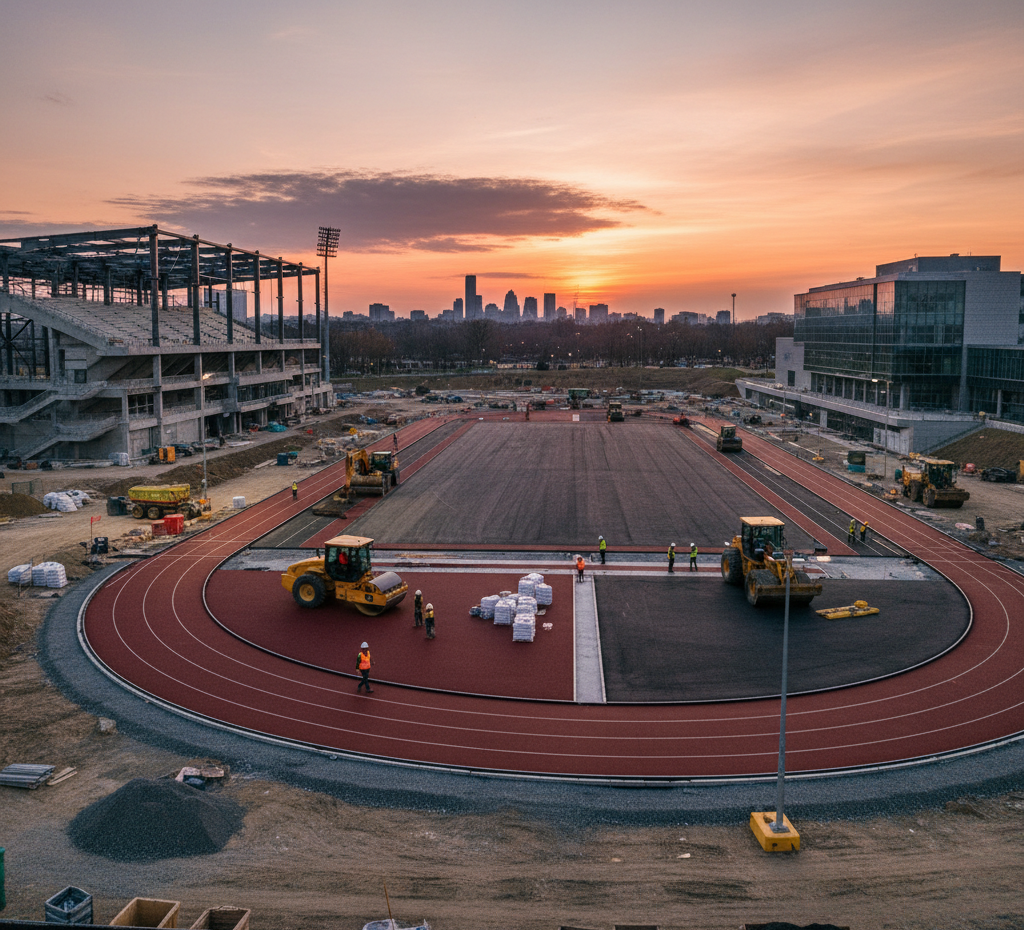
Constructing a sports complex track is a significant investment in athletic excellence, community engagement, and multi-sport functionality. Whether for professional competitions, training facilities, or recreational purposes, a well-designed track enhances athlete performance, safety, and facility value.
Sports complex tracks must accommodate heavy usage, varying weather conditions, and multiple sports disciplines, making quality construction and material selection essential.
1. Importance of Sports Complex Track Construction
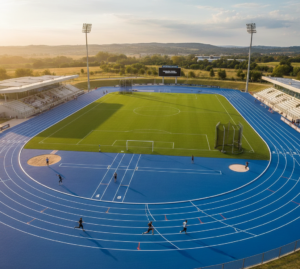
-
Athlete Safety
-
Properly constructed tracks with shock-absorbing surfaces reduce the risk of injuries during running, sprinting, and field events.
-
Ensures consistent traction under all-weather conditions.
-
-
High Performance
-
Tracks built to professional standards allow athletes to train and compete at their best.
-
Supports sprints, long-distance running, hurdles, and relay races.
-
-
Durability and Longevity
-
High-quality construction withstands heavy foot traffic, weather fluctuations, and multi-sport use.
-
Reduces maintenance costs and extends the track’s usable life.
-
-
Facility Versatility
-
Can host athletics competitions, community fitness programs, and training camps.
-
Integration with other sports facilities, such as football fields or gyms, maximizes space utilization.
-
-
Aesthetic and Institutional Value
-
Enhances the overall appeal of the sports complex, attracting athletes, schools, and local events.
-
2. Key Considerations in Sports Complex Track Construction
-
Track Layout and Design
-
Standard tracks are 400 meters in lane 1 with 6 to 8 lanes for competitions.
-
Layouts must accommodate curves, straights, and starting blocks, ensuring athlete safety and performance.
-
-
Surface Selection
-
Popular options include:
-
Polyurethane Tracks: Durable, weather-resistant, and ideal for professional use.
-
EPDM Rubber Tracks: Flexible, shock-absorbing, and all-weather compatible.
-
Tartan Tracks: Multi-layer synthetic surfaces for high-performance training and competitions.
-
-
Material choice depends on budget, expected traffic, and sports standards.
-
-
Track Base and Foundation
-
A solid base ensures structural integrity, evenness, and drainage efficiency.
-
Typically consists of compacted gravel or asphalt, topped with shock-absorbing layers.
-
-
Drainage System
-
Essential for preventing water accumulation, slippery surfaces, and long-term damage.
-
Includes curbs, gutters, and surface grading.
-
-
Line Marking and Field Event Integration
-
Accurate lane markings, start/finish lines, and designated areas for long jump, javelin, and shot put.
-
Paint must be UV-resistant, durable, and visible under all lighting conditions.
-
-
Safety Features
-
Shock-absorbing surfaces, curbs, fencing, and spectator areas contribute to athlete and visitor safety.
-
3. Steps in Sports Complex Track Construction
Step 1: Site Planning and Assessment
-
Evaluate available land, soil quality, and drainage conditions.
-
Plan track dimensions, lane numbers, and multi-sport integration.
-
Allocate areas for field events, spectator stands, and access pathways.
Step 2: Ground Preparation
-
Clear the site of debris, level the soil, and compact the base.
-
Install sub-base layers (gravel or asphalt) for stability and durability.
-
Grade the area to ensure proper water runoff and slope.
: Shock-Absorbing Layer Installation
-
Apply elastic polyurethane or rubber underlayers to enhance cushioning and joint protection.
: Surface Installation
-
Lay the chosen synthetic surface (Polyurethane, EPDM, or Tartan).
-
Ensure uniform thickness, proper adhesion, and smooth finishing.
-
: Line Marking and Lane Layout
-
Paint lanes, start/finish lines, and field event boundaries.
-
Use UV-resistant, durable paint for long-lasting visibility.
: Testing and Quality Assurance
-
Conduct traction, evenness, and shock absorption tests.
-
Ensure compliance with IAAF/World Athletics standards for competition-level tracks.
4. Maintenance and Upkeep
-
Regular Cleaning
-
Remove dirt, leaves, and debris to maintain traction and visual appeal.
-
-
Inspection and Minor Repairs
-
Check for cracks, worn areas, or fading markings.
-
Address minor issues before they escalate into major repairs.
-
-
Drainage Maintenance
-
Keep drains and gutters clear to prevent water pooling.
-
-
Surface Recoating and Granule Replacement
-
Periodically restore surface layers or EPDM granules to maintain shock absorption and performance quality.
-
-
Equipment Check
-
Inspect hurdles, starting blocks, and adjacent field areas to ensure safety and functionality.
-
5. Benefits of Professional Sports Complex Track Construction
-
Safety Assurance: Shock-absorbing, smooth surfaces minimize injury risks.
-
High Performance: Uniform lanes and quality surfaces enhance training and competition outcomes.
-
Durability: Tracks withstand heavy use, weather, and multi-sport activities.
-
Compliance: Meets international standards for professional competitions.
-
Versatility: Supports track events, field events, fitness programs, and community sports activities.
-
Aesthetic Appeal: A visually appealing track enhances the sports complex’s professional image.
6. Cost Considerations
-
Track Size and Lanes: Larger tracks require more materials and labor.
-
Surface Material: Polyurethane and Tartan surfaces are higher cost than basic EPDM.
-
Site Preparation: Grading, leveling, and drainage setup influence cost.
-
Line Markings and Accessories: Starting blocks, hurdles, and field events impact expenses.
-
Maintenance Planning: Budgeting for upkeep ensures long-term performance and cost savings.
7. Applications of Sports Complex Tracks
-
Professional Athletics Training: Sprinting, middle- and long-distance, and field events.
-
Competitions and Events: Local, state, or national-level track and field meets.
-
Fitness and Recreational Programs: Running, jogging, and community sports activities.
-
Multi-Sport Integration: Tracks surrounding football, rugby, or multi-purpose fields.
8. Advantages of Professional Construction
-
Safety Compliance: Reduces injury risk through proper materials and design.
-
Long-Term Durability: High-quality construction reduces repair frequency and costs.
-
Optimized Training Facilities: Supports both competitive and recreational athletes.
-
Multi-Purpose Usage: Tracks accommodate athletics, community programs, and field events.
-
Enhanced Facility Reputation: Attracts athletes, schools, and community events to the complex.
9. Conclusion
Constructing a sports complex track is an investment in athletic performance, safety, and community engagement. From careful site planning, base preparation, shock-absorbing layer installation, and high-quality surface application to precise line marking, professional construction ensures a durable, high-performance, and competition-ready track.
Sports Complex Track Construction — FAQ
1. What is a sports complex track?
A sports complex track is a dedicated running or multi-purpose athletic track designed for training, jogging, competitive events, and recreational use. It provides a safe, even, and durable surface that enhances performance while minimizing the risk of injuries.
2. What types of tracks are built in sports complexes?
Common types include:
-
Synthetic running tracks – Acrylic or polyurethane surfaces, often used for professional athletics
-
Rubberized jogging tracks – Shock-absorbing, ideal for fitness and recreational use
-
Concrete or asphalt tracks – Cost-effective for outdoor running but less forgiving on joints
-
Indoor multi-purpose tracks – Installed in gymnasiums or covered sports halls
The choice depends on the facility’s purpose, user type, and budget.
3. What materials are used for sports complex track construction?
Materials are chosen based on durability, safety, and performance:
-
Acrylic coatings – Weather-resistant, slip-resistant, and low maintenance
-
PU (Polyurethane) surfaces – Shock-absorbing, seamless finish, suitable for indoor or outdoor use
-
EPDM rubber granules – Provides cushioning and energy return for athletes
-
Concrete/asphalt base – Provides structural support for synthetic overlays
4. How is a sports complex track constructed?
Typical construction steps:
-
Site survey & planning – Assess terrain, dimensions, and slope for drainage
-
Base preparation – Compact sub-base, lay PCC/asphalt, ensure leveling
-
Surface installation – Apply synthetic coatings or lay rubberized layers
-
Finishing & markings – Add lanes, logos, distance markers, and borders
-
Inspection & testing – Ensure smoothness, grip, and proper shock absorption
5. Why is shock absorption important?
Shock-absorbing tracks reduce stress on joints and minimize injuries for runners, athletes, and recreational users. PU and EPDM tracks are especially effective in absorbing impact forces.
6. What are the ideal dimensions of a sports complex track?
-
Standard 400m oval track: 8 lanes, each 1.22m wide (professional athletics)
-
Recreational tracks: Can vary based on available space, e.g., 200–300m loops for jogging
-
Indoor tracks: Usually 200–250m per lap, single or double lanes
Dimensions can be customized depending on the space and purpose.
7. How long does track construction take?
Time varies by size and material:
-
Small indoor tracks: 2–3 weeks
-
Standard 400m outdoor tracks: 6–10 weeks
Factors like weather, base preparation, and complexity of lane markings affect timelines.
8. What safety features should be included?
-
Non-slip surface for wet and dry conditions
-
Smooth transitions at edges
-
Proper drainage to avoid water accumulation
-
Perimeter barriers or safety buffers
-
Clear lane markings and distance indicators
These ensure safety and comfort for all users.
9. How much does sports complex track construction cost?
Approximate cost ranges:
-
Acrylic track: ₹180–₹350 per sq ft (installed)
-
PU/EPDM track: ₹250–₹600 per sq ft
-
Concrete/asphalt base (material only): ₹100–₹180 per sq ft
Costs depend on site preparation, track size, material choice, and installation quality.
10. How long do sports complex tracks last?
-
Acrylic tracks: 5–8 years
-
PU/EPDM tracks: 8–12 years or more
-
Concrete/asphalt base: 15–20 years (surface may need periodic overlay)
Maintenance, usage intensity, and weather exposure influence lifespan.