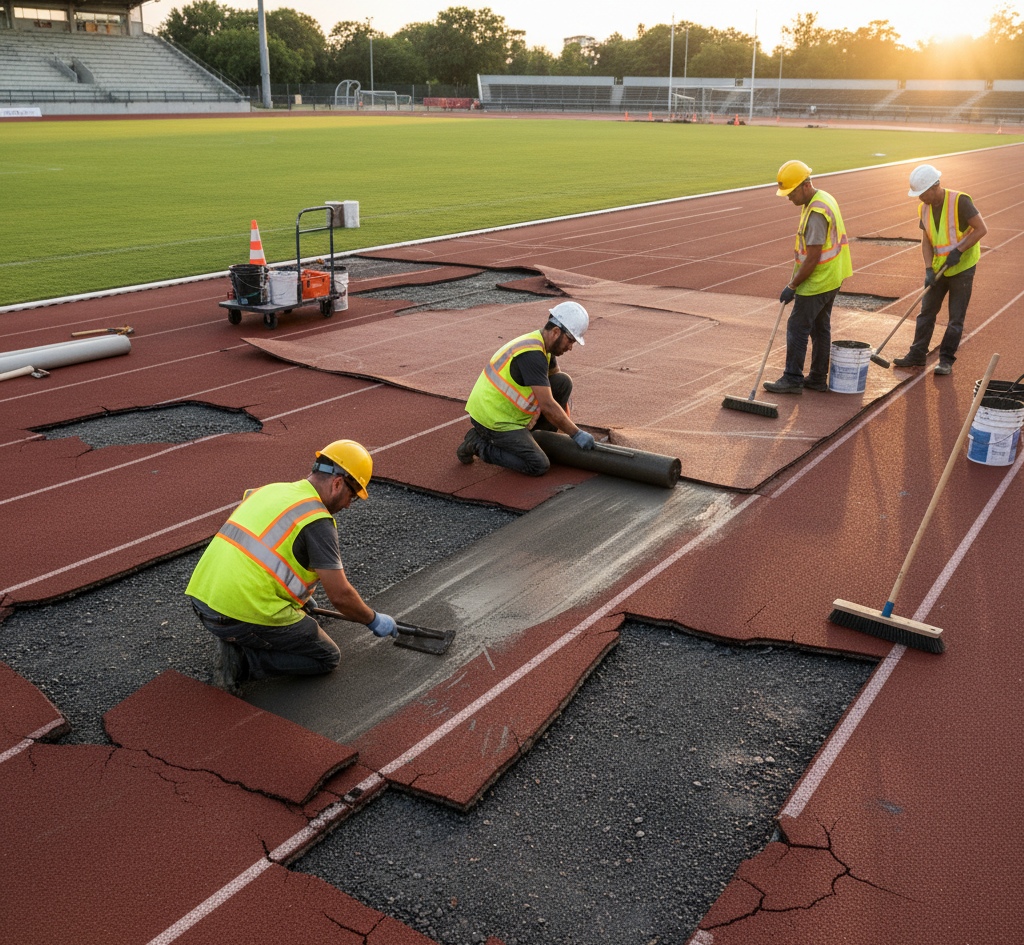
A running track is a critical sports infrastructure that supports athletic training, competition, and community fitness. Over time, however, even the most advanced track systems are subjected to continuous foot traffic, weather exposure, and mechanical stress. These factors often lead to cracks, surface peeling, uneven lanes, faded markings, and loss of shock absorption. If left unaddressed, such issues can compromise athlete safety, reduce performance quality, and shorten the lifespan of the facility.
The repair of damaged running track surfaces is essential to maintain a safe, high-performance, and visually professional environment. Whether the track is constructed from polyurethane, EPDM, tartan, or asphalt-based systems, timely repair restores functionality and preserves long-term value.
This comprehensive guide explains the importance of track repair, common types of damage, step-by-step repair processes, materials used, cost considerations, and the advantages of professional repair services.
Why Repair of Damaged Running Track Is Essential
Athlete Safety and Injury Prevention
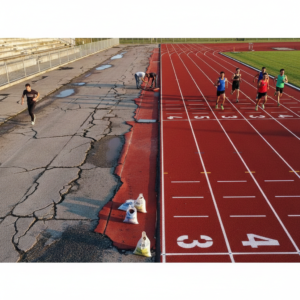
A damaged running track creates uneven surfaces, loose granules, and hard spots that increase the risk of trips, slips, and joint injuries. Cracks and depressions can cause athletes to alter their stride unintentionally, placing stress on ankles, knees, and hips. The repair of damaged running track surfaces restores smoothness and shock absorption, significantly reducing injury risks.
Performance Consistency
Track condition directly influences speed, traction, and energy return. Worn or hardened surfaces reduce grip and affect running efficiency. Repairing damaged areas ensures consistent traction and cushioning across all lanes, allowing athletes to perform at their full potential.
Preventing Structural Deterioration
Minor surface damage can quickly expand due to moisture penetration, temperature changes, and repeated impact. Timely repair of damaged running track surfaces prevents small defects from becoming major structural failures, reducing future repair costs.
Compliance With Athletic Standards
Professional and competitive tracks must meet World Athletics (formerly IAAF) standards for lane dimensions, surface uniformity, and safety. Repairs help maintain compliance and keep facilities competition-ready.
Common Types of Damage in Running Tracks
Understanding the nature of damage is crucial for effective repair.
Cracks and Surface Fissures
Cracks often form due to sub-base movement, thermal expansion, or prolonged use. These fissures can appear in both synthetic and asphalt-based tracks and allow water to seep into lower layers.
Surface Peeling and Delamination
Delamination occurs when polyurethane or EPDM layers separate from the base, usually due to moisture infiltration, aging adhesives, or improper installation. This reduces shock absorption and traction.
Uneven or Depressed Areas
Settling of the sub-base, erosion, or heavy impact from field equipment can create dips or raised sections. These irregularities disrupt running form and pose safety hazards.
Faded or Worn Line Markings
Lane numbers, start lines, and relay zones fade over time due to foot traffic and UV exposure. Poor visibility affects training accuracy and official competitions.
Loss of Shock Absorption
As track materials age, they may harden, reducing elasticity and energy return. This increases repetitive stress on athletes’ joints and muscles.
Step-by-Step Process for Repair of Damaged Running Track
Step 1: Inspection and Damage Assessment
A detailed site inspection identifies cracks, delamination, uneven zones, drainage issues, and worn markings. The severity and extent of damage determine whether localized repairs or partial resurfacing is required.
Surface Cleaning and Preparation
Minor Crack and Localized Repairs
Major Surface Restoration
Line Marking Restoration
All lanes, start zones, and field markings are repainted using weather-resistant, non-slip paint. Measurements are taken to ensure compliance with international athletic standards.
Materials and Equipment Used in Running Track Repair
-
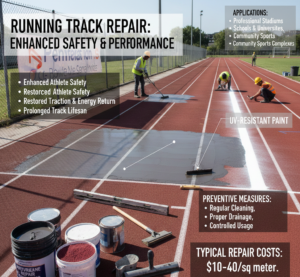
Polyurethane Repair Compounds – Restore flexibility and fill cracks
-
EPDM Granules – Improve shock absorption and surface texture
-
Primers and Bonding Agents – Ensure strong adhesion between layers
-
Leveling Tools – Trowels, rollers, and squeegees for smooth application
-
UV-Resistant Paints – Durable line marking and lane visibility
High-quality materials are essential for long-lasting repair of damaged running track surfaces.
Benefits of Timely Repair of Damaged Running Track
-
Enhanced athlete safety and reduced injury risk
-
Restored traction, elasticity, and energy return
-
Prolonged track lifespan and structural integrity
-
Compliance with competition and training standards
-
Improved appearance and facility reputation
Timely repairs prevent costly full resurfacing and keep facilities operational.
Preventive Measures to Minimize Track Damage
Regular Cleaning and Inspection
Frequent sweeping and inspections help identify early signs of damage.
Proper Drainage Management
Effective drainage prevents water accumulation that weakens surface layers.
Controlled Track Usage
Restrict non-athletic activities and heavy equipment use on the track.
Scheduled Maintenance
Routine patch repairs and recoating extend surface life.
Environmental Protection
Protect tracks from extreme UV exposure, heavy rainfall, or freezing conditions where possible.
Applications of Running Track Repair Services
-
Professional Stadiums: Maintain international competition standards
-
Schools and Universities: Ensure safe training environments
-
Community Sports Complexes: Support recreational fitness activities
-
Indoor Running Tracks: Maintain year-round training quality
The repair of damaged running track systems is essential for both elite athletes and everyday users.
Cost Considerations for Repair of Damaged Running Track
Repair costs depend on several factors:
-
Severity and extent of damage
-
Track material type (polyurethane, EPDM, tartan)
-
Track size and number of lanes
-
Labor expertise and equipment requirements
Typical repair costs range from $10 to $40 per square meter, with localized repairs being more affordable than extensive resurfacing.
Advantages of Professional Repair of Damaged Running Track
-
Expert damage assessment and solution planning
-
Use of certified materials and proven techniques
-
Compliance with World Athletics specifications
-
Long-lasting repair quality
-
Efficient project completion with minimal downtime
Professional services ensure reliable, durable, and safe outcomes.
Conclusion
The repair of damaged running track surfaces is a critical process that safeguards athlete safety, maintains performance standards, and protects the long-term value of sports facilities. From minor cracks and faded markings to major surface delamination, professional repair restores smoothness, elasticity, and visual appeal.
Frequently Asked Questions (FAQ) – Repair of Damaged Running Track
1. What are the common causes of running track damage?
Running tracks can be damaged due to heavy usage, extreme weather conditions, poor drainage, UV exposure, improper installation, and lack of regular maintenance. Spikes from athletic shoes and equipment movement can also cause surface wear over time.
2. How do I know if my running track needs repair?
Signs include cracks, surface bubbling, fading, water pooling, uneven areas, peeling layers, or reduced shock absorption. If athletes complain about slipping or discomfort, it’s time for inspection and repair.
3. Can small cracks in a running track be repaired?
Yes. Minor cracks and surface damage can typically be repaired using polyurethane or rubber-based patching compounds. Early repair prevents further structural damage and reduces overall costs.
4. How long does running track repair take?
The timeline depends on the extent of damage. Minor repairs may take 1–3 days, while resurfacing or major repairs could take 1–2 weeks, including curing time.
5. Is it better to repair or completely resurface a running track?
If damage is localized, repairs are sufficient. However, if the surface is extensively worn or structurally compromised, resurfacing may be more cost-effective and ensure long-term performance.
6. How often should a running track be maintained?
Routine inspections should be conducted every 6–12 months. Regular cleaning, crack sealing, and drainage checks help extend the lifespan of the track.
7. What materials are used in running track repairs?
Common materials include polyurethane coatings, EPDM rubber granules, latex binders, and acrylic resurfacing systems, depending on the track type (synthetic, rubber, or asphalt-based).
8. Does repairing a track improve athlete safety?
Absolutely. Timely repairs restore shock absorption, traction, and surface uniformity, reducing the risk of slips, trips, and impact injuries.
9. Can a damaged track affect athletic performance?
Yes. Uneven surfaces, cracks, or poor traction can slow runners down, affect stride mechanics, and increase fatigue or injury risk.
10. How long does a repaired running track last?
With proper maintenance, a repaired track can last 5–10 years or more. Regular care significantly enhances durability and performance.