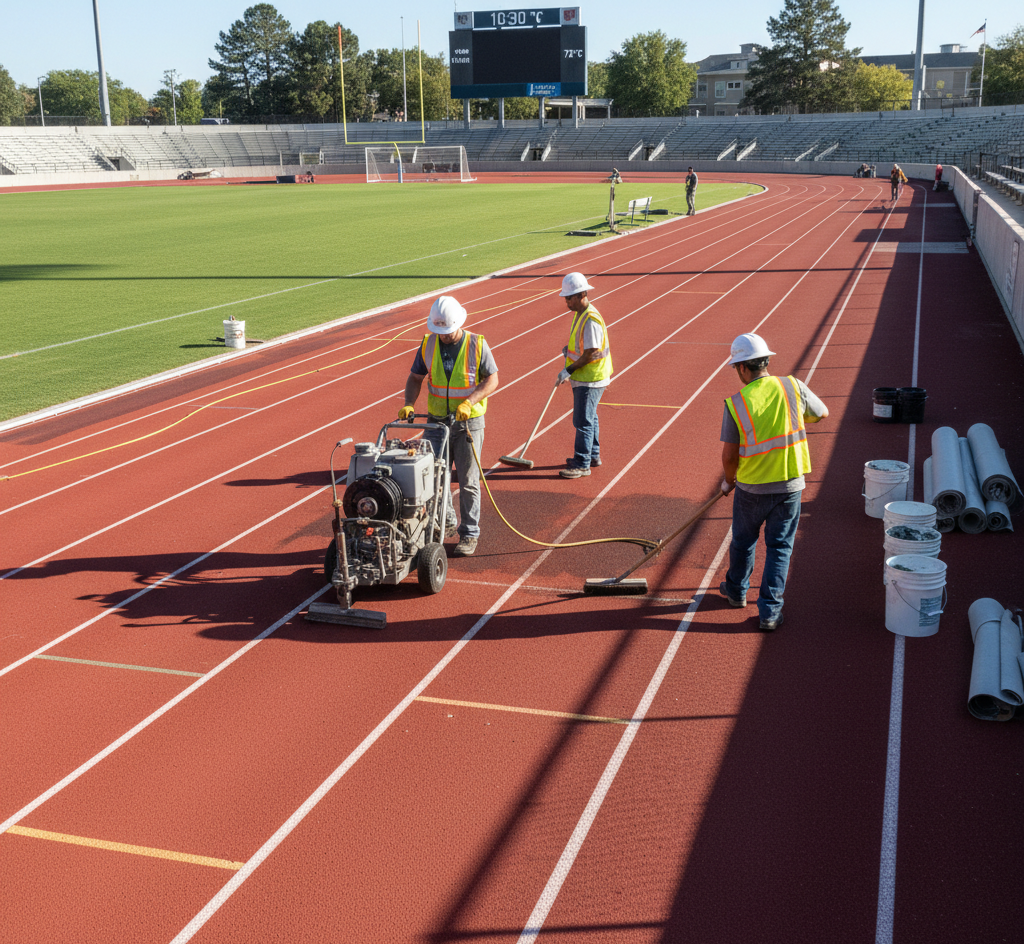
A well-maintained running track is essential for athlete safety, performance, and facility longevity. Regular maintenance preserves the structural integrity, surface quality, and shock-absorbing properties of the track, ensuring it remains suitable for training, competitions, and recreational use.
From synthetic tracks to polyurethane, tartan, or EPDM surfaces, every running track requires a maintenance strategy that combines routine inspections, cleaning, and repairs. Proper care minimizes wear and tear, reduces injury risk, and enhances the user experience.
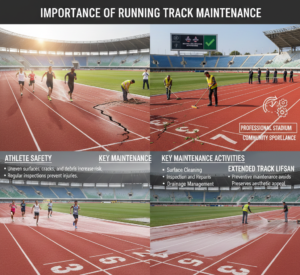
Importance of Running Track Maintenance
-
Athlete Safety
-
Uneven surfaces, cracks, and debris increase the risk of slips, trips, and falls.
-
Regular inspections prevent injuries and long-term damage to athletes’ joints and muscles.
-
-
Performance Optimization
-
Smooth, resilient surfaces allow athletes to maintain speed, balance, and stride efficiency.
-
Shock-absorbing properties remain effective when tracks are well-maintained.
-
-
Extended Track Lifespan
-
Preventive maintenance avoids costly resurfacing or reconstruction.
-
Preserves the track’s aesthetic appeal and functional quality for years.
-
-
Regulatory Compliance
-
Tracks must meet IAAF/World Athletics standards for competitions.
-
Maintenance ensures the track remains competition-ready and safe.
-
2. Key Maintenance Activities
a. Surface Cleaning
-
Remove dirt, leaves, debris, and litter from lanes and curves.
-
Use soft brooms, blowers, or low-pressure water sprays to avoid surface damage.
-
Regular cleaning prevents slipping hazards and surface wear.
b. Inspection and Repairs
-
Inspect tracks for cracks, depressions, or loose granules.
-
Repair minor damages promptly to prevent further deterioration.
-
Check for line markings fading and repaint if necessary.
c. Drainage Management
-
Ensure the drainage system is functional to prevent water pooling.
-
Remove debris from drains and gutters to maintain surface safety during rain.
-
Proper drainage prevents slippery conditions and surface damage.
d. Surface Treatment
-
For synthetic tracks, resurfacing or recoating may be necessary every few years.
-
Apply protective coatings to maintain UV resistance and shock absorption.
-
Keep EPDM or polyurethane granules evenly distributed to preserve cushioning.
e. Safety Checks
-
Inspect starting blocks, hurdles, and field equipment near the track.
-
Ensure guardrails and fencing around the track are intact.
-
Check for hazards near curves, edges, and spectator areas.
3. Seasonal and Environmental Maintenance
-
Rainy Season
-
Clear water accumulation to prevent slips and track damage.
-
Inspect synthetic surfaces for delamination or soft spots caused by moisture.
-
-
Winter
-
Avoid using sharp tools or heavy equipment to remove snow.
-
Use soft brushes or approved snow removal methods to prevent surface cracking.
-
-
Hot Weather
-
Monitor UV exposure to prevent surface fading or hardening.
-
Apply protective coatings if necessary to maintain surface elasticity.
-
4. Track Equipment Maintenance
-
Starting Blocks: Ensure proper alignment and secure attachment.
-
Hurdles: Check for rust, stability, and smooth movement.
-
Field Equipment: Ensure javelin, shot put, and long jump areas near the track are safe and free of obstructions.
Proper maintenance of equipment ensures athlete safety and preserves the integrity of the track surface.
5. Benefits of Regular Running Track Maintenance
-
Enhanced Safety: Reduces accidents caused by uneven or damaged surfaces.
-
Optimal Performance: Maintains consistent traction and shock absorption for athletes.
-
Long-Term Cost Savings: Prevents expensive resurfacing or structural repairs.
-
Aesthetic Appeal: Keeps the track looking professional and competition-ready.
-
Regulatory Compliance: Maintains standards for training and official events.
6. Maintenance Schedule Recommendations
| Frequency | Activity |
|---|---|
| Daily | Sweep debris, check for obvious hazards, inspect lane markings. |
| Weekly | Clean surfaces with soft brushes or low-pressure water, inspect equipment. |
| Monthly | Check drainage systems, repaint faded lines, inspect shock absorption. |
| Quarterly | Minor surface repairs, check for surface wear and elasticity. |
| Annually | Full inspection, deep cleaning, resurfacing if necessary, professional assessment. |
Following a structured schedule ensures the track remains safe, durable, and performance-ready throughout the year.
7. Common Issues and Solutions
-
Cracks and Depressions
-
Caused by heavy use or poor drainage.
-
Solution: Patch minor cracks with compatible filler; consult professionals for major damage.
-
-
Fading Lane Markings
-
Caused by sunlight, rain, or cleaning chemicals.
-
Solution: Repaint using durable, weather-resistant paint.
-
-
Surface Hardening or Softening
-
Exposure to extreme weather may alter surface elasticity.
-
Solution: Apply protective coatings or resurface layers to restore shock absorption.
-
-
Water Accumulation
-
Poor drainage leads to slippery or damaged areas.
-
Solution: Clear debris from drains and ensure proper grading for runoff.
-
8. Tips for Effective Running Track Maintenance
-
Conduct routine inspections and document findings.
-
Train maintenance staff on proper cleaning techniques and equipment handling.
-
Use compatible cleaning agents to avoid damaging synthetic surfaces.
-
Schedule maintenance during off-peak hours to avoid interfering with training or events.
-
Engage professional resurfacing services for long-term durability and performance.
9. Applications of Proper Track Maintenance
-
Professional Stadiums: Keeps tracks safe for elite athletes and competitions.
-
Schools and Universities: Supports daily training, PE classes, and inter-school events.
-
Community Sports Facilities: Ensures recreational users can run safely.
-
Indoor Tracks: Maintains performance in controlled environments for year-round training.
Regular maintenance ensures that all users benefit from a safe, high-quality track surface, regardless of the level of use.
10. Conclusion
Running track maintenance is essential for safety, performance, and longevity. Proper cleaning, inspections, surface repairs, drainage management, and equipment upkeep ensure that tracks remain safe, resilient, and competition-ready.
By following a structured maintenance schedule and employing best practices, schools, universities, stadiums, and community sports facilities can maximize track lifespan, enhance athlete performance, and reduce injury risk. A well-maintained running track is not only a functional athletic facility but also a professional and visually appealing asset that serves athletes and the community for years to come.
Running Track Maintenance – Frequently Asked Questions (FAQ)
❓ 1. Why is running track maintenance important?
Regular maintenance ensures:
-
Longer surface lifespan
-
Consistent athletic performance
-
Athlete safety
-
Prevention of cracks and surface damage
-
Cost savings by avoiding major repairs
Proper maintenance protects your investment and keeps the track competition-ready.
❓ 2. How often should a running track be maintained?
Maintenance frequency depends on usage:
-
Daily/Weekly: Cleaning debris and dust
-
Monthly: Inspection of high-wear areas
-
Quarterly: Deep cleaning and minor repairs
-
Every 5–8 years: Resurfacing (depending on surface type)
High-traffic stadium tracks require more frequent inspections.
❓ 3. What routine cleaning is required?
Basic cleaning includes:
-
Sweeping leaves and dust
-
Removing mud and sand
-
Washing with low-pressure water
-
Keeping drainage outlets clear
Avoid harsh chemicals and high-pressure washing unless recommended.
❓ 4. Can heavy vehicles be allowed on the track?
No. Heavy vehicles can:
-
Damage the rubber surface
-
Cause depressions or cracks
-
Reduce shock absorption
Access should be restricted to authorized maintenance personnel only.
❓ 5. How do you repair minor cracks or surface damage?
Minor issues can be repaired by:
-
Cleaning the affected area
-
Applying PU repair compound
-
Re-coating damaged spots
-
Repainting markings if needed
Professional contractors should handle significant repairs.
-
Athlete Safety
-
Uneven surfaces, cracks, and debris increase the risk of slips, trips, and falls.
-
Regular inspections prevent injuries and long-term damage to athletes’ joints and muscles.
-
-
Performance Optimization
-
Smooth, resilient surfaces allow athletes to maintain speed, balance, and stride efficiency.
-
Shock-absorbing properties remain effective when tracks are well-maintained.
-
-
Extended Track Lifespan
-
Preventive maintenance avoids costly resurfacing or reconstruction.
-
Preserves the track’s aesthetic appeal and functional quality for years.
-
-
Regulatory Compliance
-
Tracks must meet IAAF/World Athletics standards for competitions.
-
Maintenance ensures the track remains competition-ready and safe.
-
2. Key Maintenance Activities
a. Surface Cleaning
-
Remove dirt, leaves, debris, and litter from lanes and curves.
-
Use soft brooms, blowers, or low-pressure water sprays to avoid surface damage.
-
Regular cleaning prevents slipping hazards and surface wear.
b. Inspection and Repairs
-
Inspect tracks for cracks, depressions, or loose granules.
-
Repair minor damages promptly to prevent further deterioration.
-
Check for line markings fading and repaint if necessary.
c. Drainage Management
-
Ensure the drainage system is functional to prevent water pooling.
-
Remove debris from drains and gutters to maintain surface safety during rain.
-
Proper drainage prevents slippery conditions and surface damage.
d. Surface Treatment
-
For synthetic tracks, resurfacing or recoating may be necessary every few years.
-
Apply protective coatings to maintain UV resistance and shock absorption.
-
Keep EPDM or polyurethane granules evenly distributed to preserve cushioning.
e. Safety Checks
-
Inspect starting blocks, hurdles, and field equipment near the track.
-
Ensure guardrails and fencing around the track are intact.
-
Check for hazards near curves, edges, and spectator areas.
3. Seasonal and Environmental Maintenance
-
Rainy Season
-
Clear water accumulation to prevent slips and track damage.
-
Inspect synthetic surfaces for delamination or soft spots caused by moisture.
-
-
Winter
-
Avoid using sharp tools or heavy equipment to remove snow.
-
Use soft brushes or approved snow removal methods to prevent surface cracking.
-
-
Hot Weather
-
Monitor UV exposure to prevent surface fading or hardening.
-
Apply protective coatings if necessary to maintain surface elasticity.
-
4. Track Equipment Maintenance
-
Starting Blocks: Ensure proper alignment and secure attachment.
-
Hurdles: Check for rust, stability, and smooth movement.
-
Field Equipment: Ensure javelin, shot put, and long jump areas near the track are safe and free of obstructions.
Proper maintenance of equipment ensures athlete safety and preserves the integrity of the track surface.
5. Benefits of Regular Running Track Maintenance
-
Enhanced Safety: Reduces accidents caused by uneven or damaged surfaces.
-
Optimal Performance: Maintains consistent traction and shock absorption for athletes.
-
Long-Term Cost Savings: Prevents expensive resurfacing or structural repairs.
-
Aesthetic Appeal: Keeps the track looking professional and competition-ready.
-
Regulatory Compliance: Maintains standards for training and official events.
6. Maintenance Schedule Recommendations
| Frequency | Activity |
|---|---|
| Daily | Sweep debris, check for obvious hazards, inspect lane markings. |
| Weekly | Clean surfaces with soft brushes or low-pressure water, inspect equipment. |
| Monthly | Check drainage systems, repaint faded lines, inspect shock absorption. |
| Quarterly | Minor surface repairs, check for surface wear and elasticity. |
| Annually | Full inspection, deep cleaning, resurfacing if necessary, professional assessment. |
Following a structured schedule ensures the track remains safe, durable, and performance-ready throughout the year.
7. Common Issues and Solutions
-
Cracks and Depressions
-
Caused by heavy use or poor drainage.
-
Solution: Patch minor cracks with compatible filler; consult professionals for major damage.
-
-
Fading Lane Markings
-
Caused by sunlight, rain, or cleaning chemicals.
-
Solution: Repaint using durable, weather-resistant paint.
-
-
Surface Hardening or Softening
-
Exposure to extreme weather may alter surface elasticity.
-
Solution: Apply protective coatings or resurface layers to restore shock absorption.
-
-
Water Accumulation
-
Poor drainage leads to slippery or damaged areas.
-
Solution: Clear debris from drains and ensure proper grading for runoff.
-
8. Tips for Effective Running Track Maintenance
-
Conduct routine inspections and document findings.
-
Train maintenance staff on proper cleaning techniques and equipment handling.
-
Use compatible cleaning agents to avoid damaging synthetic surfaces.
-
Schedule maintenance during off-peak hours to avoid interfering with training or events.
-
Engage professional resurfacing services for long-term durability and performance.
9. Applications of Proper Track Maintenance
-
Professional Stadiums: Keeps tracks safe for elite athletes and competitions.
-
Schools and Universities: Supports daily training, PE classes, and inter-school events.
-
Community Sports Facilities: Ensures recreational users can run safely.
-
Indoor Tracks: Maintains performance in controlled environments for year-round training.
Regular maintenance ensures that all users benefit from a safe, high-quality track surface, regardless of the level of use.
10. Conclusion
Running track maintenance is essential for safety, performance, and longevity. Proper cleaning, inspections, surface repairs, drainage management, and equipment upkeep ensure that tracks remain safe, resilient, and competition-ready.
By following a structured maintenance schedule and employing best practices, schools, universities, stadiums, and community sports facilities can maximize track lifespan, enhance athlete performance, and reduce injury risk. A well-maintained running track is not only a functional athletic facility but also a professional and visually appealing asset that serves athletes and the community for years to come.
Running Track Maintenance – Frequently Asked Questions (FAQ)
❓ 1. Why is running track maintenance important?
Regular maintenance ensures:
-
Longer surface lifespan
-
Consistent athletic performance
-
Athlete safety
-
Prevention of cracks and surface damage
-
Cost savings by avoiding major repairs
Proper maintenance protects your investment and keeps the track competition-ready.
❓ 2. How often should a running track be maintained?
Maintenance frequency depends on usage:
-
Daily/Weekly: Cleaning debris and dust
-
Monthly: Inspection of high-wear areas
-
Quarterly: Deep cleaning and minor repairs
-
Every 5–8 years: Resurfacing (depending on surface type)
High-traffic stadium tracks require more frequent inspections.
❓ 3. What routine cleaning is required?
Basic cleaning includes:
-
Sweeping leaves and dust
-
Removing mud and sand
-
Washing with low-pressure water
-
Keeping drainage outlets clear
Avoid harsh chemicals and high-pressure washing unless recommended.
❓ 4. Can heavy vehicles be allowed on the track?
No. Heavy vehicles can:
-
Damage the rubber surface
-
Cause depressions or cracks
-
Reduce shock absorption
Access should be restricted to authorized maintenance personnel only.
❓ 5. How do you repair minor cracks or surface damage?
Minor issues can be repaired by:
-
Cleaning the affected area
-
Applying PU repair compound
-
Re-coating damaged spots
-
Repainting markings if needed
Professional contractors should handle significant repairs.
❓ 6. How long does a synthetic running track last with proper maintenance?
Typical lifespan:
-
Full PU systems: 10–15 years
-
Sandwich systems: 8–12 years
-
EPDM jogging tracks: 8–10 years
-
Acrylic tracks: 5–8 years
Proper care significantly extends durability.
❓ 7. What causes running track damage?
Common causes include:
-
Poor drainage
-
UV exposure
-
Heavy usage
-
Improper cleaning methods
-
Low-quality base construction
-
Standing water during monsoon
Regular inspections help detect issues early.
❓ 8. How important is drainage in maintenance?
Very important. Poor drainage can cause:
-
Water pooling
-
Surface bubbling
-
Delamination
-
Reduced traction
Tracks should maintain a 1% slope for effective water runoff.
❓ 9. When is resurfacing required?
Resurfacing may be needed when:
-
Surface loses grip
-
Granules start coming loose
-
Cracks appear frequently
-
Color fades significantly
-
Shock absorption reduces
Typically required after 8–12 years depending on use.
❓ 10. How should lane markings be maintained?
Lane markings should be:
-
Inspected annually
-
Repainted when faded
-
Applied using approved track paint
Proper marking ensures compliance with athletic standards.