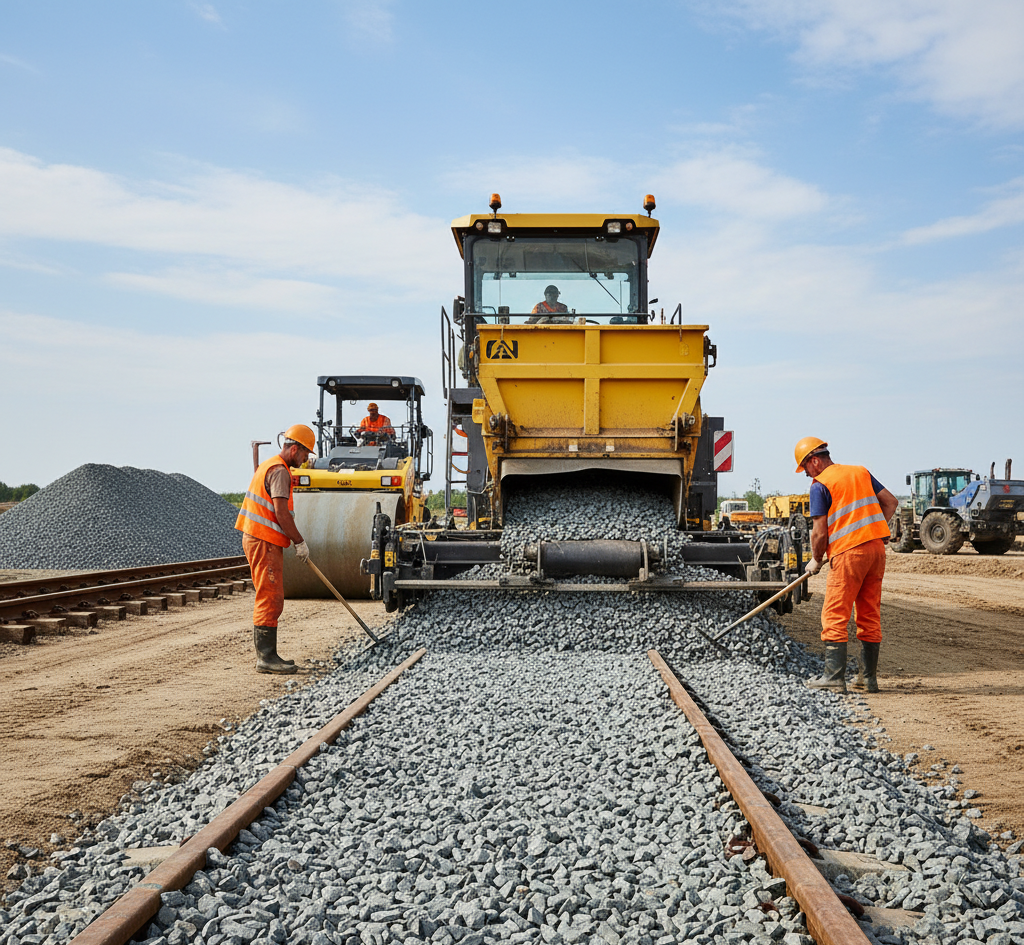
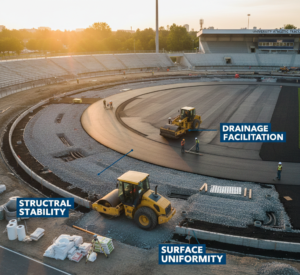
A durable and high-performance running track starts with proper foundation preparation. The foundation, or track base, provides structural stability, drainage support, and surface uniformity, ensuring the track withstands heavy usage and extreme weather conditions.
1. Importance of Track Foundation Preparation
-
Structural Stability
-
Provides a stable platform for asphalt, concrete, or synthetic track layers.
-
Prevents surface deformation, cracking, and uneven settling.
-
-
Drainage Facilitation
-
Proper foundation allows water to flow away from the track surface.
-
Reduces water pooling, which can cause surface damage and safety hazards.
-
-
Surface Uniformity
-
Ensures smooth, consistent lanes for all track events.
-
Critical for athlete performance and fair competition.
-
-
Shock Absorption Support
-
Works in conjunction with elastic layers to minimize impact on joints and muscles.
-
-
Longevity and Maintenance
-
A strong foundation reduces the need for frequent repairs and resurfacing.
-
2. Components of Track Foundation Preparation
-
Subgrade Layer
-
The natural soil layer is compacted and stabilized.
-
Weak or soft soil may require replacement or stabilization with lime, cement, or geotextiles.
-
-
Aggregate Layer
-
Crushed stone or gravel provides structural strength and drainage.
-
Typically laid in layers and compacted to prevent settlement.
-
-
Base Layer (Asphalt or Concrete)
-
Provides a level, stable platform for synthetic surfacing.
-
Thickness ranges from 50–100 mm, depending on track type and usage.
-
-
Slope and Grading
-
Track is designed with 0.5–1% cross slope to facilitate water runoff.
-
Curves and bends are carefully graded to maintain lane consistency.
-
3. Steps in Track Foundation Preparation
Step 1: Site Assessment
-
Analyze soil type, topography, and drainage conditions.
-
Conduct soil testing to determine load-bearing capacity.
-
Identify areas requiring excavation or soil stabilization.
Step 2: Excavation
-
Remove vegetation, debris, and unsuitable topsoil.
-
Excavate to a depth sufficient for subgrade, aggregate, and base layers.
-
Compact the natural soil using rollers or plate compactors.
-
Stabilize weak soil with additives like lime, cement, or geotextile membranes.
-
Ensure uniform density across the entire track area.
-
Spread crushed stone or gravel in 75–150 mm layers.
-
Compact each layer thoroughly to achieve structural integrity.
-
Maintain proper grading and cross slope for drainage.
-
Lay asphalt or concrete over the compacted aggregate.
-
Ensure the base is level, smooth, and adheres to slope requirements.
-
Clean the base of dust, loose particles, and debris.
4. Materials Used in Track Foundation Preparation
-
Soil and Subgrade Materials
-
High-quality, compactable soil or stabilized fill.
-
-
Crushed Stone and Gravel
-
Provides strength and facilitates water drainage.
-
Common sizes range from 20–40 mm.
-
-
Asphalt or Concrete
-
Rigid base layer supporting the track surface.
-
-
Geotextiles or Stabilizing Agents
-
Enhance soil strength and prevent movement or erosion.
-
-
Primer and Bonding Agents
-
Improve adhesion between base and synthetic surfacing.
-
5. Factors Affecting Foundation Preparation
-
Soil Quality – Weak or expansive soils require stabilization or replacement.
-
Climate Conditions – High rainfall areas require enhanced drainage planning.
-
Budget – Material choice and construction method affect total cost.
-
Slope and Drainage – Proper grading prevents water accumulation and surface damage.
6. Advantages of Proper Foundation Preparation
-
Structural Integrity – Prevents cracks, uneven settling, and deformation.
-
Enhanced Athlete Safety – Smooth, stable surfaces reduce the risk of injuries.
-
Durability – Strong base extends track lifespan, reducing maintenance costs.
-
Consistent Performance – Uniform foundation ensures reliable traction and speed.
-
Compliance – Meets international and national standards for athletic tracks.
7. Challenges in Foundation Preparation
-
Uneven Terrain
-
Requires careful grading and compaction.
-
-
High Water Table or Poor Drainage
-
Subsurface drainage and slope adjustments are necessary.
-
-
Weak or Expansive Soil
-
Stabilization using lime, cement, or geotextiles is critical.
-
-
Limited Construction Space
-
Requires careful planning to accommodate field events, spectator areas, and auxiliary facilities.
-
Professional engineers use surveying tools, soil testing, and compaction equipment to overcome these challenges.
8. Maintenance Considerations for Track Foundation
-
Inspect for settling, cracks, or drainage issues annually.
-
Ensure that subsurface drains are clear to prevent water accumulation.
-
Periodic maintenance enhances surface performance and longevity.
9. Applications
Track foundation preparation is essential for all types of running tracks:
-
Olympic and Professional Stadiums
-
University and School Athletic Tracks
-
Community Sports Grounds
-
Indoor Synthetic Tracks
-
Multi-Sport Training Facilities
A well-prepared foundation ensures safe, durable, and competition-ready tracks for athletes of all levels.
10. Conclusion
Track foundation preparation is the cornerstone of building a high-performance running track. From subgrade stabilization and aggregate layering to base construction and slope grading, every step ensures structural integrity, drainage efficiency, and surface uniformity.
Investing in professional foundation preparation enhances athlete safety, reduces maintenance costs, and maximizes track longevity. For any synthetic, polyurethane, or asphalt track, a strong foundation is not optional—it is essential for creating a world-class athletic facility that performs reliably for years to come.
(FAQ – Track Foundation Preparation)
1. What is track foundation preparation?
Track foundation preparation is the process of creating a strong, stable, and level base for a running track before installing the surface. It ensures durability, safety, proper drainage, and optimal performance for athletes.
2. Why is track foundation preparation important?
A well-prepared foundation:
-
Prevents surface deformation or sinking over time
-
Ensures even traction and bounce for athletes
-
Enhances drainage and prevents waterlogging
-
Reduces long-term maintenance costs
3. What are the key steps in track foundation preparation?
-
Site clearing – Remove vegetation, debris, and old surfaces.
-
Subgrade leveling – Excavation and grading to achieve a uniform base.
-
Soil compaction – Strengthen the ground to prevent settling.
-
Sub-base installation – Crushed stone or gravel layer for stability and drainage.
-
Base layer construction – Asphalt or concrete base for smooth and strong support.
-
Drainage setup – Proper sloping and pipes to avoid water accumulation.
4. What materials are used for track foundation preparation?
-
Soil – Compacted for subgrade stability
-
Crushed stone or gravel – For sub-base strength and drainage
-
Asphalt or concrete – For base layer stability
-
Drainage pipes or channels – To prevent water damage
5. How long does track foundation preparation take?
-
Small school tracks: 1–2 weeks
-
Standard 400m athletic tracks: 3–6 weeks
-
Professional stadium tracks: 6–10 weeks
The duration depends on site conditions, weather, and track size.
6. Can track foundation preparation be done on existing tracks?
Yes. Existing tracks can be assessed for base stability. Weak or uneven foundations may require excavation, soil compaction, and sub-base replacement before resurfacing.
7. What equipment is used for foundation preparation?
-
Excavators and graders for leveling and clearing
-
Rollers and compactors for soil and sub-base
-
Asphalt pavers or concrete mixers for base layer
-
Surveying tools for ensuring correct slope and alignment
8. How much does track foundation preparation cost?
-
Subgrade and sub-base work: ₹150–₹300 per sq. ft
-
Asphalt or concrete base layer: ₹300–₹600 per sq. ft
Costs vary based on materials, size, site conditions, and labor.
9. How durable is a properly prepared track foundation?
With proper materials and construction:
-
Asphalt base: 10–15 years
-
Concrete base: 15–20 years
Proper drainage and maintenance of the surface layer extend the foundation’s lifespan.
10. Who should carry out track foundation preparation?
Professional track construction companies or civil contractors specializing in sports facilities should perform foundation preparation to ensure compliance with international or local standards and athlete safety.
(FAQ – Track Foundation Preparation)
1. What is track foundation preparation?
Track foundation preparation is the process of creating a stable and durable base for a running track. It involves preparing the ground, sub-base, and base layers before installing the final track surface to ensure safety, performance, and longevity.
2. Why is track foundation preparation important?
A properly prepared foundation:
-
Prevents surface deformation or sinking over time
-
Provides even traction and bounce for athletes
-
Ensures efficient drainage and prevents waterlogging
-
Reduces maintenance costs and extends track life
3. What are the main steps in track foundation preparation?
-
Site Clearing – Remove debris, vegetation, and old surfaces.
-
Subgrade Leveling – Excavate and level the soil to create a uniform base.
-
Soil Compaction – Strengthen the ground to avoid settling.
-
Sub-Base Layer – Add crushed stone or gravel for stability and drainage.
-
Base Layer Construction – Lay asphalt or concrete for a smooth, strong surface.
-
Drainage Installation – Ensure proper slope and drainage pipes to prevent water accumulation.
4. What materials are used for track foundation preparation?
-
Compacted soil for the subgrade
-
Crushed stone or gravel for the sub-base
-
Asphalt or concrete for the base layer
-
Drainage pipes or channels to manage water runoff
5. How long does track foundation preparation take?
-
Small school tracks: 1–2 weeks
-
Standard 400m athletic tracks: 3–6 weeks
-
Professional stadium tracks: 6–10 weeks
The duration depends on soil conditions, weather, and track size.
6. Can existing tracks be prepared for resurfacing?
Yes. Existing tracks can be assessed, and if the base is weak or uneven, it can be re-excavated, compacted, and resurfaced for improved durability and performance.
7. What equipment is used in foundation preparation?
-
Excavators and graders for leveling and site clearing
-
Rollers and compactors for soil and sub-base
-
Asphalt pavers or concrete mixers for the base layer
-
Surveying tools to ensure proper slope and alignment
8. How much does track foundation preparation cost?
-
Subgrade and sub-base work: ₹150–₹300 per sq. ft
-
Asphalt or concrete base layer: ₹300–₹600 per sq. ft
Costs vary depending on materials, size, and labor.
9. How durable is a properly prepared track foundation?
-
Asphalt base: 10–15 years
-
Concrete base: 15–20 years
Regular maintenance and proper drainage can extend its lifespan even further.
10. Who should carry out track foundation preparation?
Professional track construction companies or civil contractors specializing in sports facilities should handle foundation preparation to meet safety standards and ensure optimal performance.