A running track is often judged by its surface quality, lane markings, and athletic performance standards. However, one of the most critical yet often overlooked elements of track construction is drainage design. Without an effective drainage system, even the most advanced track surfaces can deteriorate quickly, becoming unsafe and costly to maintain.
Water accumulation on or beneath a running track can cause slippery conditions, surface deformation, loss of elasticity, and long-term structural damage. A professionally designed drainage system ensures that rainwater and surface runoff are efficiently removed, preserving the track’s performance characteristics and extending its service life.
Whether for a professional stadium, educational institution, or community sports complex, drainage planning must be an integral part of running track construction.
Why Drainage Is Essential for Running Tracks
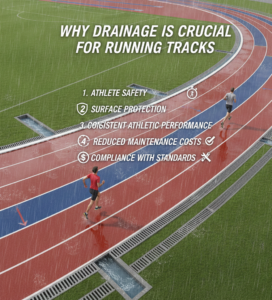
Athlete Safety
Water pooling on track surfaces significantly increases the risk of slips, falls, and muscle injuries. Proper drainage keeps lanes dry and ensures safe footing during training and competition, particularly in curves and high-impact zones such as starting areas.
Surface Protection
Synthetic track systems such as polyurethane, EPDM, and Tartan are sensitive to prolonged moisture exposure. Inefficient drainage can lead to bubbling, delamination, cracking, or loss of elasticity, reducing surface lifespan.
Consistent Athletic Performance
A dry track provides uniform traction and energy return across all lanes. Poor drainage can create uneven running conditions, affecting speed, balance, and competitive fairness.
Reduced Maintenance Costs
Tracks with effective drainage systems require fewer repairs and resurfacing interventions. Preventing water damage early significantly lowers long-term maintenance expenses.
Compliance With Standards
Athletics governing bodies mandate efficient water management systems for competition tracks. Proper drainage ensures compliance with safety and performance regulations.
Core Components of a Running Track Drainage System
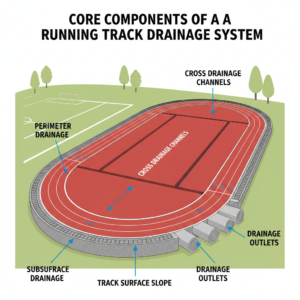
A complete drainage system is made up of several integrated elements, each playing a specific role in water management.
Perimeter Drainage
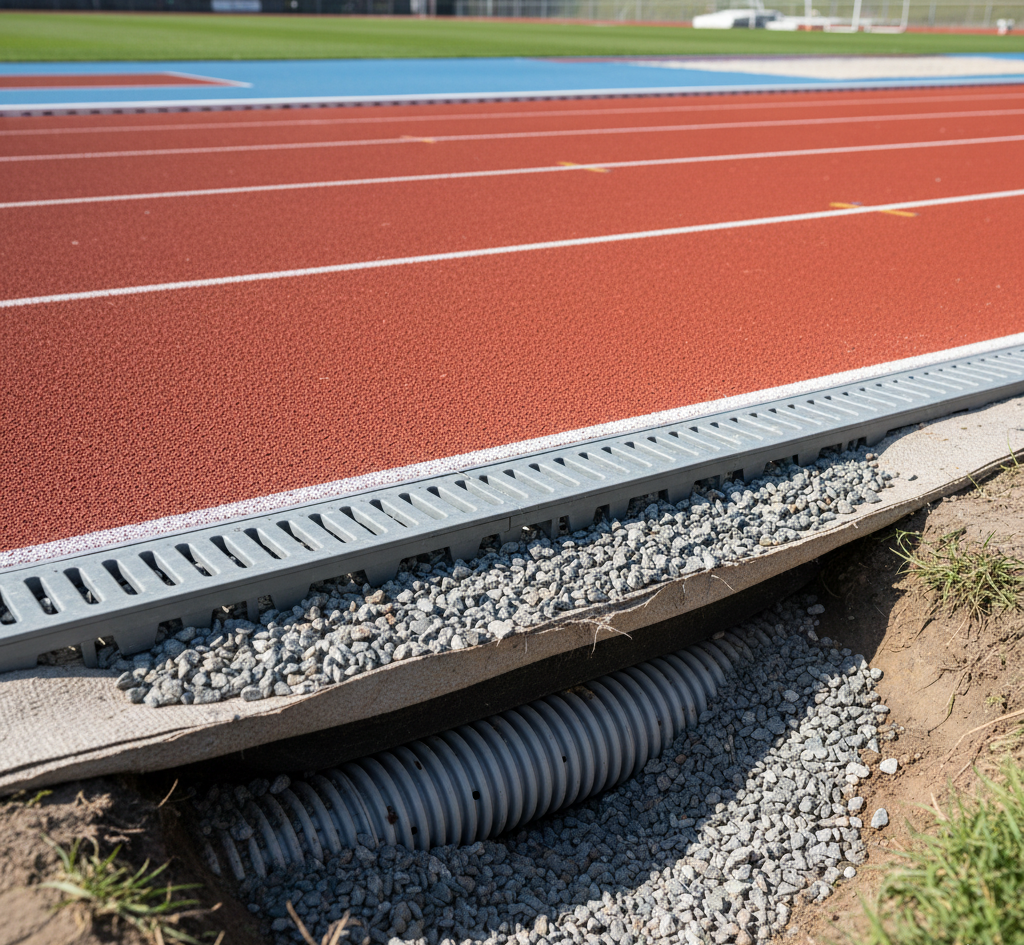
Perimeter drains are installed along the outer edges of the track to collect surface runoff. These are commonly designed as French drains or trench drains using perforated pipes surrounded by gravel for effective water collection and filtration.
Cross Drainage Channels
Cross drains connect the perimeter drainage system and ensure water is evenly removed from straights and curved sections. They are particularly important in areas prone to localized water accumulation.
Track Surface Slope
Running tracks are engineered with a cross slope of approximately 0.5% to 1%. This gentle gradient directs surface water toward drainage channels without affecting athlete movement or performance.
Subsurface Drainage Layer
Beneath the track surface lies a drainage layer made of crushed stone or graded aggregate. This layer allows water to percolate downward and flow toward drainage pipes instead of remaining trapped under the surface.
Drainage Outlets
Collected water is safely discharged through outlets connected to stormwater systems, soak pits, or natural drainage infrastructure. Proper outlet design prevents backflow and flooding near the track.
Drainage Design Principles for Running Tracks
Effective drainage design is based on engineering precision and site-specific analysis.
Uniform Sloping
Maintaining consistent cross slope across the entire track width ensures predictable water flow and prevents isolated puddles.
Soil and Subgrade Preparation
Well-compacted and properly graded subgrade layers reduce water stagnation and protect the track foundation from settlement or erosion.
Adequate Pipe Capacity
Drainage pipes must be sized to handle peak rainfall conditions. Undersized pipes can cause overflow, while oversized systems increase costs unnecessarily.
Integration With Surroundings
Drainage outlets must blend seamlessly with surrounding landscaping and infrastructure, preventing soil erosion or waterlogging in adjacent areas.
Types of Drainage Systems Used in Running Track
Surface Drainage Systems
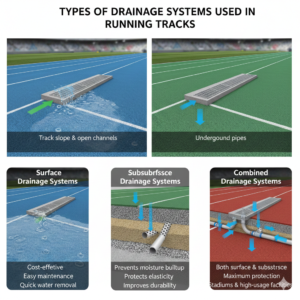
Surface drainage relies on track slope and open channels to remove water directly from the surface. It is suitable for impermeable synthetic tracks in regions with moderate rainfall.
Advantages:
-
Cost-effective
-
Easy maintenance
-
Quick water removal
Subsurface Drainage Systems
Subsurface drainage collects water that seeps through surface layers and channels it away via underground pipes. This system is essential in areas with heavy rainfall or high groundwater levels.
Advantages:
-
Prevents moisture buildup beneath the track
-
Protects elasticity and bonding layers
-
Improves long-term durability
Combined Drainage Systems
High-performance tracks often use both surface and subsurface drainage. This approach offers maximum protection against water damage and is recommended for stadiums and high-usage facilities.
Advantages:
-
Superior water control
-
Enhanced safety and surface stability
-
Long-term cost efficiency
Construction Process for Running Track Drainage
Site Evaluation
Engineers analyze soil conditions, rainfall patterns, groundwater levels, and site topography to determine the most effective drainage strategy.
Benefits of an Efficient Drainage System
-
Prevents surface degradation and material failure
-
Maintains optimal traction and elasticity
-
Extends track lifespan significantly
-
Reduces long-term maintenance and repair costs
-
Enhances athlete confidence and performance
-
Ensures regulatory compliance
Common Drainage Challenges and Solutions
High Water Table
Sites with high groundwater require deeper subsurface drainage layers and additional waterproofing to prevent seepage.
Heavy Rainfall Zones
Larger pipe diameters, additional outlets, and combined drainage systems help manage high water volumes efficiently.
Limited Space
Urban environments often require compact drainage solutions integrated with surrounding infrastructure.
Professional planning and engineering expertise are essential to address these challenges effectively.
Maintenance of Running Track Drainage Systems
Even the best drainage system requires routine maintenance to remain effective.
-
Regular removal of debris from surface drains
-
Periodic inspection of pipes and outlets
-
Clearing sediment buildup in gravel beds
-
Monitoring track performance after heavy rainfall
Preventive maintenance ensures uninterrupted drainage and protects the track investment.
Environmental and Safety Advantages
Efficient drainage systems also contribute to environmental sustainability by:
-
Managing runoff responsibly
-
Preventing soil erosion
-
Reducing water stagnation and mosquito breeding
-
Supporting eco-friendly sports infrastructure
From a safety perspective, dry tracks reduce accident risks and provide consistent playing conditions year-round.
Where Proper Drainage Is Essential
Running track drainage systems are vital for:
-
Olympic and professional stadiums
-
School and university athletic facilities
-
Community sports complexes
-
Multi-sport training grounds
-
Indoor and outdoor synthetic tracks
Conclusion
A running track drainage system is not an optional feature—it is a fundamental component of safe, high-performance sports infrastructure. From surface slopes and subsurface layers to perimeter drains and outlets, every element must work together to manage water effectively.
By investing in professional drainage design and construction, facility owners ensure athlete safety, consistent performance, reduced maintenance costs, and long-term durability. A well-drained running track remains reliable in all weather conditions, supporting athletes and institutions for years to come.