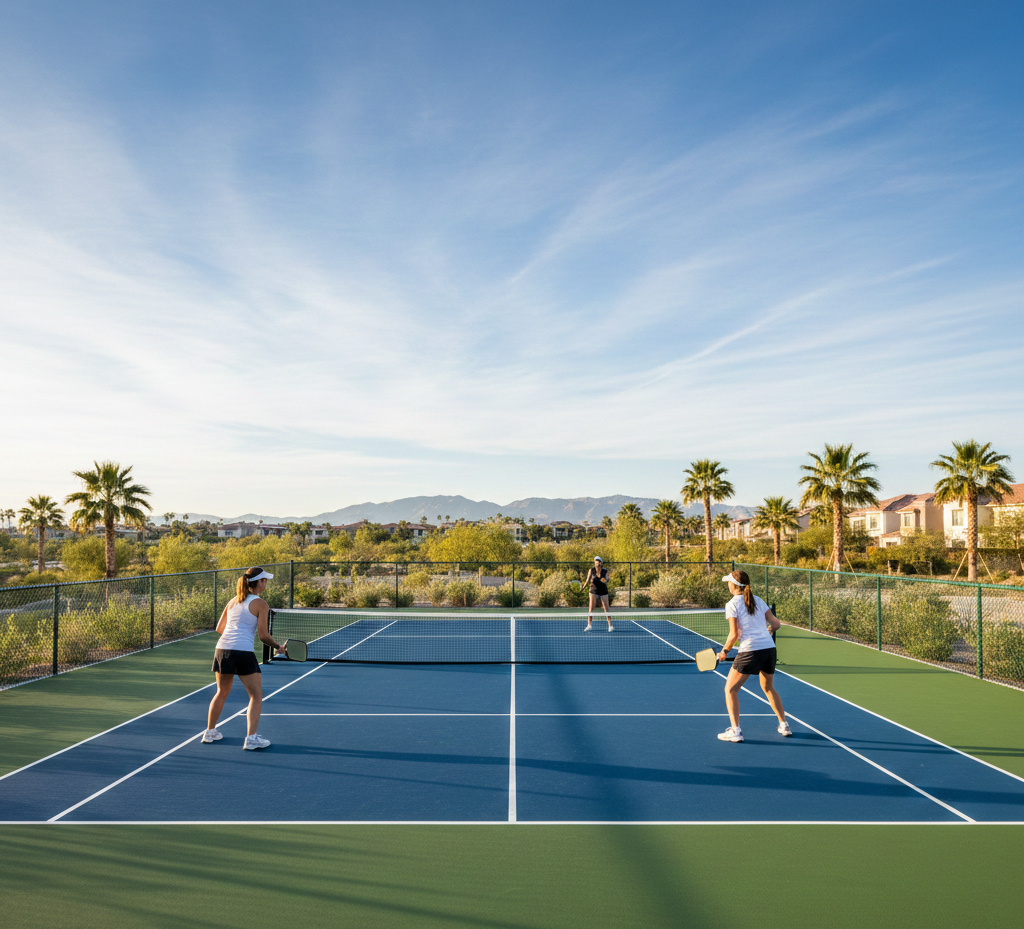
A synthetic turf pickleball court is an innovative flooring option that combines durability, low maintenance, and aesthetic appeal. Ideal for both residential and recreational facilities, synthetic turf courts provide a soft, safe, and visually appealing surface for players of all ages.
1. What is a Synthetic Turf Pickleball Court?
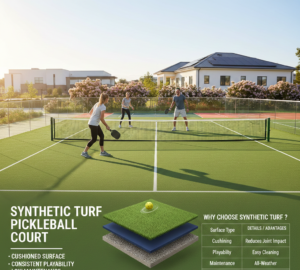
Synthetic turf courts use high-quality artificial grass fibers layered over a shock-absorbing base, providing a smooth and cushioned playing surface. This type of flooring mimics natural grass while offering consistent ball bounce and reduced maintenance requirements.
2. Advantages of Synthetic Turf Courts
-
Cushioned Surface: Reduces impact on joints, making it safer for players
-
Consistent Playability: Uniform surface ensures predictable ball bounce
-
Low Maintenance: Requires minimal cleaning and no watering or mowing
-
Weather Resistant: Can withstand sun, rain, and heavy usage without damage
-
Aesthetic Appeal: Green, natural-looking surface enhances the visual appeal of your court
-
Multi-Purpose Use: Can accommodate other sports like mini-tennis or recreational games
3. Construction and Layers
-
Base Layer: Crushed stone or gravel for proper drainage
-
Shock Pad (Optional): Adds cushioning and reduces fatigue
-
Synthetic Turf Layer: High-quality artificial fibers
-
Line Markings: Durable, contrasting paint or stitched-in lines for official court dimensions
4. Installation Considerations
-
Proper Drainage: Essential to prevent waterlogging
-
Level Surface: Ensures uniform ball bounce and player safety
-
UV-Resistant Turf: Maintains color and performance under sunlight
-
Professional Installation: Recommended for long-lasting results and durability
5. Ideal Applications
-
Residential Backyards: Safe and visually appealing for family play
-
Community and Recreational Centers: Durable and low-maintenance option for high-traffic courts
-
Multi-Sport Facilities: Can be adapted for other games while retaining pickleball compliance
6. Maintenance Tips
-
Sweep debris regularly to maintain surface integrity
-
Rinse turf occasionally to remove dust and dirt
-
Check and repair any worn or damaged areas
-
Maintain proper court lines for accurate play
7. Summary Table: Synthetic Turf Pickleball Court
| Feature | Details / Advantages |
|---|---|
| Surface Type | Synthetic turf over shock-absorbing base |
| Cushioning | Reduces joint impact |
| Playability | Consistent ball bounce |
| Maintenance | Low-maintenance, easy cleaning |
| Durability | Weather-resistant and long-lasting |
| Aesthetic Appeal | Natural green look |
Why Choose Synthetic Turf for Pickleball?
Synthetic turf offers a premium, safe, and low-maintenance alternative to traditional surfaces. Its cushioned feel, durability, and visual appeal make it perfect for families, clubs, and recreational centers looking to create a high-quality playing environment.
Contact us today to explore synthetic turf solutions and design your ultimate pickleball court.
Synthetic Turf Pickleball Court – Frequently Asked Questions
1. What is a synthetic turf pickleball court?
A synthetic turf pickleball court is an artificial grass playing surface specifically engineered for pickleball. It provides consistent ball bounce, anti-slip grip, and long-term durability, making it suitable for residential, commercial, school, and club installations.
2. Why choose synthetic turf for pickleball courts?
Synthetic turf is popular for pickleball courts because it offers:
-
Uniform ball response
-
Shock absorption for joint protection
-
Low maintenance requirements
-
All-weather usability
-
Long lifespan
It is a cost-effective and durable alternative to traditional hard courts.
3. What is the ideal pile height for pickleball synthetic turf?
For optimal performance, the recommended pile height ranges between 10mm and 15mm. This ensures:
-
Controlled and predictable ball bounce
-
Smooth foot movement
-
Reduced surface friction
-
Professional playing standards
4. Is synthetic turf suitable for outdoor pickleball courts?
Yes, synthetic turf is highly suitable for outdoor pickleball courts. Premium turf systems feature:
-
UV-resistant fibers
-
Perforated backing for drainage
-
Weather-resistant materials
These features ensure year-round play in various climates.
5. Can synthetic turf be installed for indoor pickleball courts?
Yes, indoor pickleball courts can use synthetic turf installed over a concrete or asphalt base. Adding a cushioning layer enhances comfort and reduces player fatigue.
6. How long does a synthetic turf pickleball court last?
High-quality synthetic turf typically lasts 5–8 years or more, depending on:
-
Usage frequency
-
Maintenance practices
-
Installation quality
-
Environmental exposure
Proper care significantly extends turf lifespan.
7. What base is required for synthetic turf pickleball court construction?
A stable and level base is crucial. Common base options include:
-
Concrete slab
-
Asphalt base
-
Compacted aggregate base
Proper base preparation ensures consistent ball performance and surface longevity.
8. Does synthetic pickleball turf require infill?
Yes, many systems use sand or fine infill to:
-
Support turf fibers
-
Improve shock absorption
-
Enhance stability
-
Maintain surface firmness
The type of infill depends on the court design and usage.
9. Is synthetic turf safe for pickleball players?
Yes, sports-grade synthetic turf is designed for safety. When combined with proper cushioning and infill, it reduces joint strain and minimizes the risk of slips and impact injuries.
10. How does synthetic turf affect pickleball gameplay?
Synthetic turf provides:
-
Consistent ball bounce
-
Controlled ball speed
-
Improved traction
-
Comfortable foot movement
This ensures a balanced and enjoyable playing experience.