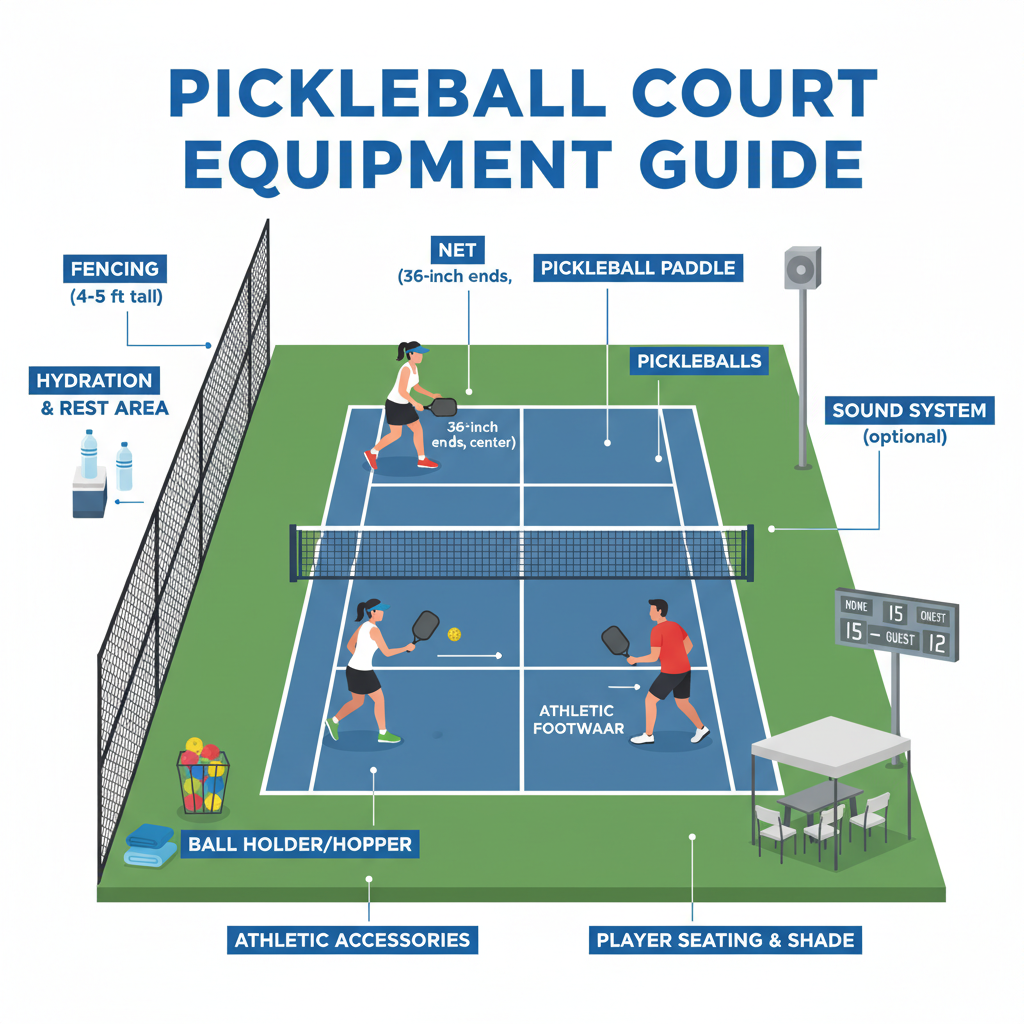
A well-designed pickleball court is only complete when it is equipped with the right tools and accessories. From nets and paddles to fencing, lighting, and maintenance equipment, every element plays an important role in ensuring safe gameplay, long-term durability, and a professional playing experience. Whether you are setting up a residential backyard court, a school facility, or a commercial pickleball complex, understanding the essential equipment is key to success.
This Pickleball Court Equipment Guide provides a comprehensive overview of all the equipment required to build, operate, and maintain a pickleball court that meets recreational and professional standards.
Why Proper Pickleball Court Equipment Matters
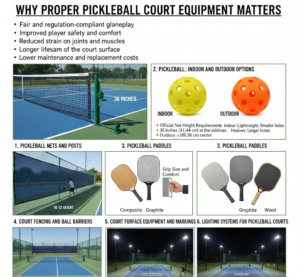
Pickleball is a fast-paced sport that relies on precision, balance, and controlled movement. Using the correct equipment ensures:
-
Fair and regulation-compliant gameplay
-
Improved player safety and comfort
-
Reduced strain on joints and muscles
-
Longer lifespan of the court surface
-
Lower maintenance and replacement costs
Quality equipment enhances the playing experience while protecting both players and the court itself.
1. Pickleball Nets and Posts
The net system is one of the most critical components of any pickleball court.
Official Net Height Requirements
-
36 inches (91.44 cm) at the sidelines
-
34 inches (86.36 cm) at the center
Maintaining correct net height ensures consistent ball clearance and fair play.
Types of Pickleball Nets
-
Permanent Nets: Ideal for dedicated courts; installed using in-ground or surface-mounted posts
-
Portable Nets: Suitable for temporary or multi-purpose courts; easy to set up and store
Net Post Features
-
Adjustable tension systems to maintain correct height
-
Durable materials such as powder-coated steel or aluminum
-
Optional wheels for portability
-
Foldable designs for shared sports spaces
A high-quality net system ensures stability, durability, and professional-level performance.
2. Pickleballs: Indoor and Outdoor Options
Pickleballs are specifically designed to perform differently depending on the playing environment.
Indoor Pickleballs
-
Lightweight construction
-
Smaller holes for controlled bounce
-
Designed for smooth indoor surfaces
-
Ideal for gymnasiums and sports halls
Outdoor Pickleballs
-
Slightly heavier to resist wind
-
Larger holes for stable flight
-
Built for rougher outdoor surfaces
-
More durable for extended use
Color Options
Bright colors such as yellow, orange, or green are recommended for maximum visibility against the court surface.
Quantity Recommendations
Always keep extra pickleballs available to avoid interruptions during games or practice sessions.
3. Pickleball Paddles
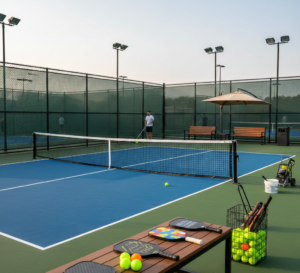
Paddles directly influence control, power, and player comfort, making them a key part of this pickleball court equipment guide.
Common Paddle Materials
-
Composite: Balanced performance with power and control
-
Graphite: Lightweight, responsive, and preferred by competitive players
-
Wood: Durable and affordable, ideal for beginners
Paddle Weight Options
-
Lightweight (7–8 oz): Enhanced control and quick reactions
-
Mid-weight (8–9 oz): Balanced power and maneuverability
-
Heavier paddles: More power but increased arm fatigue
Grip Size and Comfort
Choosing the correct grip size reduces wrist strain and improves shot accuracy. Cushioned grips also help absorb sweat and vibrations.
4. Court Fencing and Ball Barriers
Fencing is essential for safety and uninterrupted gameplay.
Purpose of Court Fencing
-
Prevents balls from leaving the court
-
Protects nearby areas and spectators
-
Enhances overall court organization
Recommended Fence Height
-
10 to 12 feet for outdoor courts
-
Lower heights may be used indoors or for residential settings
Common Fencing Materials
-
Chain-link fencing
-
Vinyl-coated steel fencing
-
Mesh panels for modern aesthetics
Optional Wind Screens
Wind screens help reduce wind interference and improve ball control during outdoor play.
5. Court Surface Equipment and Markings
Clear, durable surface markings are essential for regulation gameplay.
Line Markings
-
Line width: 2 inches (5 cm) standard
-
Use UV-resistant, weatherproof paint
-
High-contrast colors improve visibility
Required Court Lines
-
Baselines
-
Sidelines
-
Non-volley zone (kitchen) lines
-
Centerlines for doubles play
Surface Coatings
-
Acrylic coatings for outdoor courts
-
Cushioned or textured coatings for improved traction and comfort
Proper surface equipment ensures consistent ball bounce and player safety.
6. Lighting Systems for Pickleball Courts
Lighting extends playtime and improves visibility for evening and night games.
Recommended Lighting Types
-
LED floodlights for outdoor courts
-
Ceiling-mounted LED lights for indoor courts
Lighting Benefits
-
Uniform illumination without glare
-
Energy efficiency and long lifespan
-
Reduced shadows for better ball tracking
Proper lighting placement enhances safety and creates a professional playing environment.
7. Accessories for Player Comfort and Convenience
Comfort-focused equipment enhances the overall court experience.
Seating and Rest Areas
-
Benches for players between games
-
Bleacher-style seating for spectators
Shade and Weather Protection
-
Canopies, pergolas, or umbrellas
-
Especially important for outdoor courts
Storage Solutions
-
Paddle racks
-
Ball storage bins
-
Equipment cabinets to keep the court organized
These accessories improve usability and extend the time players can comfortably spend on the court.
8. Maintenance Equipment for Court Longevity
Regular maintenance helps preserve court quality and safety.
Essential Maintenance Tools
-
Sweepers and brushes to remove dust and debris
-
Pressure washers for deep cleaning outdoor surfaces
-
Net tension tools to maintain proper net height
-
Resurfacing kits for minor repairs and line repainting
Proper maintenance equipment ensures your court remains in excellent condition year after year.
Summary Table: Essential Pickleball Court Equipment Guide
| Equipment | Purpose / Details |
|---|---|
| Net & Posts | Regulation height and adjustable tension |
| Pickleballs | Indoor/outdoor types, bright colors |
| Paddles | Composite, graphite, or wood |
| Fencing & Barriers | 10–12 ft height, wind screens optional |
| Court Surface Markings | UV-resistant paint, 2-inch lines |
| Lighting | LED floodlights or ceiling fixtures |
| Seating & Shade | Player comfort and rest |
| Maintenance Tools | Cleaning, resurfacing, net adjustment |
Why Investing in Quality Equipment Is Important
High-quality, regulation-compliant equipment offers multiple long-term benefits:
-
Enhanced player performance and safety
-
Reduced wear on court surfaces
-
Fewer repairs and lower maintenance costs
-
Professional appearance and improved user satisfaction
Quality equipment ensures your pickleball court remains safe, attractive, and enjoyable for both casual and competitive play.
Conclusion
This Pickleball Court Equipment Guide highlights the essential tools and accessories needed to create a fully functional, safe, and professional pickleball court. From regulation nets and durable paddles to fencing, lighting, and maintenance equipment, every element plays a vital role in the overall quality of the playing experience.
Pickleball Court Equipment Guide – FAQ
1. What essential equipment is required for a pickleball court?
A fully functional pickleball court requires:
-
Pickleball net and posts
-
Court surface (acrylic/PU coating, modular tiles, or indoor wood)
-
Line markings (baselines, sidelines, non-volley zone)
-
Fencing (optional but recommended for outdoor courts)
-
Lighting (for evening play)
-
Optional accessories: Benches, shade, and ball holders
2. What are the specifications for nets and posts?
-
Net height: 36 inches (0.914 m) at posts, 34 inches (0.86 m) at center
-
Posts placement: Just outside the sidelines
-
Material: Weather-resistant steel or aluminum for outdoor use
-
Optional padding to improve safety
3. What type of surface materials are used?
-
Outdoor courts: Acrylic or PU-coated concrete/asphalt, interlocking modular tiles
-
Indoor courts: Wooden flooring, cushioned PU, or synthetic sports flooring
-
Considerations: Non-slip, weather-resistant, shock-absorbing
4. How are court lines marked?
-
Materials: Acrylic paint or thermoplastic markings
-
Dimensions: Follow USAPA standards — 44 ft × 20 ft, non-volley zone 7 ft from net
-
Visibility: High-contrast colors for safety and accuracy
5. Is fencing necessary for pickleball courts?
-
Recommended height: 10–12 ft
-
Purpose: Prevents balls from leaving the court, improves safety, and defines the play area
-
Materials: Chain-link, mesh, or acrylic panels
6. What lighting is recommended for high-performance play?
-
Outdoor courts: LED floodlights, 12–14 ft high
-
Illumination: 150–300 lux for recreational, 300–500 lux for competitive
-
Design: Even, glare-free lighting across the court
7. Are safety accessories important?
Yes, for injury prevention and durability:
-
Court padding: On posts or edges
-
Non-slip surfaces to reduce fall risk
-
Clear court markings to avoid collisions
-
Benches and shade to prevent heat-related issues outdoors
8. What optional gear can enhance play?
-
Ball holders or bins
-
Scoreboards
-
Wind screens for outdoor courts
-
Club or tournament branding
9. How does equipment affect court longevity?
-
High-quality nets and posts resist rust and bending
-
Durable surface materials prevent cracking and wear
-
Proper lighting and fencing reduce accidental damage
-
Correct line marking and maintenance preserve play quality
10. Can pickleball courts be multi-sport compatible?
Yes. With proper surface selection and line marking, courts can accommodate:
-
Tennis (half-court)
-
Mini-tennis
-
Badminton (indoor or large outdoor)
-
Multi-use equipment requires careful planning to avoid safety hazards