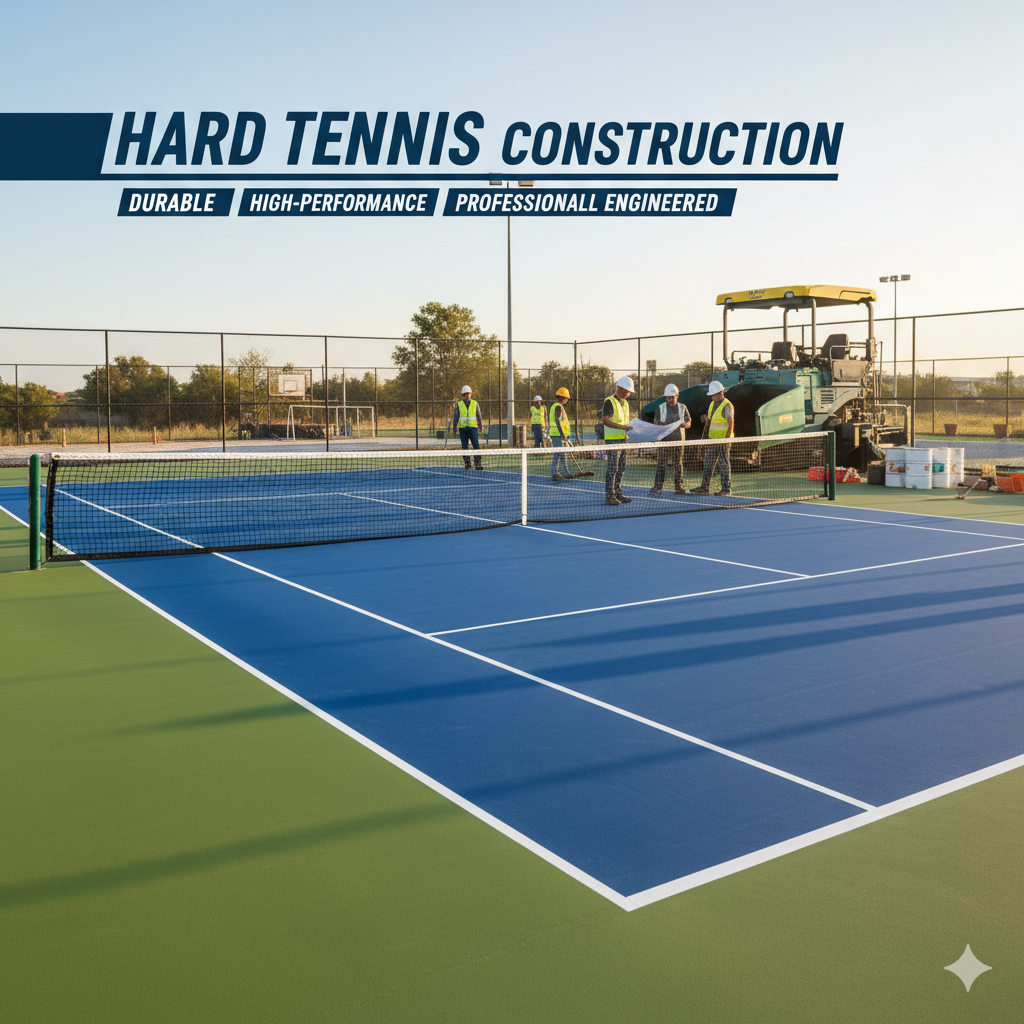
Hard tennis courts are among the most popular and widely used tennis surfaces across the world. Known for their durability, consistent ball response, and adaptability to various playing styles, hard courts are the preferred choice for schools, sports academies, clubs, resorts, and private residences. A professionally constructed hard tennis court delivers a balance of speed, control, and player comfort while requiring relatively low maintenance over its lifespan.
Hard tennis court construction is a technical process that involves careful planning, precise base preparation, advanced surface coatings, and strict adherence to international playing standards. When executed correctly, a hard court provides long-term performance, visual appeal, and excellent value for investment.
This guide explains everything you need to know about hard tennis court construction, including surface types, benefits, construction stages, applications, maintenance, and long-term advantages.
Understanding Hard Tennis Courts
A hard tennis court is typically built using a solid base of asphalt or concrete, finished with multiple layers of acrylic or specialized sports coatings. Unlike clay or grass courts, hard courts offer a predictable and uniform playing surface, making them suitable for players of all skill levels.
The surface speed of hard courts is considered medium to fast, allowing players to develop both baseline and net-play techniques. Due to their versatility and durability, hard courts are commonly used for professional tournaments, training facilities, and recreational play.
Why Hard Tennis Courts Are a Preferred Choice
Hard courts continue to be the most widely adopted tennis surface worldwide due to their performance consistency and practical advantages.
Consistent Ball Behavior
The uniform surface ensures reliable ball bounce and predictable speed, enabling fair and balanced gameplay.
Exceptional Durability
Hard courts are designed to withstand heavy foot traffic, intense training schedules, and varying weather conditions.
Player Safety and Comfort
When constructed with proper cushioning and surface texture, hard courts help reduce impact stress on joints and muscles.
Low Maintenance Requirements
Compared to clay or grass courts, hard courts require minimal daily upkeep, making them cost-effective over time.
Design Flexibility
Hard courts can be customized with a wide range of colors, textures, and branding elements to match the aesthetics of the facility.
Types of Hard Tennis Court Surfaces
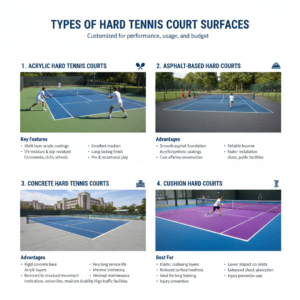
Hard tennis courts can be customized based on performance expectations, usage frequency, and budget. The most common surface systems include:
1. Acrylic Hard Tennis Courts
Acrylic hard courts are the most popular and widely used hard court systems.
Key Features:
-
Multi-layer acrylic coatings applied over asphalt or concrete
-
UV-resistant and slip-resistant surface
-
Consistent texture and surface speed
Advantages:
-
Excellent traction and control
-
Long-lasting surface finish
-
Suitable for both professional and recreational play
Best For:
Tournament courts, sports academies, clubs, and schools.
2. Asphalt-Based Hard Courts
Asphalt provides a strong and flexible base for hard tennis courts, especially in outdoor environments.
Key Features:
-
Smooth asphalt foundation
-
Finished with acrylic or synthetic coatings
-
Cost-effective construction
Advantages:
-
Reliable bounce and surface stability
-
Faster installation compared to concrete
-
Lower initial construction cost
Best For:
Outdoor courts, clubs, and public or community facilities.
3. Concrete Hard Tennis Courts
Concrete courts are known for their extreme strength and longevity.
Key Features:
-
Rigid concrete base
-
Finished with acrylic layers for improved playability
-
Highly resistant to structural movement
Advantages:
-
Very long service life
-
Minimal structural maintenance
-
Ideal for high-traffic facilities
Best For:
Institutions, universities, and locations requiring maximum durability.
4. Cushion Hard Courts
Cushioned hard courts are designed to enhance player comfort without compromising performance.
Key Features:
-
Elastic cushioning layers beneath the acrylic surface
-
Reduced surface hardness
-
Enhanced shock absorption
Advantages:
-
Lower impact on joints and muscles
-
Ideal for long training sessions
-
Improved player comfort and injury prevention
Best For:
Professional training academies, clubs, and frequent-use facilities.
Hard Tennis Court Construction Process
Professional hard tennis court construction follows a structured and detail-oriented approach to ensure long-term performance.
1. Site Evaluation and Planning
The process begins with a thorough assessment of soil conditions, drainage patterns, slope, and available space. Accurate planning ensures proper court orientation and compliance with international dimensions.
Advantages of Professional Hard Tennis Court Construction
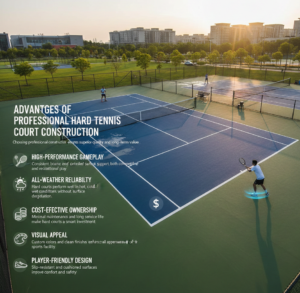
Choosing professional construction ensures superior quality and long-term value.
High-Performance Gameplay
Consistent bounce and controlled surface speed support both competitive and recreational play.
All-Weather Reliability
Hard courts perform well in hot, cold, and wet conditions without surface degradation.
Cost-Effective Ownership
Minimal maintenance and long service life make hard courts a smart investment.
Visual Appeal
Custom colors and clean finishes enhance the overall appearance of the sports facility.
Player-Friendly Design
Slip-resistant and cushioned surfaces improve comfort and safety.
Applications of Hard Tennis Courts
Hard tennis courts are suitable for a wide range of environments and user groups:
-
Tennis academies and training centers
-
Schools, colleges, and universities
-
Private residences and luxury villas
-
Resorts, hotels, and sports clubs
-
Corporate and government facilities
-
Public parks and community sports areas
Maintenance and Resurfacing
Regular maintenance ensures optimal performance and extends the lifespan of a hard tennis court.
Common Maintenance Services Include:
-
Routine cleaning and debris removal
-
Crack repair and surface patching
-
Acrylic resurfacing and repainting
-
Drainage inspection and correction
With proper care, a hard tennis court can maintain its quality for many years without major reconstruction.
Long-Term Value of Hard Tennis Courts
Hard courts offer one of the best returns on investment among tennis surfaces. Their durability, low upkeep, and versatility make them suitable for both high-traffic facilities and private installations. Over time, resurfacing restores performance without requiring complete reconstruction, further reducing long-term costs.
Conclusion
Hard tennis court construction combines engineering precision, material expertise, and sports performance standards to create a surface that is reliable, safe, and visually appealing. Whether for competitive tournaments, training facilities, or recreational use, hard courts provide a balanced playing experience that supports players of all levels.
By investing in professional hard tennis court construction, facility owners ensure long-lasting performance, consistent gameplay, and a premium sporting environment. With the right planning, materials, and maintenance, a hard tennis court becomes a valuable asset that enhances both athletic development and facility reputation for years to come.