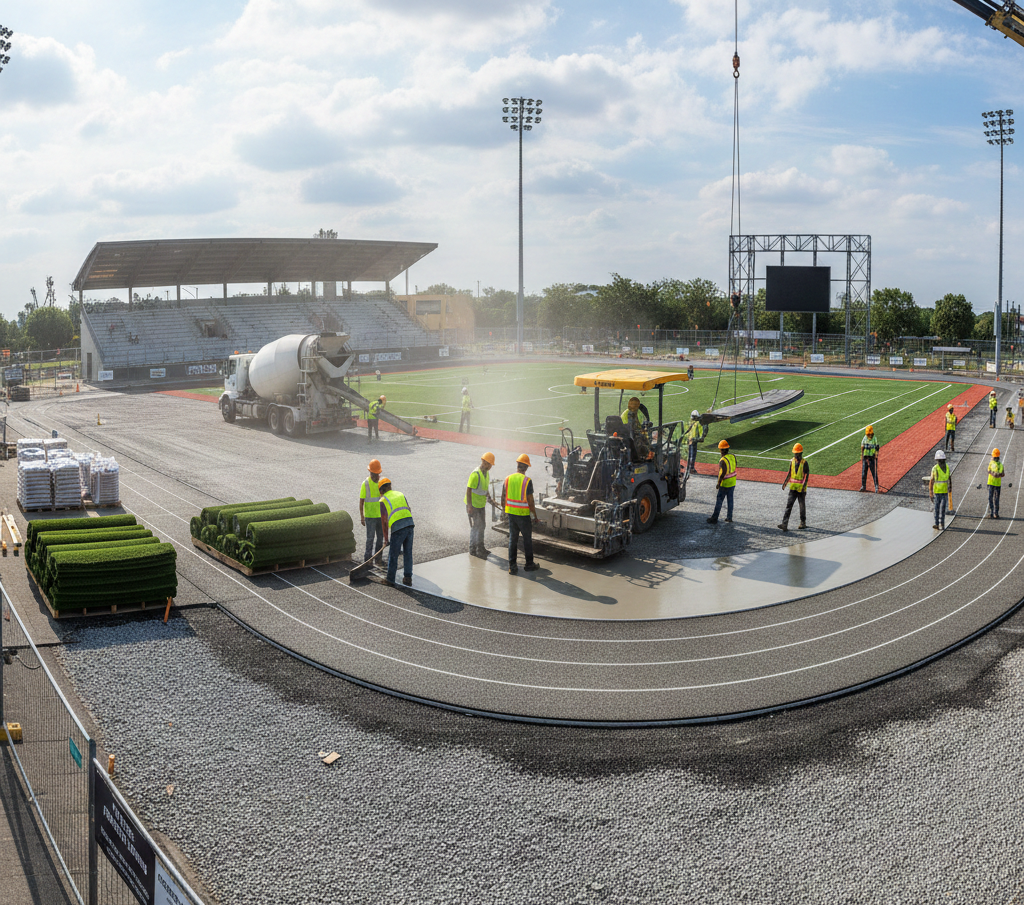
In modern sports infrastructure, the quality of flooring plays a decisive role in athlete safety, performance, and the longevity of the facility. Whether it’s an indoor badminton court, outdoor tennis arena, gymnasium, or multi-purpose stadium, sports flooring construction requires a detailed understanding of materials, techniques, and performance standards.
A well-constructed sports floor ensures shock absorption, anti-slip grip, resilience, and accurate ball response, while also meeting international federation standards such as FIBA, FIVB, BWF, or ITF. This comprehensive guide explains everything you need to know about sports flooring construction — from types and materials to the step-by-step installation process and maintenance tips.
1. Introduction to Sports Flooring Construction
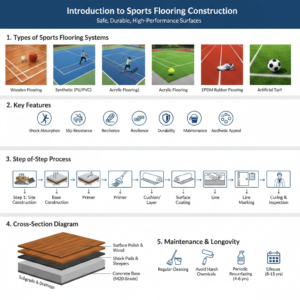
Sports flooring construction refers to the process of designing and installing a specialized surface that supports safe and efficient play. The flooring must withstand high foot traffic, provide adequate grip, minimize injury risk, and deliver consistent performance over time.
Each sport has unique flooring requirements. For example:
-
Badminton and basketball courts require wooden or synthetic surfaces for bounce and comfort.
-
Tennis and volleyball courts use acrylic or synthetic flooring for outdoor durability.
-
Running and jogging tracks prefer rubberized EPDM or PU flooring for cushioning and shock absorption.
Hence, selecting the right material and ensuring precision in construction are critical for achieving world-class results.
2. Types of Sports Flooring Systems
The choice of sports flooring depends on the type of sport, budget, and whether the facility is indoor or outdoor. Below are the most popular types used in India and globally:
a) Wooden Sports Flooring
Wooden flooring is ideal for indoor sports such as badminton, basketball, squash, and volleyball. It offers excellent shock absorption, high resilience, and uniform ball bounce.
-
Common materials: Maple wood, Teak wood, or engineered hardwood.
-
Features: Long lifespan, natural cushioning, elegant finish.
-
Construction: Includes sleepers, shock pads, and surface polish for smoothness.
b) Synthetic (PU / PVC / Vinyl) Flooring
These are multi-layered, seamless synthetic surfaces designed for both indoor and outdoor use.
-
PU (Polyurethane) Flooring: Durable and cushioned, ideal for indoor arenas.
-
PVC/Vinyl Flooring: Economical and available in rolls or tiles with different thickness levels.
-
Benefits: Non-slip, easy to maintain, suitable for multi-purpose sports halls.
c) Acrylic Flooring
Acrylic flooring is commonly used for outdoor sports like tennis, basketball, and volleyball. It’s weather-resistant, UV-stable, and offers excellent grip.
-
Installed on concrete or asphalt base.
-
Available in cushioned and non-cushioned systems.
-
Offers vibrant color options and long-lasting durability.
d) EPDM Rubber Flooring
Used for jogging tracks, playgrounds, and fitness zones, EPDM flooring provides maximum comfort and safety.
-
Made from synthetic rubber granules mixed with polyurethane binders.
-
Excellent for shock absorption and slip resistance.
-
Available in multiple colors and thickness options.
e) Artificial Turf / Grass Flooring
Ideal for football, cricket, and hockey grounds. It simulates natural grass while minimizing maintenance.
-
Provides consistent playability in all weather conditions.
-
UV-resistant and suitable for both indoor and outdoor use.
3. Key Features of a Good Sports Flooring System
A professionally built sports flooring system offers several essential qualities that enhance player performance and ensure safety:
-
Shock Absorption: Reduces stress on joints and muscles during movement.
-
Slip Resistance: Prevents accidental falls during play.
-
Resilience and Flexibility: Allows for smooth energy return and player comfort.
-
Durability: Withstands heavy use and environmental factors.
-
Easy Maintenance: Resistant to moisture, dirt, and abrasion.
-
Aesthetic Appeal: Available in vibrant colors and customizable markings.
-
International Compliance: Meets standards of sports governing bodies.
4. Step-by-Step Process of Sports Flooring Construction
The construction of a sports floor requires technical expertise and precision. Here’s a step-by-step outline of the process:
Step 1: Site Preparation
-
Clear and level the ground surface.
-
Ensure proper slope for water drainage in outdoor projects.
-
Verify the strength of the concrete base (minimum M20 grade recommended).
Step 2: Base Construction
The base is the foundation of the sports floor. It can be concrete, asphalt, or compacted subgrade, depending on the surface type.
-
The surface must be smooth and crack-free.
-
Expansion joints should be included to prevent surface cracking.
Step 3: Application of Primer or Bonding Layer
A primer layer is applied to enhance adhesion between the base and the flooring material.
Step 4: Installation of Cushion or Shock Pad Layer
For surfaces like PU, EPDM, or wooden flooring, a shock-absorbing underlayer is installed to reduce impact and improve comfort.
Step 5: Surface Coating / Flooring Application
Depending on the system type, multiple layers of acrylic, PU, or synthetic compounds are applied using trowels or spray machines.
Step 6: Line Marking and Finishing
Court markings are painted according to the specific sport’s measurements and color codes.
Step 7: Curing and Inspection
Allow sufficient curing time (usually 48–72 hours) for the surface to harden and bond completely. A final inspection ensures uniformity, surface smoothness, and safety compliance.
5. Maintenance and Longevity of Sports Flooring
To ensure long-term performance and aesthetics, proper maintenance is crucial.
-
Regular Cleaning: Sweep and mop the floor regularly to remove dust and debris.
-
Avoid Harsh Chemicals: Use mild cleaning agents to prevent surface damage.
-
Periodic Resurfacing: Reapply coatings every 4–6 years to maintain grip and color.
-
Repair Cracks Early: Immediate attention to minor cracks prevents long-term damage.
-
Monitor Moisture Levels: Especially for indoor wooden floors, humidity control is essential.
With proper maintenance, a quality sports floor can last 8 to 15 years depending on the material.
6. Cost of Sports Flooring Construction
The cost of sports flooring construction varies based on the material, type of sport, and project scale. On average:
-
Wooden Flooring: ₹250–₹450 per sq. ft.
-
Acrylic Flooring: ₹80–₹200 per sq. ft.
-
PU or Vinyl Flooring: ₹150–₹350 per sq. ft.
-
EPDM Rubber Flooring: ₹200–₹400 per sq. ft.
-
Artificial Turf: ₹80–₹250 per sq. ft.
Additional costs include base preparation, drainage, and line marking. Although initial installation costs can vary, the long-term benefits make it a valuable investment.
7. Advantages of Professional Sports Flooring Construction
-
Enhanced Player Safety: Reduces injuries with proper cushioning and slip resistance.
-
Improved Performance: Ensures consistent bounce, traction, and player confidence.
-
Aesthetic Enhancement: Custom colors and logos add a professional appeal.
-
All-Weather Durability: Synthetic systems perform consistently year-round.
-
Low Maintenance: Easy cleaning and long-lasting performance.
-
Increased Property Value: Sports facilities add prestige and usability to schools, clubs, and societies.
8. Common Applications of Sports Flooring
Sports flooring systems are suitable for:
-
Indoor Sports Halls: Badminton, basketball, volleyball, squash.
-
Outdoor Courts: Tennis, futsal, handball, multi-purpose play areas.
-
Recreational Zones: Jogging tracks, playgrounds, and gyms.
-
Professional Arenas: Stadiums and sports complexes hosting tournaments.
-
Corporate and Residential Projects: Fitness areas and rooftop sports setups.
9. Choosing the Right Sports Flooring Contractor
The success of your project depends on the experience and expertise of your flooring contractor. Always ensure that:
-
The contractor uses certified materials meeting global standards.
-
The team has experience across multiple flooring types.
-
The project includes proper base preparation and warranty support.
Professional sports flooring construction companies provide end-to-end solutions—from design consultation to installation and after-sales service.
10. Conclusion
Sports flooring construction is more than just laying a surface—it’s about engineering a system that enhances athlete performance, safety, and comfort. A well-constructed sports floor reflects quality, precision, and professionalism.
Whether you’re building an indoor badminton court, outdoor tennis arena, or multipurpose sports complex, selecting the right flooring system and an experienced installer is key to achieving world-class results.
From wooden and synthetic floors to acrylic and EPDM systems, each option offers unique benefits tailored to different needs. By focusing on quality materials, proper installation, and regular maintenance, sports flooring can deliver long-lasting value and elevate the standard of your facility.
Sports Flooring Construction — FAQ
1. What is sports flooring construction?
Sports flooring construction is the process of designing, preparing, and installing specialized floors for athletic and recreational facilities. It ensures durable, safe, and performance-oriented surfaces for indoor and outdoor courts, tracks, gyms, and multi-purpose halls.
2. What types of sports flooring can be constructed?
Common types include:
-
Solid wood flooring – For basketball, badminton, volleyball, and indoor courts
-
Synthetic flooring – PU or acrylic surfaces for indoor/outdoor courts
-
Rubberized or EPDM surfaces – Shock-absorbing tracks, gyms, and jogging paths
-
Modular/interlocking tiles – Flexible, easy-to-install, and multi-purpose surfaces
-
Vinyl/PVC flooring – Lightweight, low-maintenance, and durable
3. What is the typical construction process?
Sports flooring construction usually follows these steps:
-
Site survey – Measure area, check base, and plan layout
-
Base preparation – Level concrete/asphalt, ensure proper drainage
-
Surface installation – Apply wood, synthetic, or rubberized flooring
-
Marking and finishing – Add lane lines, court markings, logos, and borders
-
Inspection and testing – Ensure surface performance, grip, and safety
4. What materials are used in sports flooring construction?
Materials depend on the sport and environment:
-
Hardwood (maple, oak, beech) – For indoor professional courts
-
PU (Polyurethane) coatings – Shock-absorbing and seamless
-
Acrylic coatings – Weather-resistant and durable for outdoor courts
-
EPDM rubber granules – Cushioning and anti-slip
-
PVC/vinyl tiles – Flexible and easy to maintain
5. How long does construction take?
Time varies with track or court size and type:
-
Small indoor courts: 2–3 weeks
-
Medium-sized outdoor tracks: 3–5 weeks
-
Standard 400m athletic tracks: 6–10 weeks
Preparation and curing times are critical for durability and performance.
6. Why is shock absorption important in sports flooring?
Shock-absorbing surfaces:
-
Reduce stress on joints and muscles
-
Minimize injuries from repetitive movements
-
Improve performance and comfort for athletes
-
Are mandatory for high-impact sports like basketball, volleyball, and badminton
7. How much does sports flooring construction cost?
Approximate costs (installed) vary by material:
-
Solid wood courts: ₹350–₹700 per sq ft
-
Synthetic flooring: ₹180–₹600 per sq ft
-
Rubberized tracks: ₹250–₹500 per sq ft
-
Concrete/asphalt base only: ₹100–₹180 per sq ft
Final pricing depends on site preparation, size, and customizations.
8. What maintenance is required after construction?
-
Regular sweeping and cleaning
-
Damp mopping with approved cleaners
-
Periodic recoating or sanding for wood floors
-
Checking for surface wear, cracks, or edges
-
Maintaining drainage for outdoor tracks
Proper care extends lifespan and maintains safety.
9. Can sports flooring be customized?
Yes. Customizations include:
-
Court/track dimensions
-
Color schemes and branding
-
Lane markings, logos, and multipurpose layouts
-
Matte, gloss, or semi-gloss finishes
This allows floors to suit schools, gyms, clubs, and professional arenas.
10. What safety features should be included in construction?
-
Non-slip surfaces
-
Proper shock absorption
-
Smooth transitions at edges
-
Protective buffers or curbs
-
Clear lane markings and lighting for night use
These features reduce injury risks and improve overall usability.