Introduction
A standard running track is one of the most essential components of modern sports infrastructure. Whether it is a school playground, university campus, sports academy, or an international stadium, the running track serves as the foundation for athletic training and competition. Designed with precision and built according to globally accepted specifications, it ensures fairness, safety, and consistent performance for athletes of all levels.
A well-constructed running track is not just a surface to run on—it is a carefully engineered system that supports speed, reduces injury risk, and withstands varying weather conditions. From its oval geometry to the specialized materials used in its construction, every detail plays a critical role in delivering optimal athletic performance.
This comprehensive guide explores everything you need to know about a standard running track, including its definition, types, dimensions, materials, construction process, benefits, and frequently asked questions.
What Is a Standard Running Track?
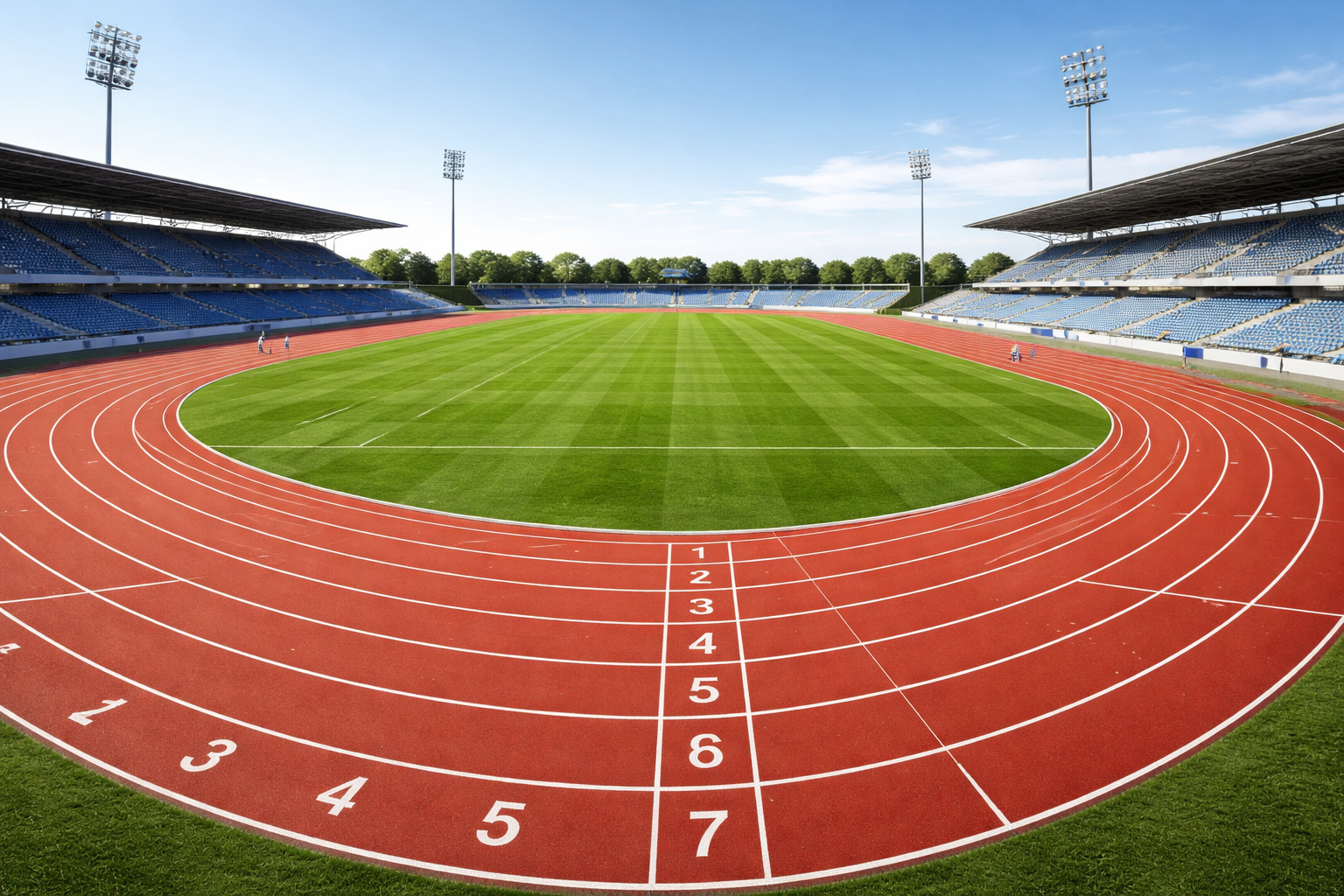
A standard running track is an oval-shaped athletic track consisting of two straight sections connected by two semicircular curves. It is divided into multiple lanes, allowing athletes to compete simultaneously without interference.
The most widely accepted format is a 400-meter track, which means one complete lap around lane one equals 400 meters. This measurement is taken at a specific distance from the inner edge of the lane to ensure accuracy.
Running tracks are used for a wide range of events, including sprints, middle-distance races, long-distance races, hurdles, relays, and race walking. The design and markings ensure that all athletes compete under equal conditions, regardless of their lane assignment.
Types of Running Tracks
Modern running tracks are constructed using various materials and systems, each suited to different applications and budgets.
1. Polyurethane (PU) Running Tracks
Polyurethane tracks are widely used in professional stadiums and international competitions. These tracks provide a seamless, cushioned surface that enhances speed and reduces impact stress on joints. They are known for their durability, elasticity, and high performance.
2. EPDM Rubber Running Tracks
EPDM (Ethylene Propylene Diene Monomer) tracks are commonly used in schools and training facilities. They offer excellent weather resistance, anti-slip properties, and cost-effectiveness. These tracks are suitable for both indoor and outdoor environments.
3. Sandwich System Tracks
This type combines a polyurethane base layer with an EPDM top layer. It offers a balance between performance and affordability, making it a popular choice for mid-range sports facilities.
4. Prefabricated Running Tracks
Prefabricated tracks consist of factory-made rubber sheets that are installed on-site. They ensure uniform quality, faster installation, and consistent performance. These tracks are often used in high-end stadiums and international venues.
5. Cinder and Clay Tracks (Traditional)
Although largely replaced by synthetic surfaces, traditional cinder or clay tracks are still found in some rural or low-budget facilities. They require frequent maintenance and do not provide the same level of performance or safety as modern tracks.
Standard Running Track Dimensions
The dimensions of a standard running track are strictly regulated to ensure consistency across all competitions.
- Total Length: 400 meters per lap (measured 30 cm from the inner edge of lane one)
- Shape: Oval with two straight sections and two curved bends
- Number of Lanes: Typically 8 lanes (can vary between 6 and 9)
- Lane Width: 1.22 meters
- Total Track Width (8 lanes): Approximately 9.76 meters
- Inner Curb Height: Around 5 cm
- Straight Length: Approximately 84.39 meters
- Curve Radius: Around 36.5 meters
These dimensions ensure that all athletes run equal distances and maintain fairness in competition.
Lane Markings and Layout
Lane markings are a critical aspect of a standard running track. Each lane is clearly defined by white lines and numbered for identification. The markings are carefully measured and applied to ensure accuracy in races.
For races longer than 400 meters, staggered starts are used. This compensates for the longer distance covered by athletes running in outer lanes due to the curvature of the track. Additional markings are also included for relay zones, hurdle placements, and starting positions for different race categories.
Materials Used in Running Track Construction
The choice of materials significantly impacts the performance, durability, and maintenance of a running track.
Synthetic Materials
Modern tracks primarily use synthetic materials such as polyurethane and rubber granules. These materials provide flexibility, shock absorption, and resistance to wear and tear.
Base Layers
The base typically consists of asphalt or concrete, providing a stable and level foundation. Proper base construction is crucial to prevent cracks and uneven surfaces.
Top Surface
The top layer is designed for grip and performance. It includes textured finishes that enhance traction and reduce slipping, even in wet conditions.
Drainage Systems
Efficient drainage systems are integrated to prevent water accumulation, ensuring the track remains usable in all weather conditions.
Construction Process of a Standard Running Track
Building a standard running track involves multiple technical steps that require precision and expertise.
1. Site Preparation
The process begins with land clearing, leveling, and soil testing. This ensures the ground can support the structure and remain stable over time.
2. Sub-Base Construction
A strong sub-base is created using compacted materials. This layer provides structural stability and prevents settlement.
3. Base Layer Installation
An asphalt or concrete base is laid to create a smooth and durable surface for the track.
4. Application of Synthetic Surface
Multiple layers of synthetic material are applied, including base coats and top finishes. Each layer is carefully installed to achieve the desired thickness and performance characteristics.
5. Marking and Finishing
Precise lane markings, event lines, and numbering are applied using specialized equipment. Final inspections ensure compliance with standards.
6. Installation of Accessories
Curbs, drainage systems, and other components are installed to complete the track.
Maintenance and Lifespan
Regular maintenance is essential to preserve the quality and longevity of a running track.
- Routine cleaning to remove dirt and debris
- Periodic inspection for cracks or damage
- Repainting of lane markings
- Checking and maintaining drainage systems
With proper care, a high-quality synthetic running track can last between 8 to 15 years, depending on usage and environmental conditions.
Benefits of a Standard Running Track
A standard running track offers numerous advantages for athletes, institutions, and sports organizations.
1. Consistent Performance
The uniform surface ensures predictable performance, allowing athletes to train and compete effectively.
2. Enhanced Safety
Shock-absorbing materials reduce the risk of injuries, particularly to joints and muscles.
3. Fair Competition
Standardized dimensions and markings ensure equal conditions for all participants.
4. All-Weather Usability
Modern tracks are designed to withstand various weather conditions, enabling year-round use.
5. Multi-Event Support
Running tracks accommodate a wide range of athletic events, making them versatile sports facilities.
6. Increased Facility Value
A professionally built track enhances the reputation and value of sports infrastructure.
Applications of Running Tracks
Running tracks are widely used across different sectors:
- Schools and educational institutions
- Sports academies and training centers
- Stadiums and professional sports complexes
- Military and fitness training facilities
- Community and recreational parks
They serve both competitive and recreational purposes, promoting fitness and athletic development.
Frequently Asked Questions (FAQs)
1. What is the standard length of a running track?
A standard running track is 400 meters in length for one complete lap in lane one.
2. How many lanes are there in a standard track?
Most standard tracks have 8 lanes, although some may have 6 or 9 lanes depending on space and requirements.
3. Why are staggered starts used?
Staggered starts ensure that all athletes cover the same distance, compensating for the longer outer lanes.
4. What is the best material for a running track?
Polyurethane is considered the best material for professional tracks due to its durability and performance.
5. How long does a running track last?
With proper maintenance, a synthetic running track can last between 8 to 15 years.
6. Can running tracks be used in all weather conditions?
Yes, modern synthetic tracks are designed for all-weather use and provide good drainage.
7. Are running tracks suitable for beginners?
Yes, they are ideal for athletes of all levels, from beginners to professionals.
Conclusion
From precise dimensions and advanced materials to expert construction techniques, every aspect contributes to its effectiveness.
Investing in a high-quality running track ensures long-term benefits for athletes and institutions alike. By adhering to standard specifications and maintaining the track properly, it becomes a valuable asset that promotes fitness, encourages competition, and supports the growth of sports at every level.