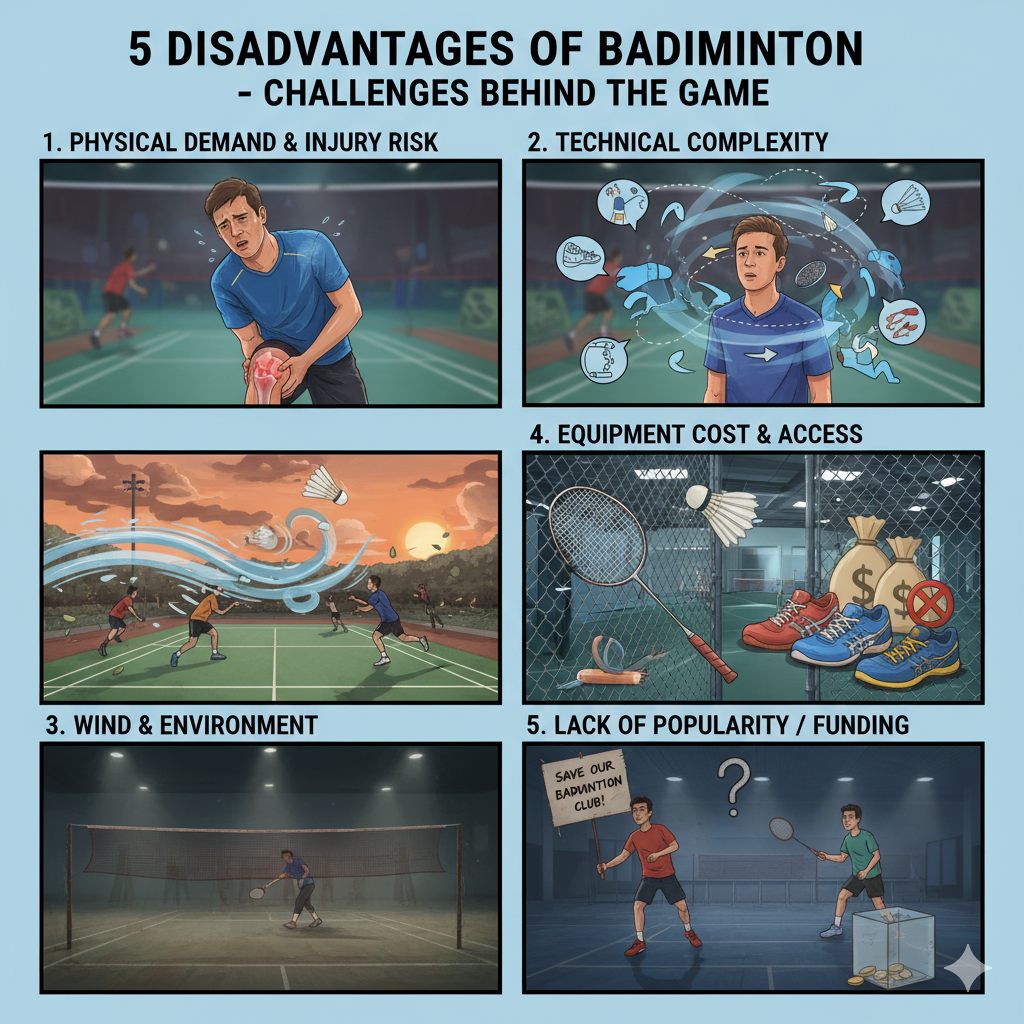
Badminton is one of the most popular racquet sports in the world — fast-paced, skillful, and exciting. It promotes agility, strength, and focus, and is enjoyed by millions of players across schools, clubs, and professional arenas. However, like every sport, badminton also has its challenges and drawbacks.
While it is often highlighted for its health benefits and accessibility, players and enthusiasts should also understand the disadvantages of badminton, especially when considering it as a regular fitness routine or professional pursuit.
In this detailed article, we explore the five main disadvantages of badminton, along with context and insights into how these challenges affect players at different levels.
1. High Risk of Injuries
One of the biggest disadvantages of badminton is the risk of physical injuries. Despite being a non-contact sport, badminton demands quick reflexes, sudden direction changes, and high-impact movements.
Common Injuries Include:
-
Ankle sprains: Rapid side movements and lunges put immense pressure on the ankles.
-
Knee injuries: Continuous jumping and landing can strain the knees.
-
Shoulder pain or rotator cuff injuries: Repetitive overhead shots like smashes and clears can lead to joint inflammation.
-
Wrist and elbow strain: Overuse or improper technique often causes “tennis elbow” or wrist sprain.
-
Back pain: Extended rallies and poor posture during shots can stress the lower back.
Why It Happens:
Badminton involves intense footwork, quick sprints, and sudden stops — all on relatively small courts. These explosive actions, especially when performed without proper warm-up, increase the chances of muscle pulls and ligament damage.
Preventive Measures:
-
Warm up before play and stretch after every game.
-
Use proper footwear with ankle support.
-
Strengthen muscles and maintain flexibility through regular fitness routines.
-
Get adequate rest between practice sessions.
While injuries are manageable, they can slow progress and discourage new players. Professional players, in particular, face long rehabilitation periods that may interrupt their careers.
2. Dependence on Indoor Conditions
Unlike sports such as football or running that can be played almost anywhere, badminton requires specific playing conditions. The sport is highly sensitive to external factors such as wind and lighting, making outdoor play challenging.
Key Challenges:
-
Wind interference: The shuttlecock is lightweight and easily affected by even mild breezes. This makes outdoor play inconsistent.
-
Lighting requirements: Shadows or uneven lighting can make it difficult to judge the shuttle’s flight path.
-
Surface issues: Outdoor or uneven surfaces can cause irregular bounces and foot instability.
Impact on Players:
This dependence means that badminton courts must be indoors for professional play, limiting accessibility in regions without proper sports infrastructure. In areas with high humidity or lack of indoor halls, players often struggle to practice regularly.
Moreover, setting up an indoor badminton court involves higher costs, controlled air circulation, and specialized flooring — all of which are not always feasible for schools or small clubs.
Thus, while badminton is known for its global popularity, its dependence on controlled indoor conditions can be a significant limitation for widespread access and consistent training.
3. Expensive Equipment and Maintenance
At first glance, badminton might appear to be a low-cost sport — all you need is a racquet and shuttlecock. However, for competitive or regular players, the expenses can add up quickly.
Key Cost Factors:
-
Quality racquets: Professional-grade racquets are lightweight, made of graphite or carbon fiber, and can be expensive to maintain or replace.
-
Shuttlecocks: Feather shuttlecocks (used in tournaments) wear out quickly — often within a few games — and are costly compared to nylon alternatives.
-
Shoes and apparel: Badminton-specific shoes with non-marking soles and ankle support are essential for safety and grip.
-
Court fees: Renting indoor courts for training or tournaments can be expensive in cities.
-
String maintenance: Racquet strings lose tension over time, requiring frequent restringing for consistent performance.
Financial Implications:
For professional players or enthusiasts who practice several times a week, equipment and maintenance costs can become a long-term financial burden. Schools or community clubs that want to promote the sport must also invest heavily in proper flooring, lighting, and court setups.
Although badminton is an inclusive sport in terms of age and skill level, its hidden maintenance costs make it less accessible for economically constrained regions.
4. Limited Outdoor Play Opportunities
While some people enjoy casual outdoor badminton, serious play is almost impossible outside due to wind and weather interference. This limits the sport’s flexibility compared to other recreational activities.
Drawbacks of Limited Outdoor Play:
-
Seasonal restrictions: Rain, humidity, or heat can disrupt training schedules.
-
Limited court availability: Many towns and schools lack indoor badminton facilities.
-
Reduced casual play: Unlike football or cricket, badminton cannot easily be played in open fields or on rough ground.
For many players, especially in rural areas, this lack of suitable space restricts regular practice and participation. Even in urban areas, indoor badminton centers often have long waiting lists or high hourly charges.
This limited outdoor compatibility is a key disadvantage when it comes to badminton’s global reach — especially when compared to sports like basketball or football, which thrive in outdoor community spaces.
5. Requires High Stamina and Fast Reflexes
Badminton is an intense physical sport that requires high stamina, agility, and lightning-fast reflexes. While this makes it exciting, it also creates a steep learning curve for beginners and can be exhausting for casual players.
Physical Demands Include:
-
Continuous running, jumping, and lunging.
-
Quick transitions between offense and defense.
-
Maintaining alertness for high-speed shuttle rallies.
Why It’s a Challenge:
The shuttlecock travels at incredible speeds — professional smashes can exceed 400 km/h. This means players must make split-second decisions, often under physical fatigue. Without proper conditioning, players may experience early exhaustion, dehydration, or muscle strain.
For older adults or those with limited fitness levels, sustaining long matches can be difficult. Beginners might find the sport frustrating at first because it demands coordination, strength, and reaction time all at once.
Balancing the Challenge:
-
Build endurance through regular cardio and leg-strengthening exercises.
-
Start slow, focusing on technique before speed.
-
Take breaks between games to recover.
Despite these challenges, players who develop stamina and consistency often find badminton to be one of the most rewarding physical sports.
Conclusion
Badminton is undoubtedly a thrilling, skillful, and health-promoting sport — but it’s not without its downsides. From injury risks and expensive equipment to dependence on indoor conditions and physical demands, every player faces unique challenges.
However, these disadvantages don’t take away the beauty of the game. Instead, they emphasize the need for proper training, preparation, and infrastructure to enjoy badminton safely and sustainably.https://www.sports-facility.in/index.php
By understanding the drawbacks, players can make informed choices — investing in the right equipment, improving fitness levels, and adopting safe play practices. After all, every sport has its hurdles, and overcoming them is part of the journey toward mastery and enjoyment.