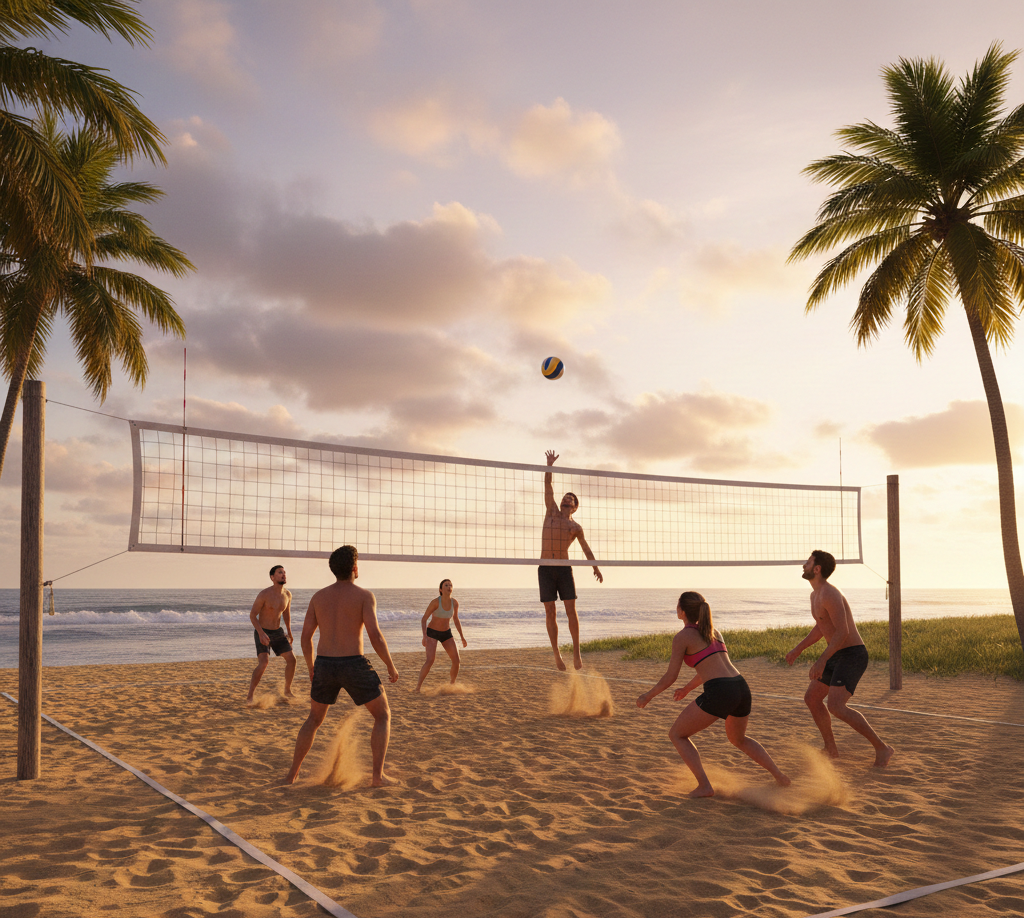
Volleyball is one of the most dynamic and widely played sports in the world. Whether indoors or outdoors, in schools, clubs, residential communities, or professional arenas, a well-designed and properly constructed volleyball court ensures player safety, performance, and longevity of use.
At its core, volleyball court construction is about more than just marking boundaries—it’s about designing a surface system that combines proper measurements, drainage, shock absorption, and grip. From the sub-base to the playing surface, every element plays a vital role in ensuring a professional-standard game experience.
This comprehensive guide explains everything about volleyball court construction — materials, design standards, flooring types, installation, and maintenance.
Understanding the Volleyball Court
A standard volleyball court is rectangular and divided into two equal halves by a central net. The size and specifications of the court differ slightly between indoor and outdoor versions of the game, but both follow international standards set by the Fédération Internationale de Volleyball (FIVB).
Court Dimensions
-
Total Court Size: 18 meters (length) × 9 meters (width)
-
Each Team Area: 9 meters × 9 meters
-
Free Zone: Minimum 3 meters around the court (recommended up to 5 meters for competitive play)
-
Ceiling Height (Indoor): Minimum 7 meters clearance above the court
Net Height:
-
Men’s Competitions: 2.43 meters
-
Women’s Competitions: 2.24 meters
-
Junior & School Levels: Adjustable as per age category
Types of Volleyball Courts
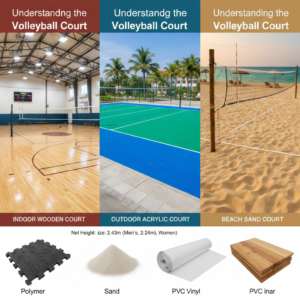
1. Indoor Volleyball Court
-
Usually constructed using wooden, synthetic, or PVC flooring.
-
Designed to provide shock absorption, slip resistance, and smooth surface traction.
-
Commonly found in schools, universities, stadiums, and sports complexes.
-
Requires climate-controlled environments to protect flooring integrity.
2. Outdoor Volleyball Court
-
Built using synthetic acrylic, sand, or modular tile systems.
-
Designed for weather resistance, UV protection, and durability.
-
Ideal for parks, clubs, resorts, schools, and residential complexes.
-
Incorporates proper drainage systems to withstand heavy rains and temperature variations.
Materials Used in Volleyball Court Construction
Choosing the right surface material is essential for durability, performance, and player safety. Below are the most commonly used flooring materials for volleyball courts:
1. Wooden Flooring (Indoor)
-
Made from high-quality maple or teak wood.
-
Offers excellent shock absorption and bounce consistency.
-
Ideal for professional tournaments and indoor stadiums.
-
Requires regular maintenance and polishing.
2. PVC Vinyl Flooring (Indoor)
-
Popular for schools and recreational courts.
-
Provides anti-slip properties, durability, and ease of cleaning.
-
Available in multiple thicknesses and colors.
-
Cost-effective compared to wooden surfaces.
3. Synthetic Acrylic Flooring (Outdoor)
-
Commonly used for outdoor volleyball courts.
-
UV resistant, non-slip, and all-weather proof.
-
Provides excellent grip and low maintenance needs.
4. Modular Interlocking Tiles (Outdoor)
-
Made from polypropylene or high-impact polymer.
-
Can be installed over concrete or asphalt bases.
-
Suitable for temporary courts and multi-sport areas.
5. Sand Surface (Beach Volleyball)
-
Used for beach or recreational volleyball.
-
Requires special sand with controlled granule size for safety and comfort.
-
Needs proper leveling and drainage to avoid waterlogging.
Steps in Volleyball Court Construction
Constructing a volleyball court involves precise planning, design, and professional execution. Below is a step-by-step outline of the construction process:
1. Site Preparation
-
Clear the area of debris, vegetation, and uneven surfaces.
-
Level the base to ensure uniform elevation.
-
For outdoor courts, establish a slight slope (about 1%) for water drainage.
2. Sub-Base Construction
-
Prepare a solid foundation with compacted soil, gravel, or crushed stone.
-
For indoor courts, concrete or cement screed bases are used.
-
A proper sub-base ensures durability and prevents surface cracking.
3. Flooring Installation
-
Depending on the court type (indoor/outdoor), the selected flooring material is installed.
-
For wooden courts, shock pads and underlays are fixed before laying wooden planks.
-
For synthetic or PVC floors, rolls or tiles are glued or welded together.
-
Outdoor acrylic or EPDM systems are poured and leveled for a seamless finish.
4. Marking and Line Painting
-
Court markings are painted using high-quality, non-fading paints.
-
Includes attack lines, boundary lines, center line, and service zones.
-
Colors are chosen for contrast and visibility.
5. Net and Post Installation
-
High-strength steel or aluminum posts are installed securely at the center.
-
Nets are tensioned as per international height standards.
-
Anchors and sleeves ensure easy setup and removal for multi-purpose use.
6. Final Inspection and Finishing
-
The entire surface is checked for level, adhesion, and playability.
-
Drainage and safety zones are verified.
-
Court is then ready for play.
Maintenance of Volleyball Courts
Proper maintenance extends the life and performance of the volleyball court.
For Indoor Courts:
-
Regular cleaning and dust mopping.
-
Use protective mats at entrances to prevent dirt accumulation.
-
Re-coating or polishing wooden floors periodically.
For Outdoor Courts:
-
Inspect for cracks or worn-out areas and repair promptly.
-
Ensure water drains properly after rain.
-
Repaint lines and boundaries as needed.
Routine care guarantees consistent play quality, safety, and visual appeal.
Cost Factors in Volleyball Court Construction
The cost of constructing a volleyball court depends on multiple factors:
-
Type of court: Indoor or outdoor
-
Surface material: Wood, PVC, acrylic, or sand
-
Size and customization: Standard or customized layouts
-
Base preparation: Soil, concrete, or asphalt base
-
Accessories: Nets, poles, and lighting systems
-
Labor and professional installation charges
On average, outdoor synthetic volleyball courts are more affordable than indoor wooden or PVC systems. Investing in a high-quality surface pays off in longevity, safety, and reduced maintenance.
Why Choose a Professional Volleyball Court Construction Company
Building a volleyball court requires expertise in sports engineering, surface technology, and layout precision. Professional court builders ensure:
-
Adherence to FIVB-approved dimensions and standards
-
Use of high-performance, weather-resistant materials
-
Perfect leveling and finishing for optimal gameplay
-
Proper installation of nets, posts, and drainage systems
-
Long-term warranty and maintenance support
A professionally built court enhances the quality of play, minimizes injuries, and improves the facility’s aesthetic value.
Conclusion
A well-constructed volleyball court is the foundation of great gameplay, athlete safety, and long-term usability. Whether it’s an indoor wooden court, an outdoor acrylic surface, or a beach sand setup, the right design and materials ensure lasting performance and player comfort.
From schools and sports clubs to stadiums and residential areas, investing in a professionally built volleyball court is a step toward promoting health, teamwork, and an active lifestyle.
With the right planning, materials, and expert execution, your volleyball court will not only meet international standards but also provide a safe, durable, and world-class playing experience for years to come
FAQ: Volleyball Court – Complete Guide
1. What are the standard dimensions of a volleyball court?
-
Court size: 18 m × 9 m (59 ft × 29.5 ft)
-
Attack line: 3 m from the centerline
-
Free zone: Minimum 3 m wide around the court
-
Ceiling height: At least 7 m for indoor courts (preferably 9–12 m for professional play)
These comply with FIVB (International Volleyball Federation) regulations.
2. What types of volleyball courts exist?
-
Indoor courts: Wooden or synthetic flooring for gyms and sports halls
-
Outdoor courts: Sand (beach volleyball) or synthetic turf for recreational use
-
Multi-purpose courts: Can accommodate other sports like badminton or basketball with line markings
3. Which flooring is best for indoor volleyball courts?
-
Maple wood flooring: Preferred for professional indoor courts due to shock absorption, uniform bounce, and player comfort
-
Synthetic or vinyl sports flooring: Cost-effective, low maintenance, suitable for school or community gyms
-
Rubberized sports flooring: Good for recreational purposes and multi-sport use
4. What is the ideal surface for outdoor volleyball courts?
-
Sand: Fine, uniform, free of rocks and debris; minimum 40 cm depth for safety
-
Synthetic turf or grass: Suitable for recreational play, but less ideal for professional tournaments
5. How high should the net be?
-
Men’s volleyball: 2.43 m (7 ft 11 5/8 in)
-
Women’s volleyball: 2.24 m (7 ft 4 1/8 in)
-
Nets should be taut and securely fixed to posts for safety
6. Do indoor volleyball courts need ventilation and lighting?
Yes. Proper ventilation ensures:
-
Air circulation to maintain comfort
-
Humidity control to prevent floor damage
-
Indoor air quality for athlete performance
Lighting should be even, glare-free, with a recommended minimum of 300–500 lux for recreational play and 1000 lux for professional tournaments.
7. How much space is required around the court?
-
Free zone: Minimum 3 m on all sides for safe movement
-
Service zone: Extra space behind end lines (minimum 3 m recommended)
-
Spectator area: Should not interfere with the free zone
8. What maintenance is required for indoor volleyball courts?
-
Regular dusting and dry mopping
-
Wet cleaning with neutral pH cleaners for wooden or synthetic floors
-
Inspection of net posts, lines, and flooring for damage
-
Recoating or polishing wood floors periodically
9. Can volleyball courts be used for multi-sport purposes?
Yes. Many indoor gyms install multi-purpose flooring with line markings for:
-
Badminton
-
Basketball
-
Handball
-
Futsal
Vinyl or synthetic flooring makes multi-use easier without damaging the surface.
10. What safety considerations should be addressed?
-
Non-slip flooring
-
Proper padding around posts and walls
-
Adequate lighting and ventilation
-
Free of obstacles in the free zone and service areas