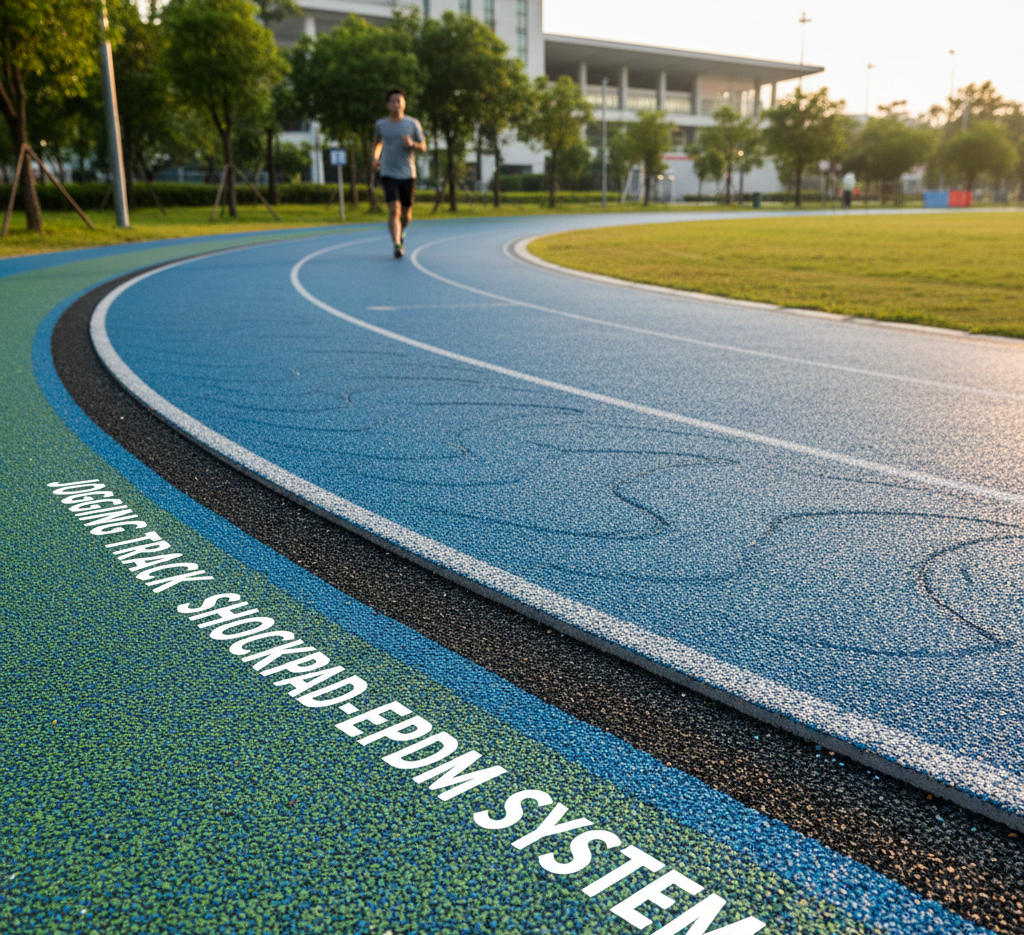
Jogging and running are essential activities for maintaining physical fitness, promoting cardiovascular health, and improving overall well-being. However, the surface on which you run significantly impacts your safety, comfort, and performance. Traditional surfaces such as asphalt or concrete can cause joint stress, slips, or long-term injuries. To address these concerns, modern sports facilities, schools, residential complexes, and public parks are increasingly adopting the Jogging Track Shockpad-EPDM System, a technologically advanced flooring solution that combines safety, durability, and aesthetics.
This page provides a comprehensive guide on Jogging Track Shockpad-EPDM Systems, explaining its features, benefits, applications, installation process, and maintenance requirements.
What is a Jogging Track Shockpad-EPDM System?
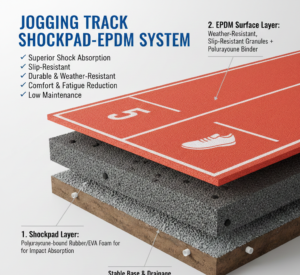
The Jogging Track Shockpad-EPDM System is a two-layer running track solution designed to provide superior shock absorption, safety, and long-lasting performance. The system combines:
-
Shockpad Layer:
-
Made from polyurethane-bound rubber or EVA (Ethylene Vinyl Acetate) foam.
-
Provides cushioning and impact absorption, reducing stress on joints, knees, and ankles.
-
Enhances running comfort and reduces fatigue, making it suitable for runners of all ages.
-
-
EPDM Surface Layer:
-
Composed of colored EPDM (Ethylene Propylene Diene Monomer) granules mixed with polyurethane.
-
Offers weather resistance, slip resistance, and vibrant aesthetics.
-
Provides durability and grip under all weather conditions.
-
This combination creates a premium jogging track surface that is soft, resilient, safe, and visually appealing.
Advantages of Jogging Track Shockpad-EPDM Systems
Choosing a Shockpad-EPDM system offers multiple advantages over traditional running surfaces:
1. Superior Shock Absorption
-
The shockpad layer absorbs impact, reducing the risk of injuries and stress on joints.
-
Especially beneficial for schools, residential complexes, and sports academies where users of all ages run regularly.
2. Slip-Resistant Surface
-
EPDM top layer ensures excellent grip even in wet conditions.
-
Minimizes chances of slipping, providing a safer environment for jogging and running.
3. Durable and Weather-Resistant
-
Resistant to UV rays, rain, heat, and cold, ensuring longevity.
-
Unlike asphalt or concrete, the surface does not crack or erode easily.
4. Comfort and Fatigue Reduction
-
Soft and cushioned surface allows runners to train longer with reduced fatigue.
-
Makes running enjoyable for children, adults, and senior citizens alike.
5. Low Maintenance
-
Requires minimal upkeep—regular cleaning with water and mild detergent is sufficient.
-
Long lifespan reduces repair and replacement costs over time.
6. Aesthetic Flexibility
-
Available in various colors, textures, and patterns.
-
Can include lane markings, distance markers, or logos for schools, parks, or sports facilities.
7. Eco-Friendly Option
-
Made from non-toxic, recyclable materials.
-
Supports sustainable construction practices, especially with recycled rubber used in the shockpad layer.
Applications of Shockpad-EPDM Jogging Tracks
Shockpad-EPDM jogging tracks are versatile and suitable for a wide range of installations:
-
Schools and Universities: Safe and cushioned running tracks for physical education and athletic competitions.
-
Residential Complexes: Promote fitness and recreation for community residents.
-
Public Parks and Recreational Areas: Create safe and comfortable jogging paths for the public.
-
Sports Academies and Stadiums: Professional-grade tracks suitable for competitive training.
-
Corporate Campuses: Encourage employee wellness through safe jogging facilities.
Installation Process of Jogging Track Shockpad-EPDM System
Professional installation ensures performance, durability, and safety. The installation process typically involves the following steps:
1. Site Preparation
-
Clear the area of debris, rocks, vegetation, and unwanted material.
-
Level and compact the soil to create a stable base.
-
Ensure proper drainage to prevent water accumulation on the track surface.
2. Shockpad Layer Application
-
Spread polyurethane-bound rubber or EVA foam granules evenly over the compacted base.
-
Level and compact the shockpad layer to create uniform cushioning.
-
This layer acts as the primary impact absorber.
3. EPDM Top Layer Application
-
Mix EPDM granules with polyurethane binder according to design specifications.
-
Spread evenly over the shockpad layer using trowels or rollers.
-
Ensure proper bonding with the underlying shockpad for durability and stability.
4. Curing and Finishing
-
Allow the track to cure for 24–48 hours, depending on material specifications.
-
Apply lane markings, logos, or distance markers as per requirement.
5. Final Inspection
-
Check for uniform thickness, adhesion, smoothness, and overall quality.
-
The track is then ready for use, providing a safe, cushioned, and durable running surface.
Maintenance Tips for Shockpad-EPDM Jogging Tracks
Even though the system is designed for low maintenance, regular care ensures longevity and performance:
-
Cleaning: Remove dust, leaves, and debris regularly.
-
Avoid Heavy Loads: Keep vehicles and heavy equipment off the track.
-
Inspection: Repair minor surface wear or cracks immediately.
-
Drainage Maintenance: Ensure proper runoff to avoid waterlogging and surface damage.
With proper maintenance, a Shockpad-EPDM jogging track can last 10–15 years or more while retaining safety, comfort, and aesthetics.
Cost Considerations
The cost of a Jogging Track Shockpad-EPDM System depends on:
-
Track dimensions (length and width)
-
Thickness and type of shockpad layer
-
EPDM layer specifications, color, and customization
-
Site preparation, drainage, and leveling
-
Professional installation charges
Though the initial investment is higher than asphalt or gravel, the long-term benefits of durability, safety, low maintenance, and user comfort make it a highly cost-effective solution for fitness and sports facilities.
Why Choose Shockpad-EPDM over Traditional Surfaces?
Compared to asphalt, concrete, or plain rubber tracks, Shockpad-EPDM systems offer:
-
Enhanced shock absorption and joint protection
-
Slip-resistant surfaces for all weather conditions
-
Long-lasting performance with minimal repairs
-
Customizable design options and visual appeal
-
Weather-proof and UV-resistant properties
This combination of safety, comfort, performance, and aesthetics makes the Shockpad-EPDM system the preferred choice for modern jogging and running tracks.
Conclusion
The Jogging Track Shockpad-EPDM System represents a premium solution for running surfaces, combining safety, durability, comfort, and visual appeal. The shockpad layer absorbs impact, reducing joint stress and injuries, while the EPDM top layer ensures a weather-resistant, slip-proof, and aesthetically pleasing surface.
Ideal for schools, parks, residential complexes, sports academies, and corporate campuses, the Shockpad-EPDM system encourages outdoor activity and promotes physical fitness for all age groups. Proper planning, professional installation, and regular maintenance ensure that the track provides a safe, long-lasting, and high-performance running experience.
Investing in a Jogging Track Shockpad-EPDM system is not just about building a track—it is a commitment to health, wellness, and the overall fitness of the community, offering a reliable and premium-quality surface for years to come.
Frequently Asked Questions (FAQ) – Jogging Track Shockpad – EPDM System
1. What is a Jogging Track Shockpad – EPDM System?
A Jogging Track Shockpad – EPDM System is a multi-layered flooring system designed for jogging tracks, combining a shock-absorbing base (shockpad) with an EPDM rubber surface. It provides joint protection, safety, and durability for runners and walkers.
2. What are the components of the system?
-
Shockpad layer: Made of rubber or polyurethane foam, absorbs impact and reduces stress on joints
-
EPDM top layer: Durable, UV-resistant rubber granules bound with polyurethane for a slip-resistant running surface
-
Optional line markings: For lanes and distance indicators
3. Why use a Shockpad – EPDM system for jogging tracks?
-
Reduces impact on knees and ankles
-
Enhances safety with slip-resistant surfaces
-
Durable and weather-resistant for outdoor use
-
Comfortable running experience
-
Suitable for both professional and recreational tracks
4. Can the system be installed outdoors?
Yes, the Shockpad – EPDM system is UV-resistant, waterproof, and durable, making it ideal for:
-
Parks
-
Residential complexes
-
School and college campuses
-
Sports complexes
5. How thick is the Shockpad – EPDM system?
-
Shockpad layer: 8–20 mm, depending on cushioning requirement
-
EPDM surface layer: 5–15 mm
-
Total thickness: Typically 15–35 mm for optimal shock absorption and durability
6. How is the system installed?
-
Prepare the sub-base (compacted soil, gravel, or concrete)
-
Lay the shockpad layer evenly over the sub-base
-
Pour or install the EPDM surface over the shockpad
-
Cure and level the surface
-
Apply line markings or distance indicators if required
7. How long does it take to install a Shockpad – EPDM jogging track?
-
Small residential tracks: 3–5 days
-
Medium park or school tracks: 7–10 days
-
Large multi-lane or professional tracks: 2–4 weeks
Installation time depends on track size, base preparation, and curing.
8. How much does a Shockpad – EPDM jogging track cost in India?
-
Shockpad layer: ₹300–₹600 per sq. meter
-
EPDM surface layer: ₹900–₹1,800 per sq. meter
-
Total system cost: ₹1,200–₹2,400 per sq. meter
Cost varies with thickness, customization, and additional features.
9. How long does a Shockpad – EPDM jogging track last?
With proper installation and maintenance:
-
EPDM surface layer: 10–12 years
-
Shockpad layer: 12–15 years
-
Overall system lifespan can exceed 15 years with regular maintenance
10. Can additional features be added to the track?
Yes, Shockpad – EPDM jogging tracks can include:
-
Lane markings and distance indicators
-
Benches and seating areas
-
Hydration stations or water fountains
-
Lighting systems for night jogging
-
Fitness or exercise stations
11. How is maintenance done for Shockpad – EPDM jogging tracks?
-
Regular cleaning to remove dirt, leaves, or debris
-
Inspection for surface damage or cracks
-
Touch-up or repainting of lane markings
-
Ensure drainage remains clear to avoid waterlogging
12. Who provides Shockpad – EPDM jogging track systems?
Professional sports flooring contractors and suppliers provide turnkey services including:
-
Material supply (shockpad and EPDM)
-
Track installation
-
Custom design, line marking, and additional features
-
Maintenance guidance
13. Can the system be used for professional or competitive tracks?
Yes, EPDM shockpad systems meet international sports flooring standards and are suitable for professional training tracks, school competitions, and public jogging tracks.
14. What are the advantages of a Shockpad – EPDM system over traditional tracks?
-
Superior shock absorption for joint safety
-
Slip-resistant and durable surface
-
Weather and UV resistance for outdoor use
-
Customizable colors and lane markings
-
Long-lasting and low-maintenance