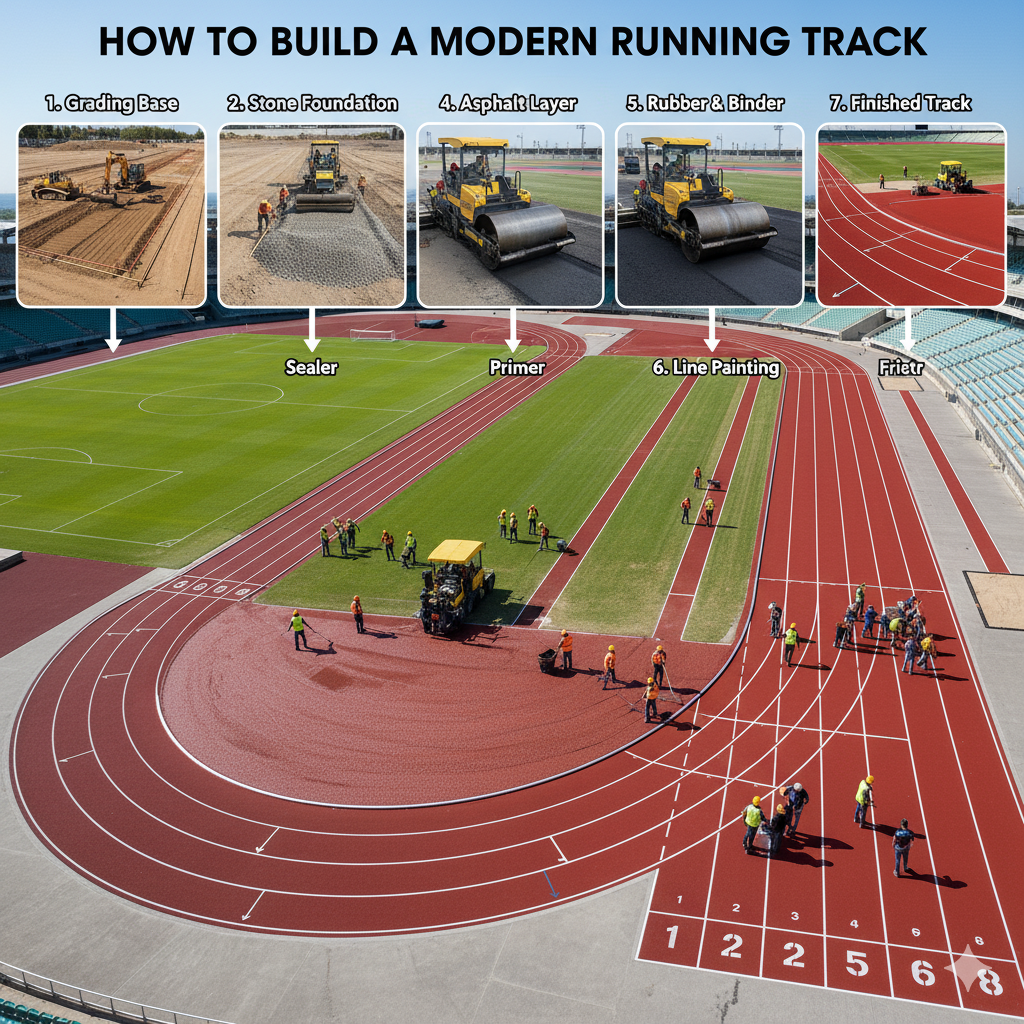
Jogging tracks are an essential feature in schools, parks, residential complexes, and sports facilities, promoting fitness, wellness, and outdoor activity. A well-constructed jogging track provides a safe, durable, and comfortable surface for running, walking, or fitness exercises. Creating a jogging track requires proper planning, quality materials, and professional execution to ensure longevity and safety.
This guide provides step-by-step instructions, materials, and considerations for making a jogging track that meets both functional and aesthetic requirements.
1. Planning Your Jogging Track
Before starting construction, careful planning is crucial to ensure the track meets the intended purpose and budget. Key planning steps include:
a. Determine the Purpose
-
Is the track for recreational jogging, professional training, or a multi-purpose sports track?
-
The intended use affects the material choice, thickness, and design of the track.
b. Decide Track Length and Width
-
Standard jogging tracks are usually 1.2 to 2 meters wide to allow two people to run comfortably.
-
Track length can vary depending on available space; common loops in parks are 400 meters or more.
c. Choose the Location
-
Prefer flat, well-drained areas to avoid waterlogging.
-
Avoid steep slopes, large roots, or rocky terrain.
d. Select Track Material
The material affects safety, durability, and maintenance. Common options include:
-
EPDM or PU Rubber Tracks: Shock-absorbing, weather-resistant, professional-grade.
-
Asphalt or Concrete: Budget-friendly but hard on joints.
-
Gravel or Crushed Stone: Natural and eco-friendly, suitable for park trails.
-
Synthetic Turf: Soft, aesthetically pleasing, multi-purpose.
2. Site Preparation
Proper site preparation ensures the durability and smoothness of the jogging track. Steps include:
a. Clear the Area
-
Remove grass, roots, rocks, and debris.
-
Ensure the track path is free of obstructions.
b. Level the Ground
-
Use machinery or manual labor to level the terrain.
-
Ensure slight slopes for proper drainage (1–2% slope is recommended).
c. Compact the Soil
-
Use a compactor or roller to compress the soil and create a firm base.
-
A well-compacted base prevents uneven surfaces and track settling.
d. Install Drainage (if required)
-
Proper drainage is essential for outdoor tracks to avoid water accumulation.
-
Install underground drains or slope the track edges to channel water away.
3. Laying the Base Layer
The base layer provides stability and cushioning, especially for rubberized tracks.
a. Asphalt Base
-
Spread hot-mix asphalt over the compacted ground.
-
Level and compact the asphalt to create a smooth surface.
b. Gravel or Stone Base
-
For rubber or synthetic tracks, lay a layer of crushed stone or gravel.
-
Compact it thoroughly to create a stable foundation.
4. Applying the Surface Layer
The surface layer determines comfort, grip, and aesthetics of the jogging track.
a. Rubberized Tracks (EPDM/PU)
-
Mix EPDM granules with polyurethane binder.
-
Spread evenly over the base layer using trowels or rollers.
-
Cure the surface for 24–48 hours to allow hardening.
b. Asphalt or Concrete Tracks
-
Level the asphalt or concrete surface.
-
For concrete, apply a textured finish to improve traction.
c. Gravel Tracks
-
Spread and level gravel evenly over the compacted base.
-
Regularly roll and tamp down to prevent displacement.
5. Marking and Design
Adding markings and design elements enhances usability and aesthetics:
-
Lane Markings: Optional for wider tracks to guide runners.
-
Distance Markers: Install markers at intervals (e.g., every 100 meters).
-
Color and Texture: Rubber tracks can be customized with colors and patterns for visual appeal.
6. Finishing Touches
-
Inspect the track for uneven surfaces or gaps.
-
Clean the track of debris, dust, or loose materials.
-
Install edge borders, such as bricks, pavers, or curbs, to prevent material spillage.
-
Provide lighting and signage for safety during evening jogging.
7. Maintenance Tips
A jogging track remains safe and durable with proper maintenance:
-
Regular Cleaning: Remove debris, leaves, and dust to prevent slips.
-
Periodic Inspection: Check for cracks, loose gravel, or surface wear.
-
Drainage Maintenance: Ensure slopes and drains remain functional to avoid waterlogging.
-
Surface Repairs: Repair minor cracks or surface damages immediately to prevent further deterioration.
8. Safety Considerations
-
Surface Material: Soft surfaces reduce stress on joints.
-
Slope and Drainage: Prevent waterlogging to reduce slip hazards.
-
Track Width: Ensure sufficient space for runners to avoid collisions.
-
Lighting: Adequate lighting enhances safety for evening or early morning jogs.
9. Cost Considerations
The cost of a jogging track depends on:
-
Track material (rubber, asphalt, concrete, gravel)
-
Track length and width
-
Base preparation and drainage requirements
-
Surface finishing, lane markings, and design features
-
Labor and professional installation
While rubberized tracks have higher initial costs, their durability, safety, and low maintenance make them a cost-effective long-term investment.
Conclusion
Making a jogging track requires careful planning, quality materials, and professional execution. From selecting the right location and material to proper site preparation and surface installation, each step plays a vital role in creating a safe, durable, and comfortable running path.
Whether for schools, parks, residential complexes, or professional sports facilities, a well-constructed jogging track promotes fitness, health, and outdoor activity. By following these steps and maintaining the track regularly, you can provide a running surface that lasts for years while ensuring safety, aesthetics, and functionality.
Investing in a high-quality jogging track is an investment in community health, fitness, and well-being, offering a safe and enjoyable environment for people of all ages.
Frequently Asked Questions (FAQ) – How to Make a Jogging Track
1. What materials are used to make a jogging track?
Jogging tracks are commonly made using PU (Polyurethane), EPDM rubber, synthetic acrylic layers, interlocking rubber tiles, or natural materials like compacted soil or grass. For long-term durability and low maintenance, PU and EPDM surfaces are the most preferred.
2. What is the ideal width of a jogging track?
The standard jogging track width ranges from 1.2 meters to 2.5 meters, depending on expected foot traffic. Public parks and stadiums usually have wider tracks to allow comfortable two-way movement.
3. How deep should a jogging track base be?
A jogging track typically requires:
-
100–150 mm compacted sub-base (stone or WMM)
-
40–60 mm elastic or shock-absorbing layer
-
10–15 mm top wear layer
This ensures stability, cushioning, and long-term performance.
4. Is drainage important while constructing a jogging track?
Yes, proper drainage is critical. A gentle slope (1:100) and side drains help prevent water accumulation, which can damage the surface and reduce lifespan—especially for outdoor jogging tracks.
5. How long does it take to construct a jogging track?
Construction time depends on size and surface type. On average:
-
Small park track: 7–10 days
-
PU or EPDM track: 10–15 days
-
Large institutional track: 2–3 weeks
6. What is the cost of making a jogging track?
The cost varies based on material, thickness, and area. In India, jogging track construction may range from ₹800 to ₹3,500 per sq. meter, depending on whether the surface is basic rubber, EPDM, or PU.
7. Can a jogging track be built on existing concrete or asphalt?
Yes, jogging tracks can be installed over existing concrete or asphalt, provided the surface is level, crack-free, and structurally sound. A primer and cushioning layer are usually added before applying the final surface.
8. Which surface is best for joints and injury prevention?
PU and EPDM jogging tracks are best for joint protection as they offer excellent shock absorption, slip resistance, and consistent running comfort.
9. How much maintenance does a jogging track require?
Synthetic jogging tracks require minimal maintenance, such as regular cleaning, debris removal, and periodic inspection. Unlike natural tracks, they don’t need watering or resurfacing frequently.
10. What is the lifespan of a jogging track?
A well-constructed jogging track can last:
-
8–10 years for EPDM surfaces
-
10–12 years for PU tracks
Proper installation and maintenance significantly extend lifespan.