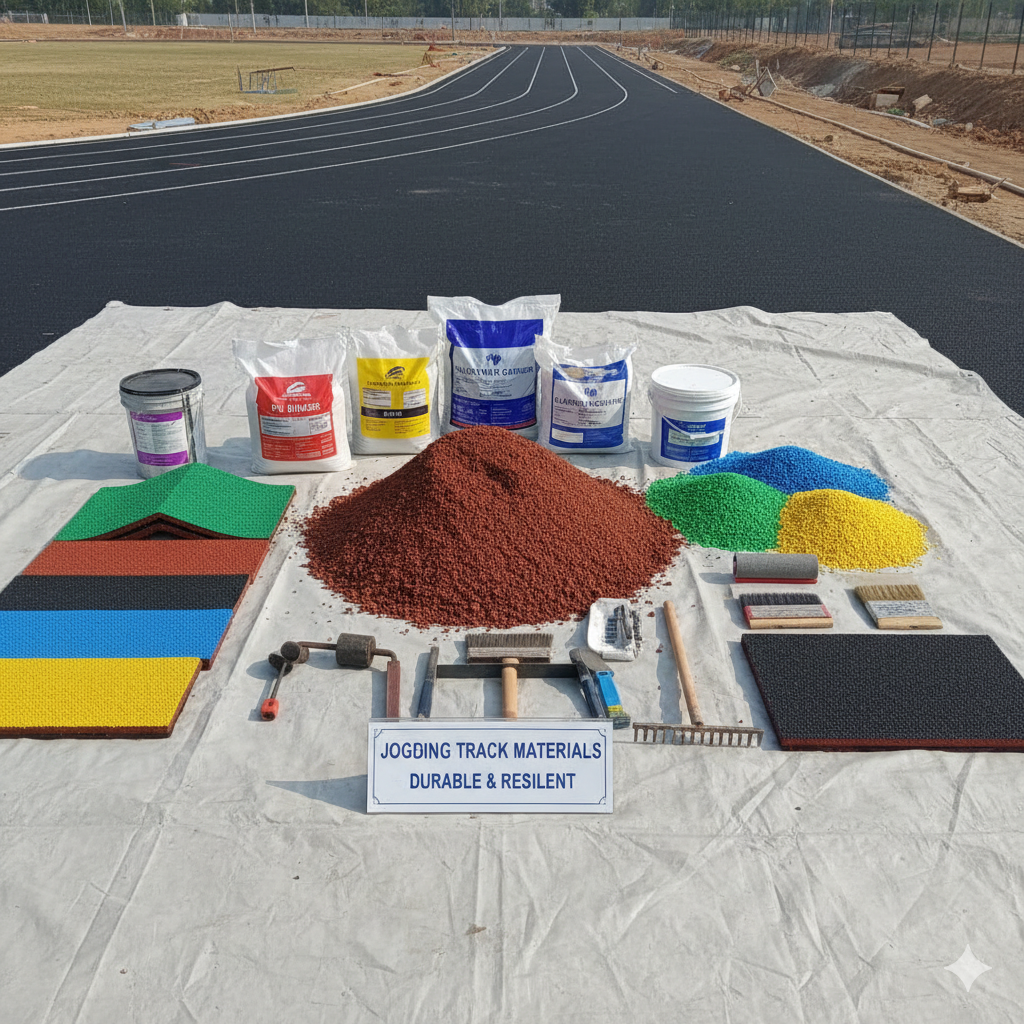
Jogging and running are among the most popular forms of fitness activity worldwide. While the benefits of jogging are well-known—improved cardiovascular health, strengthened muscles, and enhanced mental well-being—the surface on which you run plays a crucial role in safety, comfort, and performance. Selecting the right jogging track material is essential for schools, residential complexes, parks, sports facilities, and public recreational areas.
This guide explores the various jogging track materials, their features, advantages, and suitability for different environments.
Importance of Choosing the Right Jogging Track Material
The material used for a jogging track significantly affects the runner’s experience. The wrong surface can lead to injuries, fatigue, and reduced performance, while the right material enhances safety, comfort, and durability. Key factors to consider when selecting jogging track materials include:
-
Shock Absorption: Reduces joint and muscle strain during running.
-
Durability: Ability to withstand heavy foot traffic and weather conditions.
-
Slip Resistance: Minimizes the risk of accidents, especially during wet conditions.
-
Maintenance Requirements: Low-maintenance materials reduce long-term costs.
-
Aesthetic Appeal: Color, texture, and design can enhance the environment.
Popular Jogging Track Materials
Several materials are used to construct jogging tracks, each offering unique benefits and characteristics. The choice depends on usage, location, budget, and aesthetic preferences.
1. Asphalt Jogging Tracks
Overview: Asphalt is a commonly used material for jogging and running paths. It consists of a mix of aggregates and bitumen, creating a smooth, hard surface.
Advantages:
-
Smooth surface for easy running
-
Relatively low installation cost
-
Suitable for outdoor parks and public areas
Disadvantages:
-
Hard surface increases the risk of joint stress and injuries
-
Can become slippery in rainy conditions
-
Prone to cracks and requires periodic maintenance
Best For: Public parks, community walking paths, and temporary or budget-friendly installations.
2. Concrete Jogging Tracks
Overview: Concrete tracks are durable and long-lasting, offering a hard and stable surface.
Advantages:
-
Extremely durable and long-lasting
-
Can be easily shaped and designed
-
Minimal maintenance required
Disadvantages:
-
Very hard on joints, leading to increased risk of injuries
-
Slippery when wet unless treated
-
Less comfortable for long-distance running
Best For: High-traffic areas, urban jogging paths, and school tracks where durability is a priority.
3. Rubberized Jogging Tracks (EPDM and PU Surfaces)
Overview: Rubberized surfaces, including EPDM (Ethylene Propylene Diene Monomer) and PU (Polyurethane) tracks, are highly popular for athletic tracks and modern jogging paths.
Advantages:
-
Excellent shock absorption reduces joint stress
-
Slip-resistant surface for safe running in wet and dry conditions
-
Weather-resistant and UV-stable
-
Available in various colors and textures for aesthetic appeal
-
Low maintenance and long-lasting
Disadvantages:
-
Higher installation cost compared to asphalt or concrete
-
Requires professional installation for optimal performance
Best For: Sports complexes, schools, universities, residential societies, and professional jogging tracks.
4. Gravel Jogging Tracks
Overview: Gravel or crushed stone tracks are natural and permeable surfaces often used in parks and forest trails.
Advantages:
-
Provides natural cushioning for joints
-
Eco-friendly and aesthetically pleasing
-
Good drainage properties, reducing waterlogging
Disadvantages:
-
Loose gravel can cause slips or uneven footing
-
Requires regular leveling and maintenance
-
Can be uncomfortable for long-distance running
Best For: Recreational trails, park paths, and nature jogging tracks.
5. Synthetic Turf or Artificial Grass Tracks
Overview: Some jogging tracks use synthetic turf or artificial grass to provide a soft, visually appealing surface.
Advantages:
-
Soft and cushioned surface reduces impact on joints
-
Natural appearance enhances landscape aesthetics
-
Suitable for multi-purpose usage (running, walking, sports)
Disadvantages:
-
Higher installation cost
-
Requires occasional cleaning and maintenance
-
Can heat up in direct sunlight
Best For: Residential complexes, recreational parks, and sports academies where aesthetics and comfort are a priority.
6. Cinder or Clay Tracks
Overview: Cinder and clay tracks were traditionally used in athletic stadiums and outdoor sports facilities.
Advantages:
-
Soft surface with moderate shock absorption
-
Provides natural traction and comfort
Disadvantages:
-
High maintenance due to erosion and weather effects
-
Not suitable for wet conditions
-
Less common in modern jogging tracks
Best For: Traditional athletic tracks, schools, and community running fields.
Factors to Consider Before Choosing a Jogging Track Material
When selecting the right jogging track material, it is essential to consider:
-
Purpose of Use: Is it for casual jogging, competitive athletics, or multi-purpose sports?
-
Foot Traffic: High-traffic areas need more durable and wear-resistant surfaces.
-
Budget: Asphalt and concrete are budget-friendly, while EPDM and PU surfaces offer superior performance at higher costs.
-
Weather Conditions: Outdoor tracks in rainy or sunny climates require weather-resistant materials.
-
Safety Requirements: Shock absorption, slip resistance, and joint protection are vital for user safety.
-
Maintenance: Consider long-term maintenance costs and ease of repair.
Conclusion
Choosing the right jogging track material is critical for providing a safe, comfortable, and durable running environment. Modern materials such as EPDM and PU rubber tracks offer excellent shock absorption, weather resistance, and aesthetic versatility, making them the preferred choice for schools, sports facilities, residential complexes, and public parks.
For budget-conscious projects, asphalt or concrete tracks remain practical options, while gravel or clay surfaces are ideal for natural trails and recreational paths. Ultimately, the ideal jogging track material balances safety, performance, durability, and aesthetics, ensuring an enjoyable experience for all users while promoting a healthy and active lifestyle.
By selecting the right material and ensuring professional installation, you can create a jogging track that is safe, long-lasting, and visually appealing, encouraging fitness and outdoor activity for years to come.