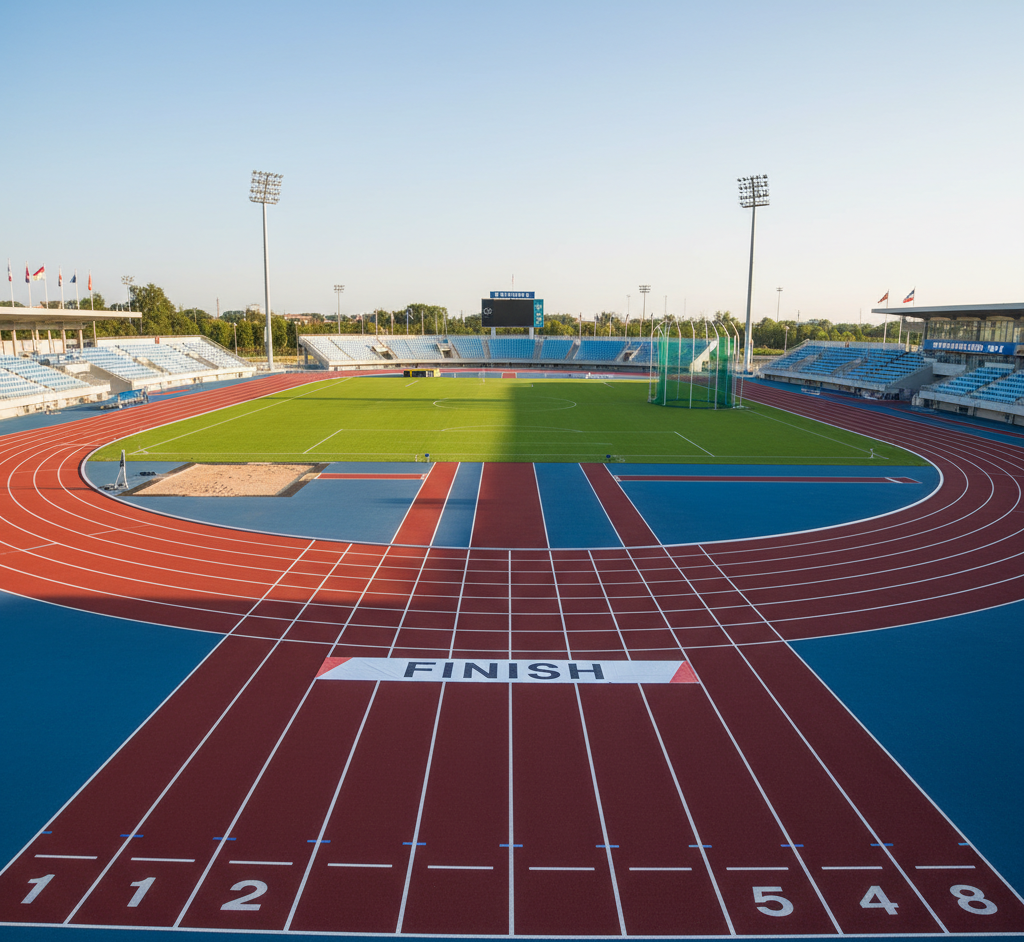
An 8-lane athletics track is the standard choice for professional competitions, universities, and high-performance sports facilities. With 8 lanes, each 1.22 meters wide, these tracks are designed to meet IAAF/World Athletics standards, providing athletes with a safe, competitive, and high-performance environment.
Constructing an 8-lane track involves careful planning, quality materials, and precise installation of foundation, surfacing, drainage, and line markings. From elite stadiums to university sports complexes, 8-lane tracks are essential for hosting official competitions, training sessions, and community athletic programs.
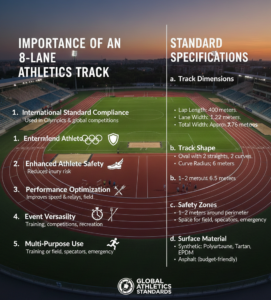
1. Importance of an 8-Lane Athletics Track
-
International Standard Compliance
-
8-lane tracks are widely used in Olympics, national, and regional competitions, ensuring global standards are met.
-
-
Enhanced Athlete Safety
-
Adequate lane width and proper curve design reduce risk of injury.
-
-
Performance Optimization
-
Smooth curves, uniform lane width, and premium surfaces improve speed, traction, and energy return.
-
-
Event Versatility
-
Accommodates sprints, middle-distance races, relay events, hurdles, and field event integration.
-
-
Multi-Purpose Use
-
Supports training, competitions, and recreational athletics without compromising safety or performance.
-
2. Standard Specifications of an 8-Lane Track
a. Track Dimensions
-
Lap Length: 400 meters measured along the innermost lane.
-
Lane Width: 1.22 meters per lane.
-
Total Width: Approximately 9.76 meters (excluding safety zones).
b. Track Shape
-
Oval with two straight sections and two curved sections.
-
Standard curve radius: 36.5 meters for 400-meter outdoor tracks.
c. Safety Zones
-
Recommended 1–2 meters of buffer space around the track perimeter.
-
Provides space for field events, spectators, and emergency access.
d. Surface Material
-
Synthetic surfaces like polyurethane, Tartan, or EPDM ensure durability, weather resistance, and shock absorption.
-
Asphalt tracks can be used for budget-friendly facilities but may require synthetic overlays.
3. Steps in 8-Lane Track Construction
Step 1: Planning and Design
-
Conduct site surveys for soil, terrain, and drainage.
-
Prepare a detailed track layout including lanes, curves, straightaways, and field event zones.
-
Ensure compliance with international athletics standards.
Step 2: Excavation
-
Remove topsoil, debris, and unsuitable materials.
-
Excavate to accommodate subgrade, aggregate, and base layers.
-
Compact natural soil using rollers or plate compactors.
-
Stabilize weak soil using lime, cement, or geotextiles.
-
Lay crushed stone or gravel layers and compact thoroughly.
-
Construct asphalt or concrete base to provide a stable, level surface.
-
Ensure 0.5–1% cross slope for water drainage.
-
Apply synthetic surfacing layers evenly over the base.
-
Use professional equipment to achieve a smooth, uniform surface.
-
Allow proper curing time: 24–48 hours for asphalt, longer for concrete.
-
Paint lanes, start/finish lines, staggered starts, relay zones, and hurdle markings.
-
Verify accuracy and compliance with official regulations.
-
Inspect surface uniformity, drainage efficiency, and compliance.
-
Confirm the track is ready for training and competitive events.
4. Materials Used in 8-Lane Track Construction
-
Subgrade Soil and Stabilizers
-
Essential for a strong, stable foundation.
-
-
Crushed Stone and Gravel
-
Provides structural strength and drainage.
-
-
Asphalt or Concrete Base
-
Creates a level, durable platform for synthetic surfacing.
-
-
Synthetic Surfacing Materials
-
Polyurethane, Tartan, or EPDM layers provide traction, shock absorption, and weather resistance.
-
-
Line Marking Paints
-
Acrylic or polyurethane-based for durable, high-visibility lane lines.
-
5. Factors Affecting 8-Lane Track Construction Cost
-
Track Size and Area: Larger tracks require more materials and labor.
-
Surface Type: Premium synthetic materials are costlier but provide long-term durability.
-
Base Preparation: Soil stabilization and drainage systems influence costs.
-
Additional Features: Line marking, fencing, lighting, and seating increase expenses.
-
Labor and Equipment: Skilled labor and machinery affect overall budget.
Estimated construction costs for an 8-lane synthetic track range between $250,000 – $450,000, depending on site conditions, materials, and additional facilities.
6. Maintenance Considerations
-
Regular Cleaning: Remove debris and leaves to maintain surface traction.
-
Surface Inspection: Address minor cracks, uneven areas, or worn spots promptly.
-
Line Repainting: Refresh lane markings every 2–3 years.
-
Drainage Maintenance: Keep drains clear to prevent water pooling.
-
Weight Restrictions: Avoid heavy vehicles or equipment on the track surface.
Proper maintenance ensures athlete safety, surface longevity, and peak performance.
7. Advantages of an 8-Lane Track
-
Professional Competition Ready – Meets international athletics standards.
-
Athlete Safety – Proper lane width, curve design, and shock-absorbing surface reduce injuries.
-
Durability – Premium construction materials extend track lifespan.
-
Versatility – Supports sprints, relays, middle-distance events, hurdles, and field events.
-
Aesthetic Appeal – Vibrant surfaces and clear lane markings enhance facility appearance.
8. Applications
-
Olympic and National Stadiums – Hosts professional athletic competitions.
-
Universities and Schools – Supports student training and inter-school competitions.
-
Community Sports Complexes – Provides recreational and competitive athletic facilities.
-
Indoor and Outdoor Tracks – Adaptable for both indoor arenas and outdoor stadiums.
A professionally constructed 8-lane track ensures high-performance training, competitive events, and long-term durability.
9. Conclusion
An 8-lane athletics track is the benchmark for professional athletic facilities, combining regulatory compliance, safety, durability, and performance. From foundation preparation and base construction to synthetic surfacing and precise line marking, each step is crucial for a world-class track.
Investing in an 8-lane track ensures that schools, universities, and stadiums can host official competitions, support athlete development, and provide a safe, durable, and visually appealing facility. With proper construction and maintenance, an 8-lane athletics track delivers years of reliable use for training, competitions, and community sports programs.
FAQ – 8-Lane Athletics Track Construction: Complete Guide
1. What is an 8-lane athletics track?
An 8-lane athletics track is a professional running track with eight lanes, designed for training, competitions, and recreational use. It is commonly used in stadiums, sports complexes, colleges, and international athletic facilities.
2. What are the standard dimensions of an 8-lane track?
- Lane Width: 1.22 meters (4 ft) per lane
- Track Length: 400 meters per lap (measured in lane 1)
- Total Width: Approximately 9.76 meters (8 lanes × 1.22 m)
- Track Shape: Oval with two straights and two semicircular curves
3. What surfaces are used for 8-lane athletics tracks?
- PU (Polyurethane) Track: Professional-grade, shock-absorbing, durable
- EPDM Rubber Track: Non-slip, joint-friendly, suitable for outdoor conditions
- Asphalt or Concrete Base: Provides stable foundation before synthetic surfacing
- Synthetic Athletics Surface: Standard for international competitions
4. How long does it take to construct an 8-lane track?
Construction time depends on surface type and site preparation:
- Basic asphalt track: 4–6 weeks
- PU/EPDM synthetic track: 6–8 weeks
- Professional competition-standard track: 8–12 weeks
5. How much does 8-lane track construction cost?
Cost varies based on materials, amenities, and stadium infrastructure:
- Basic asphalt track: ₹30–50 lakh
- PU/EPDM synthetic track: ₹60–90 lakh
- High-end international-standard track with lighting and landscaping: ₹1.5 crore+
6. Can an 8-lane athletics track be built outdoors?
Yes. Outdoor tracks are common in schools, stadiums, and sports academies. Proper drainage systems, UV-resistant surfaces, and non-slip coatings ensure durability in all weather conditions.
7. How to maintain an 8-lane athletics track?
- Regular cleaning of dust, leaves, and debris
- Inspect for cracks, surface wear, and unevenness
- Repaint lane markings and distance markers as needed
- Maintain proper drainage to avoid waterlogging
- Periodic resurfacing for synthetic tracks to maintain quality