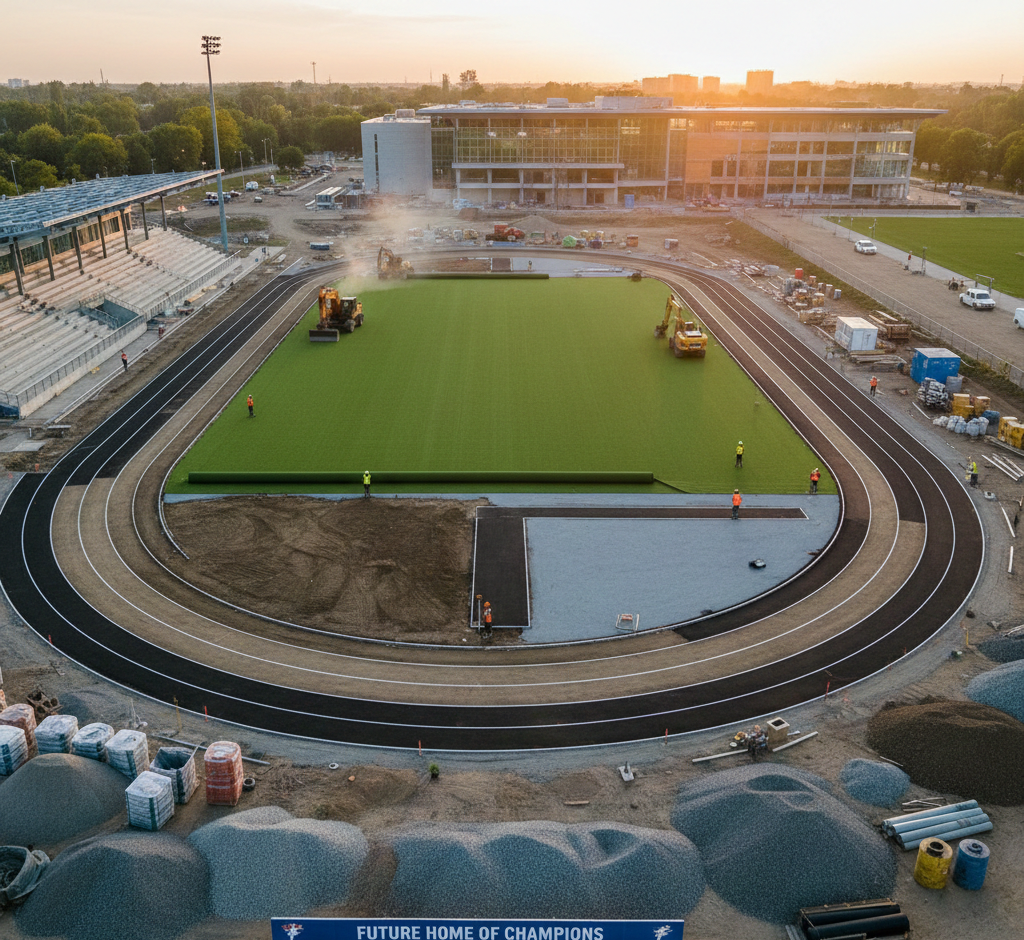
A 6-lane running track is a practical and efficient solution for schools, universities, training centers, and community sports facilities. It offers a strong balance between space utilization, construction cost, and competitive usability, making it ideal where land availability or budget constraints do not allow for an 8-lane stadium track.
Successful 6-lane track construction demands accurate planning, quality materials, precise geometry, and compliance with recognized athletics standards. Every stage—from soil preparation to final line marking—directly impacts athlete safety, performance, and the long-term durability of the facility.
1. Why Choose a 6-Lane Running Track?
Competitive & Training Ready
Suitable for sprints, middle-distance events, relays, and daily athletic training.
Safety & Regulatory Compliance
Standard lane width, curve geometry, and safety zones help minimize injury risks and meet recognized athletic guidelines.
Multi-Purpose Integration
Easily combined with football fields, multipurpose grounds, recreational spaces, and fitness zones.
2. Standard Specifications for a 6-Lane Track
a. Track Dimensions
-
Lap Length: 400 meters (measured along the innermost lane)
-
Lane Width: 1.22 meters per lane
-
Total Track Width: Approximately 7.32 meters (excluding safety margins)
b. Track Geometry
-
Oval configuration with two straights and two curves
-
Curve Radius: Approximately 36.5 meters for standard outdoor tracks
c. Safety Zones
-
Clear space: 1–2 meters around the track perimeter
-
Required for athlete safety, field events, spectators, and emergency access
d. Surface Options
-
Synthetic PU or EPDM for performance and safety
-
Asphalt surfaces for budget-conscious school or community projects
3.Step-by-Step 6-Lane Track Construction Process
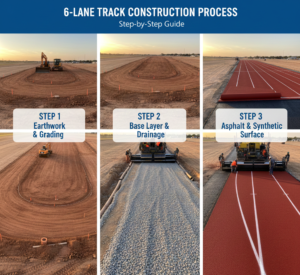
Step 1: Planning & Design
-
Conduct detailed site surveys (soil type, slope, drainage)
-
Prepare layout drawings in accordance with recognized athletics standards
-
Plan safety zones, drainage lines, and access routes
Site Preparation & Subgrade Work
-
Remove vegetation, debris, and unsuitable soil
-
Excavate to required depth for subgrade and base layers
-
Compact natural soil using rollers or plate compactors
-
Stabilize weak soil using lime, cement, or geotextile membranes
Base Layer Construction
-
Lay crushed stone or gravel in multiple layers
-
Compact each layer thoroughly to ensure load-bearing strength
-
Install asphalt or concrete base to create a smooth, level platform
-
Provide 0.5–1% cross slope to facilitate surface drainage
-
Allow adequate curing time (24–48 hours for asphalt; longer for concrete)
Synthetic Surfacing Installation
-
Apply polyurethane, EPDM, or similar athletic surfacing systems
-
Use specialized equipment to ensure uniform thickness and texture
-
Ensure proper bonding and slip resistance for athlete safety
Line Marking & Final Inspection
-
Paint lane lines, start/finish points, staggered starts, and relay zones
-
Use weather-resistant acrylic or polyurethane paints
-
Verify measurements, surface uniformity, and drainage efficiency
-
Conduct final inspection to confirm readiness for use
4. Materials Used in 6-Lane Track Construction
-
Subgrade Soil & Stabilizers: Provide foundational strength
-
Crushed Stone & Gravel: Ensure structural support and drainage
-
Asphalt or Concrete Base: Creates a stable surface for synthetic layers
-
Synthetic Track Systems: PU, EPDM, or tartan surfaces for traction and shock absorption
-
Line Marking Paints: Durable acrylic or PU coatings for long-lasting visibility
5. Key Factors Affecting Construction Cost
-
Track Area & Layout Complexity
-
Surface Material Selection
-
Soil Condition & Drainage Requirements
-
Additional Features: Lighting, fencing, seating, and field-event zones
-
Labor & Equipment Costs
Indicative Cost Range:
A 6-lane synthetic running track typically costs USD 120,000 – 250,000, depending on materials, site conditions, and location.
6. Maintenance Requirements
Regular maintenance ensures safety and extends service life:
-
Routine cleaning to remove dust and debris
-
Periodic surface inspections and minor repairs
-
Repainting lane markings every 2–3 years
-
Maintaining drainage channels to prevent water damage
-
Restricting heavy vehicles and equipment on the track surface
With proper care, a professionally built track can perform reliably for 10–15 years or more.
7. Advantages of a 6-Lane Running Track
-
Economical Construction & Operation
-
Suitable for Competitive & Training Use
-
Enhanced Athlete Safety
-
Adaptable for Multi-Purpose Activities
-
Durable and Low Maintenance
8. Common Applications
-
Schools and Universities: Physical education, training, and competitions
-
Community Sports Grounds: Public fitness and recreational use
-
Athletic Training Centers: Daily practice for clubs and professionals
-
Indoor or Outdoor Facilities: Adaptable to space-restricted environments
A well-designed 6-lane track strengthens athletic programs and promotes active lifestyles.
9. Conclusion
6-lane running track construction delivers an optimal blend of performance, affordability, and space efficiency.
A professionally constructed 6-lane track is not just a sports surface—it is a long-term investment in fitness, education, and athletic excellence.
FAQ – 6-Lane Track Construction: Complete Guide
1. What is a 6-lane track?
A 6-lane track is an athletic running track with six lanes, each designed for individual runners. It is commonly used in schools, colleges, sports complexes, and stadiums for training, competitions, and recreational running.
2. What are the standard dimensions of a 6-lane track?
- Lane Width: 1.22 meters (4 ft) per lane
- Track Length: 400 meters per lap (measured in lane 1)
- Total Width: Approximately 7.32 meters (6 lanes × 1.22 m)
- Track Shape: Oval with two straights and two semicircular bends
3. What surfaces are used for 6-lane tracks?
- Asphalt or Concrete Base: Provides a solid foundation
- PU (Polyurethane) Track: Shock-absorbing, durable, and professional-grade
- EPDM Rubber Track: Non-slip, joint-friendly, and ideal for outdoor conditions
- Synthetic Athletics Surface: Standard for competitive sports and professional stadiums
4. How long does it take to construct a 6-lane track?
Construction time depends on surface type and preparation:
- Basic asphalt track: 3–4 weeks
- PU/EPDM synthetic track: 4–6 weeks
- Professional sports-standard track: 6–8 weeks
5. How much does 6-lane track construction cost?
Cost varies depending on materials and amenities:
- Basic asphalt track: ₹20–35 lakh
- PU/EPDM synthetic track: ₹40–70 lakh
- High-end professional track with lighting, landscaping, and drainage: ₹1 crore+
6. Can a 6-lane track be built outdoors?
Yes. Outdoor tracks are common in schools, stadiums, and parks. Proper drainage, UV-resistant surfaces, and non-slip coatings ensure durability even in heavy rain or hot climates.
7. How to maintain a 6-lane track?
- Clean regularly to remove dirt, debris, and leaves
- Inspect for surface cracks or wear
- Repaint lane markings and distance markers
- Maintain drainage channels to prevent waterlogging
- Periodic resurfacing for synthetic tracks